Financial Supervisory Service Publishes Q3 Complaint and Dispute Cases with Dispute Judgment Criteria
"Supreme Court Rules Refunds via Risk-Sharing Not Covered by Indemnity Insurance"
Financial Firms Justified in Charging Depreciation Fees to Users at End of Auto Operating Lease
"Insurance Payments Required for Type 2 Diabetes Direct Treatment Using 'Wisomae Jeoljesul'"
The Financial Supervisory Service (FSS) has determined that it is difficult to consider the handling of claims as improper when a patient receives indemnity insurance payments excluding the refund amount from the insurer after being treated with drugs subject to the risk-sharing system. Additionally, the FSS judged that the handling by financial companies of calculating and charging depreciation costs to users upon the expiration of automobile operating leases is also appropriate.
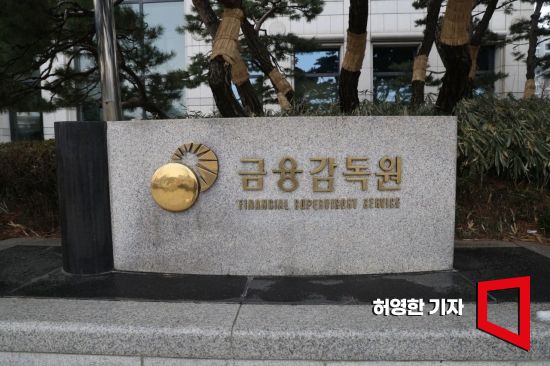
On the 27th, the FSS announced this through the major complaint and dispute cases and dispute judgment criteria disclosed quarterly as part of the business innovation roadmap (FSS, the F.A.S.T.). For the third quarter complaint and dispute cases, the FSS disclosed three cases in the insurance sector, one case in the small and low-income sector, and one case in the financial investment sector. It also disclosed dispute judgment criteria for two cases in the insurance sector.
First, the FSS viewed the insurer’s handling of excluding refund amounts under the risk-sharing system from indemnity insurance compensation as legitimate. It cited the recent Supreme Court ruling that refund amounts through the risk-sharing system are not subject to indemnity insurance compensation. Accordingly, the FSS explained, "Amounts to be refunded by pharmaceutical companies related to drugs subject to the risk-sharing system cannot be compensated under indemnity insurance, so caution is required."
The FSS also judged that the financial company’s handling of charging depreciation costs to users upon the expiration of automobile operating leases is not improper. The standard automobile lease contract stipulates that if there is depreciation compared to the expected value at the time of returning the leased vehicle, the lease user can be charged that amount. The FSS advised, "When returning a leased vehicle, the financial company can inspect the vehicle and charge depreciation costs reflecting the depreciation rate according to the depreciation items, so caution is necessary."
The FSS also judged that the insurer’s handling of refusing a request to resume individual indemnity insurance six months after the termination of group indemnity insurance is not improper. The special clause for suspension and resumption of indemnity medical insurance requires that an application to resume individual indemnity insurance be made within one month from the termination date of group indemnity insurance. This is intended to prevent moral hazard such as maintaining an uninsured status after group indemnity insurance termination and then resuming individual indemnity insurance upon illness occurrence.
The FSS emphasized, "It is important to note that when suspending individual indemnity insurance due to overlapping subscription with group indemnity insurance, an application to resume individual indemnity insurance must be made within one month after the termination of group indemnity insurance."
The FSS also supported the insurer in a case where insurance payments were not made because the damage was outside the scope covered by crop disaster insurance. The relevant clause stipulates compensation for damage caused by weather disasters related to weather warnings issued by the Korea Meteorological Administration. According to the Korea Meteorological Administration’s criteria for issuing weather warnings, a weather warning is issued when the daily maximum perceived temperature is 35°C or higher for two or more consecutive days, among other reasons.
The FSS stated, "Since it was confirmed that no weather warning was issued for the time and region claimed by the complainant, it is difficult to consider the insurer’s handling as improper," and explained, "Crop disaster insurance compensates for damage to crops caused by natural disasters or tidal waves, but the scope of compensation is limited according to the policy, so prior confirmation is necessary."
Furthermore, the FSS disclosed judgment criteria for two insurance payment-related disputes. Regarding the dispute over payment of surgery insurance benefits for type 2 diabetes, the FSS judged that the complainant’s sleeve gastrectomy can be regarded as a direct treatment for type 2 diabetes, making the payment of insurance benefits appropriate. The Ministry of Health and Welfare considers sleeve gastrectomy for type 2 diabetes patients who have difficulty controlling blood sugar through medical treatment as a health insurance benefit.
The FSS explained, "In the complainant’s case, it falls under the health insurance benefit category and can be seen as surgery for diabetes treatment, not just obesity treatment, and the condition improved significantly after the surgery," adding, "It is appropriate to pay the related insurance benefits considering sleeve gastrectomy as surgery directly aimed at diabetes treatment."
Regarding whether a prescription plan recorded in medical records within one year after signing an insurance contract guaranteeing targeted anticancer treatment costs can be regarded as a ‘prescription,’ the FSS ruled that the ‘prescription issuance date’ should be considered the prescription time. The actual prescription for the complainant was executed after one year from the contract date.
The FSS explained, "Medical advisory results suggested that the actual treatment schedule may differ from the treatment plan recorded in the medical records, making it difficult to regard the treatment plan as a prescription," and added, "It is reasonable to consider the doctor’s ‘prescription issuance date,’ which is close to the actual administration time and can be recognized as an official prescription act, as the prescription time."
© The Asia Business Daily(www.asiae.co.kr). All rights reserved.
![From Bar Hostess to Organ Seller to High Society... The Grotesque Con of a "Human Counterfeit" [Slate]](https://cwcontent.asiae.co.kr/asiaresize/183/2026021902243444107_1771435474.jpg)
















