Snow and Rain in Central Region Until the 28th
Snow Three Times Heavier Than Construction Standards
External Facilities Must Be Inspected
Starting from the night of the 26th, the first snow of the year is expected to fall across various parts of the country. In particular, the Seoul metropolitan area and the Chungcheong region are forecasted to experience heavy snowfall on the morning of Wednesday, the 27th, which is likely to cause disruptions during the morning commute.
According to the Korea Meteorological Administration, as of the morning of the 26th, rain is falling nationwide at a rate of 1 to 5 mm per hour. The expected precipitation amounts by the night of the 26th are ▲Busan 20?60 mm ▲Gangwon, Ulsan, Gyeongnam 10?40 mm ▲Seoul metropolitan area, Chungcheong, Daegu, Gyeongbuk, Jeju 5?30 mm ▲Honam 5?20 mm.
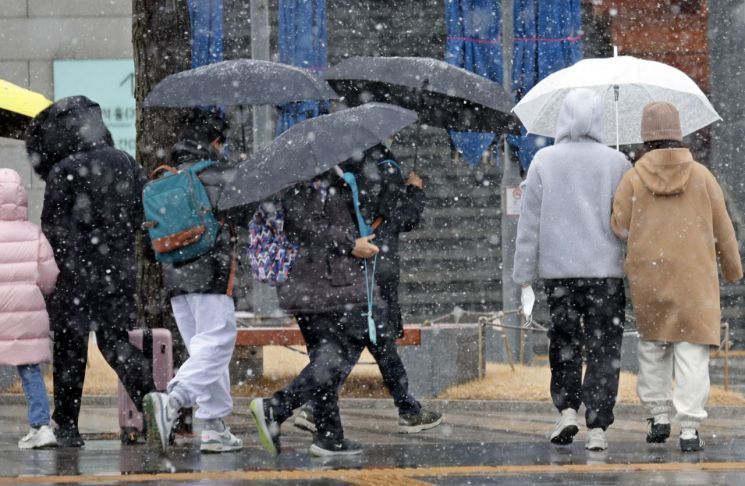
Rain will stop in the southern regions and Jeju Island by the afternoon, but in the central regions including the Seoul metropolitan area, it will continue until night in some places. Especially from the afternoon of the 26th, cold air will move southward from the upper atmosphere, causing rain to change into snow in various parts of the country.
In the Seoul metropolitan area including Seoul and Incheon, snow accumulation is expected to be 3?8 cm (over 10 cm in eastern Gyeonggi), 1?3 cm on the five islands in the West Sea, 5?15 cm (over 20 cm in some areas) in inland and mountainous areas of Gangwon, about 1 cm on the mid-north Gangwon East Coast, 5?10 cm in Chungbuk, and 1?5 cm in Daejeon and Chungnam.
The rain and snow falling nationwide are expected to continue until the morning of Thursday, the 28th. In the central and southern parts of Gangwon and the Gyeongbuk region, precipitation will last until the afternoon of the 28th, while in southern Gyeonggi, Chungcheong, and Jeolla regions, snow and rain will continue until the night of the 28th.
The snow falling this time is “wet snow” that contains a lot of moisture. Wet snow is about three times heavier than dry “light snow,” which increases the risk of structural damage, so inspection of structures is necessary.
The Korea Meteorological Administration advised, "This snowfall may cause severe icing on roads in some areas," and urged people to "drive safely during the morning commute and take measures to prevent road icing."
© The Asia Business Daily(www.asiae.co.kr). All rights reserved.

















