'2025 Construction and Housing Market Outlook Seminar'
Housing Market Polarization and Short-Term Supply Shortage Drive House Price Increase in the Seoul Metropolitan Area
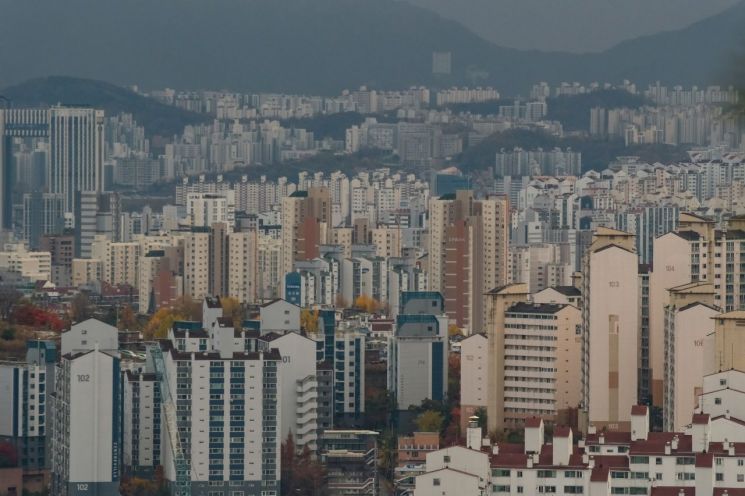
It is forecasted that housing prices in the Seoul metropolitan area will rise by around 1-2% next year. However, due to the concentration in the metropolitan area and the stagnation of the local real estate market, housing prices in local areas are expected to remain flat.
 The Korea Construction Policy Institute held the "2025 Construction and Housing Market Outlook Seminar" on the 26th at the Specialized Construction Hall in Dongjak-gu, Seoul. Photo by Korea Construction Policy Institute
The Korea Construction Policy Research Institute announced this on the 26th at the '2025 Construction and Housing Market Outlook Seminar' held at the Professional Construction Hall in Dongjak-gu, Seoul.
Go Ha-hee, a deputy research fellow at the institute who presented at the seminar, predicted that housing prices in the metropolitan area will rise next year amid continued polarization in the housing market. He explained that the polarization is widening due to the gap between the metropolitan area and non-metropolitan areas, differences in preference between apartments and non-apartments, and the gap between newly built and older apartments.
Deputy Research Fellow Go said, "Currently, the real estate market is gradually recovering compared to the previous peak," adding, "Seoul apartment prices have recovered to 93.8% of the previous peak, while local areas remain at 88.4%." He noted, "In the metropolitan area, prices have not yet surpassed the previous peak, so there is potential for further increases." He also mentioned that according to the housing sales supply-demand index, a value above 100 indicates an overheated market, which applies only to metropolitan area apartments, while non-metropolitan apartments and metropolitan non-apartments have indices below 100.
He also touched on the difference in preference between apartments and non-apartments. He said, "Before the Jeonse fraud incident, the transaction share of non-apartments averaged 30% over 10 years," adding, "This share rose to 46% just before the Jeonse fraud incident but sharply dropped to 17% in the second half of 2022 and still remains below the average." He added, "As the perception that non-apartments are risky has become entrenched, the aversion to non-apartments is expected to continue next year."
He also noted that the preference for newly built properties could further drive up housing prices. According to the Statistics Korea 'Housing Census,' the proportion of houses over 30 years old was 25.8% nationwide and 26.0% in Seoul last year. Deputy Research Fellow Go said, "In the past, the proportion of old houses nationwide was higher than in Seoul, but since 2018, the proportion of old houses in Seoul has increased and started to approach the national level," adding, "This situation has led to a clear trend of preference for newly built apartments in the market."
Poor housing supply performance is also fueling price increases. According to the Korea Construction Association's 'Monthly Construction Economic Trends,' the number of housing construction permits counted until September this year was 218,641 units, a 22.6% decrease compared to the same period last year (282,471 units).
Deputy Research Fellow Go said, "The government has introduced several supply measures such as the '8·8 Supply Plan' and the '11·5 Greenbelt Release,'" adding, "In reality, redevelopment projects and greenbelt releases are mid- to long-term measures that take more than 8-10 years until completion, so supply remains insufficient in the short term."
Additionally, it was mentioned that the housing prices could rise as the two Lease Laws reach their 4-year mark. Under these laws, landlords could not significantly raise Jeonse prices if tenants exercised their right to renew the lease. However, since tenants have already used this right once, landlords can increase prices when signing new Jeonse contracts, which leads to rising Jeonse prices and consequently higher housing prices.
Meanwhile, there was also a call to find survival strategies amid the stagnation of the domestic construction industry. Park Seon-gu, a research fellow at the institute, said, "The scale of construction investment is likely to stabilize downward in the mid to long term. In 1991, construction investment accounted for 29% of the gross domestic product (GDP), but it decreased to 13% last year," adding, "We need to prepare survival strategies for the already stagnant construction industry environment."
© The Asia Business Daily(www.asiae.co.kr). All rights reserved.


















