303 Ambulances and 2 Firefighting Helicopters Test Negative for 4 Pathogenic Bacteria
Gyeonggi-do Fire and Disaster Headquarters Conducts Contamination Inspection on All Ambulances and Firefighting Helicopters via Specialized Company
The Gyeonggi-do Fire and Disaster Headquarters announced on the 26th that all 119 ambulances and fire helicopters in their possession have been found to be safe from pathogenic bacteria.
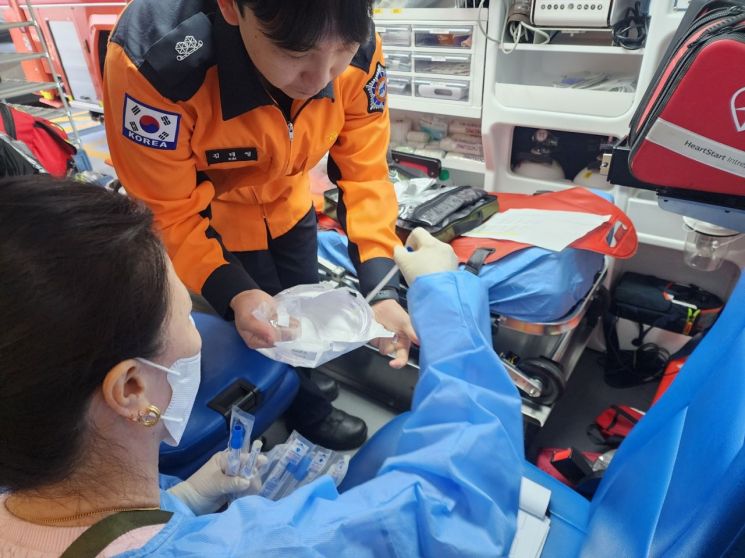 Gyeonggi-do Fire and Disaster Headquarters confirmed that all 119 ambulances and fire helicopters in their possession are safe from pathogenic bacteria. The photo shows a sample being collected to investigate bacterial contamination on a fire helicopter. Photo by Gyeonggi-do Fire Headquarters
The Gyeonggi-do Fire and Disaster Headquarters recently commissioned a professional company to conduct pathogenic bacteria contamination inspections on 303 ambulances from 36 fire stations in the province and 2 fire helicopters from the Special Response Unit over the past month.
As a result of testing 1,525 items across five categories per vehicle?including airway maintenance supplies, respiratory-related supplies, circulatory-related supplies, patient compartments, and driver’s seats?no bacteria such as Staphylococcus aureus, vancomycin-resistant enterococci, Klebsiella pneumoniae, or Bacillus cereus were detected.
Staphylococcus aureus causes illnesses such as food poisoning, otitis media, and cystitis, and is particularly fatal to patients with weakened immune systems or the elderly. Enterococci are bacteria that cause various infections such as urinary tract infections in the elderly.
Since 2018, Gyeonggi Fire has conducted annual comprehensive bacterial contamination inspections on all ambulances owned by fire stations. Because ambulances and fire helicopters, which serve patients with various diseases and trauma, can act as vectors transmitting pathogens through blood or medical waste, this is to preemptively block the risk of secondary infections for residents using these services.
To prevent bacterial contamination inside ambulances, Gyeonggi Fire operates infection control rooms within the dispatch units where ambulances are stationed and disinfects emergency equipment using specialized sterilization devices. In particular, equipment such as stretchers that are difficult to detach and thus cannot be sterilized using infection control room devices are managed in accordance with the Korea Fire Agency’s infectious disease response manual.
Jeon Yong-ho, Head of Rescue and Emergency Medical Services at the Gyeonggi-do Fire and Disaster Headquarters, stated, “The inspection results confirmed that bacterial infection control of Gyeonggi Fire’s ambulances and fire helicopters is being effectively carried out. We will establish a systematic infection control system and ensure that emergency medical personnel strictly adhere to hygiene guidelines to provide ambulance services that Gyeonggi residents can trust.”
© The Asia Business Daily(www.asiae.co.kr). All rights reserved.

















