Mexico's September Constitutional Amendment on 'Direct Election of Judges'
Random Ballot Listing Among Selected Candidates
Mexico, which introduced the 'direct election of judges' system, is currently preparing for elections next year to overhaul its judiciary, with over 18,000 people having applied to run.
Arturo Saldivar, Chief of Staff to the President and former Chief Justice of the Mexican Supreme Court, stated on the 25th (local time) at President Claudia Sheinbaum's regular press conference, "A total of 18,447 candidates have completed online registration to run in the election for approximately 880 judges," adding, "After a qualification review of candidates by the 14th of next month, a separate evaluation committee will select the final candidates."
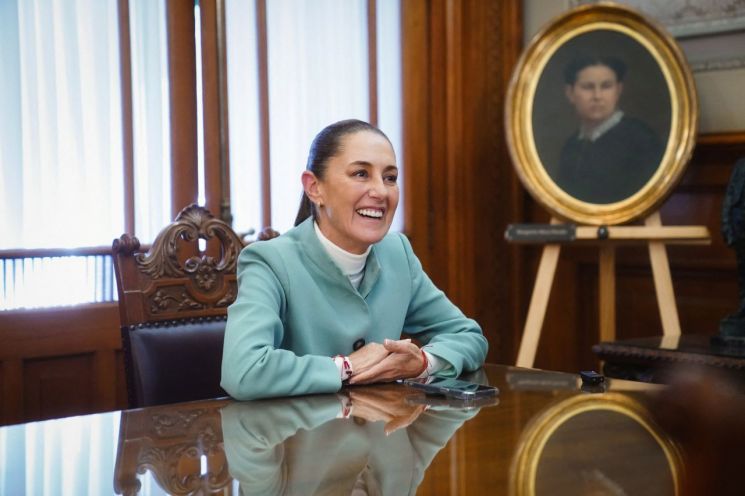
President Sheinbaum emphasized, "(The number of applicants) has astonishingly exceeded all expectations, which demonstrates the great interest of the Mexican people," and added, "This is also a historic event and signifies complete success." The presidential office further explained that for the Supreme Court, which consists of nine members, 480 people applied as candidates for justices, resulting in a competition ratio of over 50 to 1.
Previously, after considerable effort, Mexico enacted a constitutional amendment that includes the introduction of a direct election system for all domestic judges by popular vote, reduction of the number of Supreme Court justices (from 11 to 9), shortening of justices' terms (from 15 to 12 years), abolition of lifetime pensions for justices, and prohibition of judges' salaries exceeding the presidential salary cap. The Associated Press highlighted that Mexico will effectively be the first country where all judges within the judiciary are elected directly by the people.
To register as a candidate in the judicial election, applicants must have a law degree, a GPA of 3.2 or higher, over five years of professional experience, and five recommendation letters from neighbors or friends. However, even if applicants pass the qualification evaluation, not all can run in the election. Luck also plays a role in the final selection process.
Once candidate recruitment ends, the relevant committee will spend about a month reviewing candidates' resumes and narrowing down the candidates for 881 judge positions and 9 Supreme Court justice seats to fewer than 10 candidates each. Then, among the selected candidates, 1,793 names will be randomly chosen and finally listed on the ballot for the vote on June 1 next year.
Earlier, the Mexican Senate selected the courts where elections will be held next year through a random lottery system. According to local media El Universal, judges in other regions are expected to be elected through elections around 2027.
Supporters from the government and the ruling party expect that judges elected by direct vote will help reform the judiciary, which has been criticized for 'nepotism, corruption, and inefficiency' in Mexico's judicial authorities.
However, there are also negative views. Opponents, including court staff and legal scholars, worry that rulings will be swayed by public opinion and the ruling party's influence, severely undermining fairness. In particular, there are concerns that cartels with financial power will exert influence.
Sergio Mendez Silva, legal coordinator of the civic group 'Foundation for Justice,' argued, "When we select doctors or surgeons, we base it on technical expertise, ability, and knowledge, not on popularity votes," adding, "The same should apply when selecting judges."
© The Asia Business Daily(www.asiae.co.kr). All rights reserved.

















