Whether It Can Be Realized Is Uncertain
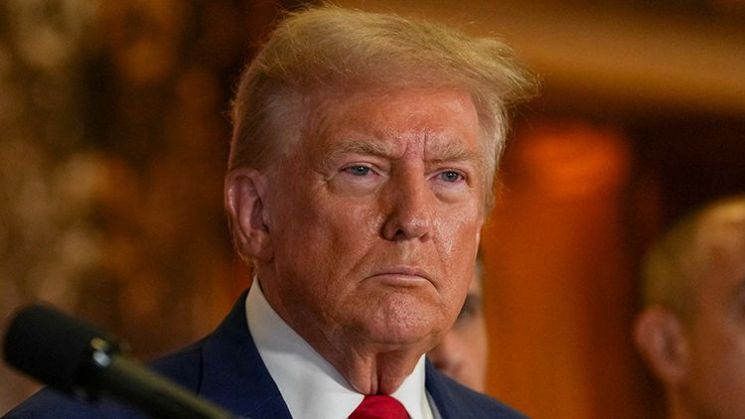
In Europe, the security crisis is intensifying more than ever with the inauguration of Donald Trump's second term, leading to a rise in self-reliance theories. Donald Trump, the President-elect of the United States, may decide to withdraw from the North Atlantic Treaty Organization (NATO), the Western military alliance including North America and Europe. This comes as Russia, the main source of security threats, has gained modern warfare experience through its war with Ukraine. However, there is also pessimism that NATO without the United States would be nothing more than a "paper tiger."
According to major foreign media on the 25th (local time), the think tank International Institute for Strategic Studies recently suggested in a report that if the U.S. withdraws from NATO, "European member states must significantly raise their readiness levels, strengthen their defense industrial base, and make long-term financial investments in military and defense innovation."
The first task gaining traction is the need to reorganize Europe's dispersed weapon systems. According to McKinsey, the U.S. possesses 32 types of systems across 11 major weapon categories such as fighter jets, tanks, and destroyers, whereas Europe has 172 types of systems. Such dispersed weapon systems increase costs and limit interoperability.
Foreign media reported, "For example, the Ukrainian military, supported by Europe, had to handle more than 12 different types of 155mm shells and often had to adjust their guns for each version." Pieroberto Folgiero, CEO of the Italian defense company Fincantieri, pointed out, "The reorganization of the European defense industry is urgent. There are too many platforms."
Preventing division and fostering unity among European member states is also important. There are forecasts that if the U.S. leaves NATO, conflicts may intensify over who will take the position of Supreme Commander, who oversees military operations. Until now, this position has been held by a U.S. military general. EU member states are already showing signs of friction. The issue concerns how much third-country defense companies from the UK, Norway, Turkey, and others can participate in joint procurement contract bids. France holds the position that third-country defense companies should have access to about one-third of the defense procurement fund, which differs from other EU member states.
Achieving the goal of increasing defense spending among EU member states is also a challenge. According to NATO, European allies have increased their defense budgets by nearly one-third since 2022, expanding to $476 billion. As of June, 23 out of NATO's 32 member countries have met the target of spending 2% of their Gross Domestic Product (GDP) on defense.
However, whether this can be achieved remains uncertain. Many European member states have high public debt and limited budgets, with healthcare and education often prioritized. NATO Secretary-General Jens Stoltenberg's statement earlier this month that "Europe will not reach the 2% target" is not unrelated to this situation.
Some pessimists argue that ultimately NATO will struggle to cope with security crises without the United States. Among the military supplies the U.S. provides to NATO, many are irreplaceable. A representative example is the U.S.-made C-17 cargo plane, which costs $340 million per unit and can transport 75 tons of equipment about 4,500 km without refueling. Foreign media noted, "Money is a political issue and can be resolved, but the problem is that the military equipment the U.S. possesses cannot be found elsewhere."
© The Asia Business Daily(www.asiae.co.kr). All rights reserved.

![Clutching a Stolen Dior Bag, Saying "I Hate Being Poor but Real"... The Grotesque Con of a "Human Knockoff" [Slate]](https://cwcontent.asiae.co.kr/asiaresize/183/2026021902243444107_1771435474.jpg)















