The White House announced on the 25th (local time) that a ceasefire agreement between Israel and the Lebanese militant group Hezbollah is imminent. As expectations for a ceasefire rose, international oil prices plummeted.
John Kirby, National Security Communications Coordinator for the White House National Security Council (NSC), stated in an online briefing that regarding the ceasefire negotiations between Israel and Hezbollah, "We believe we are close (to a deal)." He added, "The discussions have been constructive," confirming that "(the negotiation process) is moving in the right and positive direction toward a ceasefire." However, he also said "Nothing is finalized until everything is finalized," and "We will announce something as soon as there is something to announce and it is practical to do so." He remained tight-lipped about the details of the negotiations.
Earlier, the internet media Axios reported, citing a senior U.S. official, that Israel and Hezbollah had agreed on a ceasefire. The official told Axios, "The Israeli Security Cabinet is expected to approve this agreement on Tuesday (the 26th)," and "We believe the agreement has been reached." Additionally, the official noted the uncertainty, saying, "The approval of the Israeli Cabinet is required, and until then, something could always go wrong." Axios added that five other U.S. and Israeli officials also stated that the negotiations are in the final stages.
According to reports, the ceasefire agreement between Israel and Hezbollah aims for both sides to halt hostile actions for 60 days, thereby laying the foundation for a lasting ceasefire. It also includes the activities of a U.S.-led monitoring committee to oversee compliance and violations by both parties. Relatedly, CNN reported on the same day that Israeli Prime Minister Benjamin Netanyahu has 'principally' approved the ceasefire plan with Hezbollah. Lebanese sources also told major foreign media that U.S. President Joe Biden and French President Emmanuel Macron are expected to announce the ceasefire agreement within 36 hours.
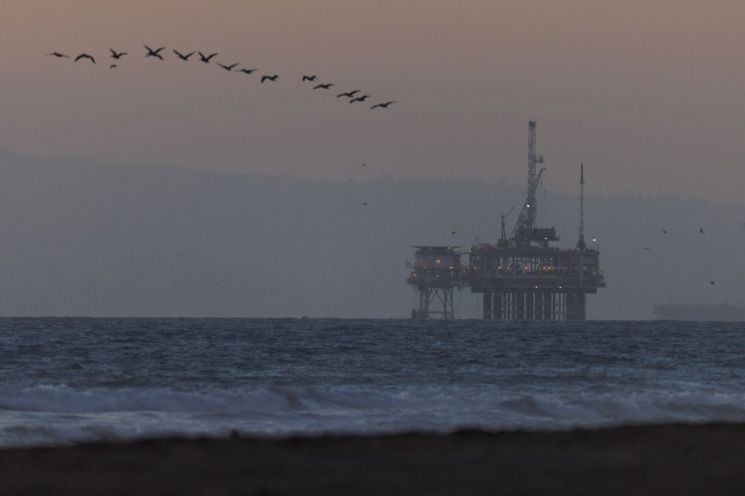
Following news that Israel and Hezbollah are close to a ceasefire agreement, international oil prices showed a downward trend. On that day, the front-month January delivery West Texas Intermediate (WTI) crude oil on the New York Mercantile Exchange closed at $68.94 per barrel, down $2.30 (3.23%) from the previous session. This is the first time since the 20th that WTI has closed below the $70 mark. The global benchmark Brent crude for January delivery also closed at $73.01 per barrel, down $2.16 (2.87%) from the previous session.
Giovanni Staunovo, an analyst at UBS, said, "The news of a ceasefire between Israel and Lebanon appears to be the cause of the oil price decline." Phil Flynn, senior analyst at Price Futures Group, wrote in an investor memo, "Reports that Prime Minister Netanyahu has approved the Lebanon ceasefire agreement could, in principle, act as a catalyst for the (oil price) decline," but cautioned, "We need to watch the details more closely. Last week, when Russia launched supersonic missiles at Ukraine, the world was shocked." Last week, following Russia's missile launch, Brent and WTI recorded their largest weekly gains since the end of September.
© The Asia Business Daily(www.asiae.co.kr). All rights reserved.












