Marriage before inauguration, expedited asylum application... Permanent residents also apply for citizenship
Advising international students to "return to the US before Trump's inauguration" during university selection
As the inauguration of Donald Trump, the President-elect of the United States who promised large-scale deportations of illegal immigrants, approaches, immigrants in the U.S. are trembling with anxiety and preparing themselves. Illegal immigrants are applying for asylum, and immigrants dating U.S. citizens are rushing to get married. Immigration lawyers and related organizations are receiving a flood of inquiries.
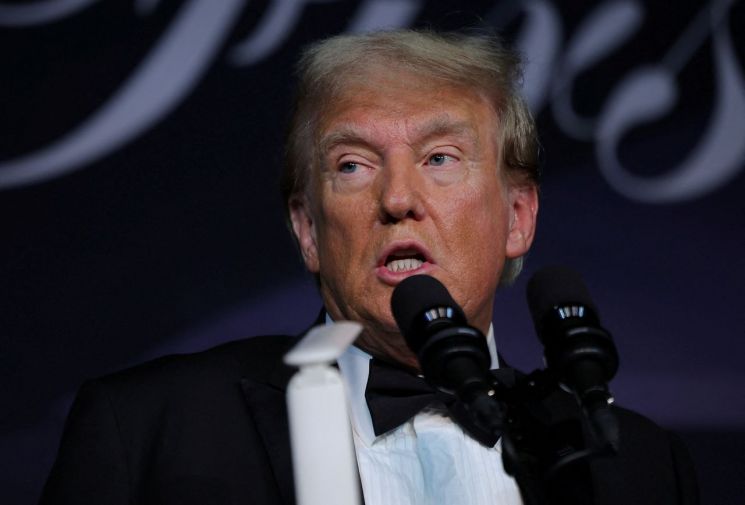 President-elect Donald Trump of the United States, set to be inaugurated on January 20 next year. Photo by Reuters Yonhap News
The daily New York Times (NYT) reported on the 24th (local time) that such scenes are being observed across the U.S. ahead of Trump’s inauguration in January next year. Trump, who has long identified illegal immigrants as the main culprits behind crime, unemployment, and rising housing prices, has announced that he will drastically reduce immigration, both legal and illegal, and will launch large-scale deportations from his first day in office.
Immigrants who entered the U.S. illegally or have weak legal grounds to stay legally are rushing to apply for asylum with the U.S. government. Even though the chances of being granted asylum are low, they apply first because once the process is underway, they can avoid deportation and buy time in the U.S. Immigrants dating U.S. citizens are hurrying to get married to qualify for permanent residency (Green Card) applications. Immigrants who already have permanent residency are also trying to obtain citizenship as soon as possible. According to the NYT, about 13 million immigrants with permanent residency live in the U.S. Additionally, as of 2022, the number of illegal residents is estimated to be 11.3 million.
Immigration lawyers are receiving a flood of phone calls. Ina Simakovsky, an immigration lawyer in Ohio, said, "People who should be afraid are coming, and even those with permanent residency who have no problems are flocking," conveying the atmosphere that "everyone is terrified." Immigrants are also attending immigration-related meetings hosted by nonprofit organizations in increasing numbers. The NYT reported, "Immigrants are taking every possible measure to protect themselves from the sweeping actions Trump has promised."
Yanes Campuzano, a 30-year-old software engineer in Houston, said, "The election result threw me into a panic and made me immediately seek a permanent solution," adding that he is rushing his marriage plans with his fianc?, who is a U.S. citizen. He came to the U.S. from Mexico when he was three months old and is a beneficiary of Deferred Action for Childhood Arrivals (DACA). Created during the Barack Obama administration, DACA is a program that protects young people who came to the U.S. illegally as children from deportation and allows them to work. However, Trump had sought to eliminate the DACA program during his first term. Campuzano said he plans to marry next month before Trump’s inauguration and that "only after my (legal) status is stabilized will I be able to breathe again."
Sergio Teran (36), originally from Venezuela and residing in Florida, already has legal permanent residency but applied for citizenship as soon as he became eligible in July. The uncertainty surrounding the election results was one of the reasons he hurried. He said, "I wanted to do it quickly. I am a model community member. But even with permanent residency, I can still be deported. I feel much safer knowing that the citizenship process is underway."
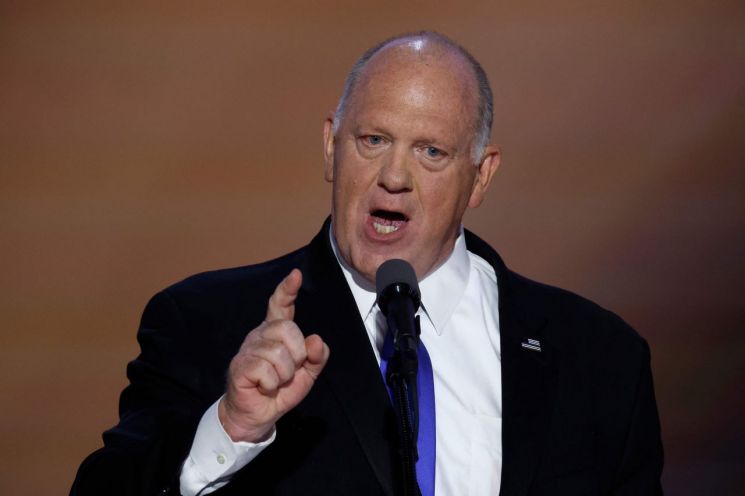 Tom Homan, former Acting Director of Immigration and Customs Enforcement (ICE), appointed as 'Border Czar' for Trump's second term. Photo by Getty Images Yonhap News
Deportations of illegal residents in the U.S. are not uncommon. According to the Migration Policy Institute (MPI), about 1.5 million people were deported during Trump’s first term. Democratic President Joe Biden also deported a similar number of illegal residents. Former President Barack Obama deported 3 million people during his first term alone. However, the NYT noted that the U.S. has never conducted a large-scale mass deportation since the 1950s and has never built massive detention facilities for such an operation.
In Trump’s second term administration, Steven Miller, who designed the large-scale illegal immigrant deportation pledge, was appointed as Deputy Chief of Staff for Policy at the White House, and a 'border czar' position was also created to execute the plan. Tom Homan, former Acting Director of Immigration and Customs Enforcement (ICE) and nominated as Trump’s second-term 'border czar,' announced that deportations would prioritize criminals and immigrants with deportation orders. He also said that other means, including surprise workplace raids, would be used to arrest illegal residents. Sylvia Campos (42), who works on a Mexican farm illegally, said she is bombarded with immigration-related information everywhere?from Spanish-language radio, TV, to social media (SNS). Two of her three teenage children are U.S. citizens, and she added, "We must prepare for the worst."
Universities are quietly reviewing measures to assist foreign international students and undocumented students. More than 1,700 university staff attended a related webinar on the 15th. Miriam Feldblum, a representative of the event organizer, explained that many institutions are considering sponsoring work visas for DACA beneficiaries.
One of the universities’ concerns is that winter break, when many international students return to their home countries, is approaching. Some universities, including the University of Massachusetts Amherst and Wesleyan University, have strongly urged all foreign students, faculty, and staff to consider returning to the U.S. before Trump’s inauguration through travel advisories. Wesleyan University emphasized in an email that being in the U.S. around January 19, the day before the inauguration, is "the safest way to avoid difficulties upon re-entry." After Trump’s inauguration in 2017, when entry bans were imposed on countries with large Muslim populations, panic and confusion ensued.
© The Asia Business Daily(www.asiae.co.kr). All rights reserved.


















