Only 12 Places Recognized with Grade 1 Technology... 8 Are Large Corporations
"Difficult to Commercialize Grade 1 Interfloor Noise Technology, LH Took Initiative"
"Construction Cost Increase Due to Technology Application Is Under Financial or Fund Investment Review"
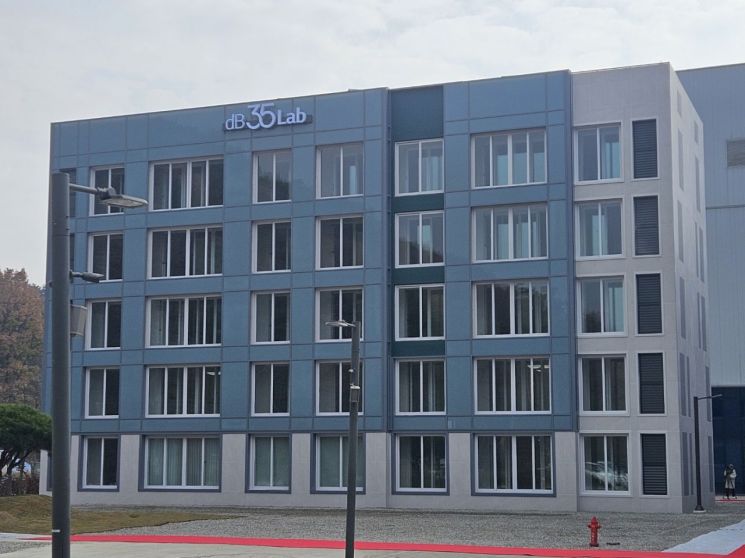 The Korea Land and Housing Corporation (LH) Housing Performance Research and Development Center located in Sejong City. Photo by Park Seung-wook
"Korea Land and Housing Corporation (LH) has established an inter-floor noise reduction testing facility twice the size of Samsung C&T's Inter-floor Noise Research Institute (Raemian Goyo安 Lab). Through this, they plan to solve the inter-floor noise problem and disseminate this technology to the private sector."
LH President Lee Han-jun stated this at a Ministry of Land, Infrastructure and Transport press briefing held in Sejong City on the 21st. At 'Decibel 35' within the LH Housing Performance Research and Development Center in Sejong City, which he visited that same morning, technology development to create zero inter-floor noise apartments was in full swing, just as he mentioned.
Measuring noise by using a treadmill or dropping a ball
At Decibel 35, to measure inter-floor noise, activities such as using a treadmill or dropping a 2.5kg experimental ball from 120 cm above the floor were conducted in a space structured like an apartment. This allowed verification of how noise is heard on the lower floor according to inter-floor noise grades 1 through 4.
When grade 1 technology was applied, unlike grade 4, the sound of running on the treadmill upstairs was barely audible. When dropping the experimental ball, slight vibrations were felt, but they were less than those in grade 4.
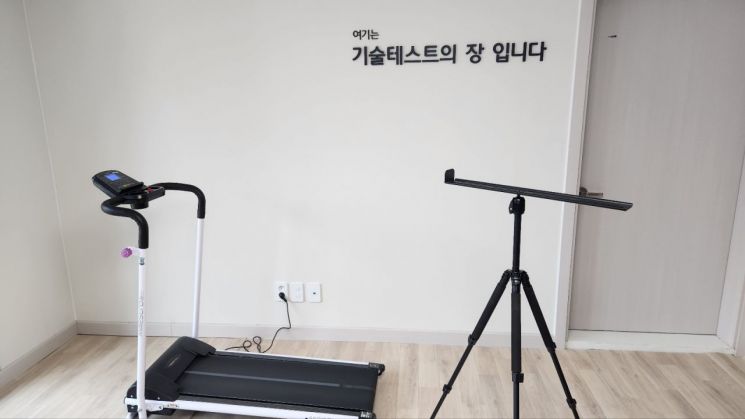 On the 21st, equipment for noise measurement testing was set up inside the Housing Performance Research and Development Center of Korea Land and Housing Corporation (LH) in Sejong City. Photo by Seungwook Park
The standard for inter-floor noise grade 1 is noise measured at 37 dB (decibels) or below, which is equivalent to whispering in a library. Noise levels exceeding 37 dB up to 41 dB receive grade 2, over 41 dB up to 45 dB receive grade 3, and over 45 dB up to 49 dB receive grade 4. For multi-family housing, performance is recognized from grades 1 to 4, but from grade 5 onwards, additional procedures such as remedial construction or compensation claims are required.
When noise caused by dragging a chair occurred, an alert sound was emitted along with a message on the wall pad saying "Please be careful." LH developed a 'Noise Guard' to prevent inter-floor noise and introduced it in some LH public housing. The Noise Guard is a system that sends inter-floor noise alerts to smartphones or wall pads when residents cause noise through floor vibrations by running or dragging chairs. It is a device to minimize noise generation by residents.
"Only 12 places have been recognized with grade 1 inter-floor noise technology so far"
Currently, grade 1 technology is still insufficient domestically. A total of 12 private companies have been recognized with grade 1 technology, including 8 large corporations such as Samsung C&T and Hyundai Construction. The market size is small, making it difficult to commercialize the technology.
Jung Woon-seop, head of LH Smart Construction Headquarters, said, "While large corporations are actively developing inter-floor noise reduction technology, small and medium-sized construction companies face significant difficulties in technology development. Since solving the inter-floor noise problem cannot rely on technology from only a few construction companies, LH will take the lead in distributing various versatile technologies."
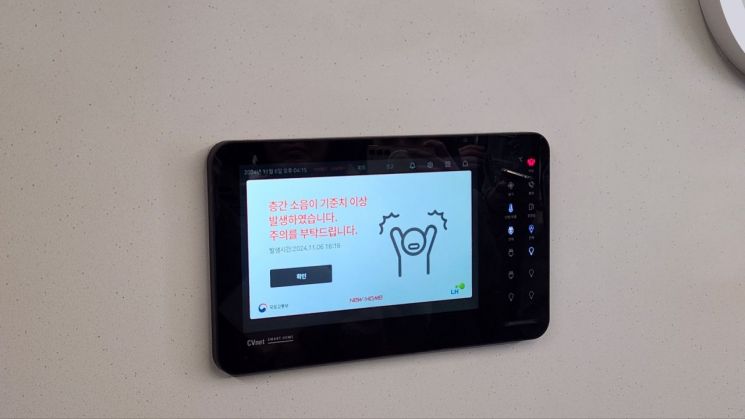 On the 21st, at the Korea Land and Housing Corporation (LH) Housing Performance Research and Development Center in Sejong City, an alert was issued due to noise caused by floor vibrations. Photo by Park Seung-wook
For technology development, LH created 47 technology models based on technical elements such as composite cushioning materials and slab thickness, and conducted 1,347 performance tests here. Kim Byung-moon, team leader of the Housing Performance Improvement Team at LH Smart Housing Technology Department, said, "Currently, technology application is being reviewed only for wall-type structures, but in the future, we plan to introduce the technology to various housing types such as frame structures and modular housing."
The floor structure of a house consists of mortar, cushioning materials, and slabs. Increasing the density of mortar, using composite materials for cushioning, and increasing slab thickness all enhance noise blocking effects.
For example, the standard floor structure for grade 3 technology consists of 40 mm of general mortar, 40 mm of lightweight foam, 30 mm of composite cushioning material, and a 210 mm slab, whereas the grade 1 structure consists of two layers of high-density mortar measuring 40 mm and 30 mm, 40 mm of composite cushioning material, and a 250 mm slab.
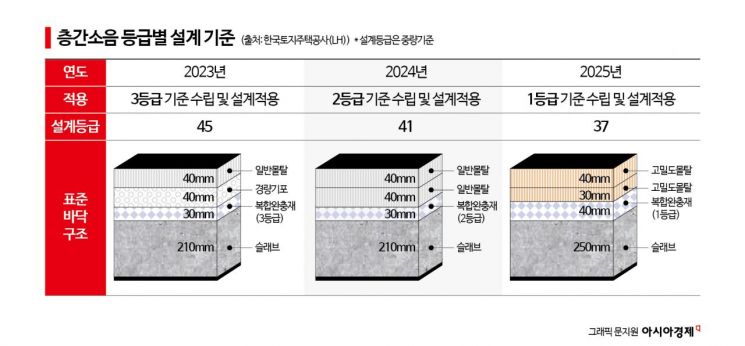
LH plans to apply grade 1 technology to LH apartment designs starting next year. Some grade 1 technology has already been applied to public housing New Home projects and the 3rd New Town developments. Kim said, "In the design of these complexes, 250 mm slabs have been applied. If high-density mortar is also used, it will fully meet the grade 1 standards."
Meanwhile, grade 1 technology can increase construction costs. Kim said, "Upgrading from inter-floor noise grade 4 to grade 1 costs about 4 million KRW more per household," adding, "Since this could increase consumer burden, we are currently recommending expanded government funding or fund investments."
© The Asia Business Daily(www.asiae.co.kr). All rights reserved.
![Clutching a Stolen Dior Bag, Saying "I Hate Being Poor but Real"... The Grotesque Con of a "Human Knockoff" [Slate]](https://cwcontent.asiae.co.kr/asiaresize/183/2026021902243444107_1771435474.jpg)


















