The Incheon Health and Environment Research Institute announced on the 22nd that it has scientifically proven that the tidal flats in Incheon are an important carbon absorption resource that can contribute to carbon neutrality goals.
The institute quantitatively calculated the amount of carbon stored in the tidal flats of Dongmak Tidal Flat in Ganghwa-gun and Yeongjong Tidal Flat in Yeongjongdo, and analyzed the patterns of carbon absorption according to the seasons. In the tidal flats, benthic microalgae in the surface layer absorb carbon from the air through photosynthesis, and the absorbed carbon is stored for a long time in the tidal flat sediments through sedimentation.
The research results confirmed that an average of about 18.5 kg of carbon is stored per 1㎡ in the sediment of Incheon tidal flats. This level corresponds to the carbon fixed by the tidal flats in Ganghwa and Jung-gu areas, which accounts for about 20% of Incheon City's annual greenhouse gas emissions.
Also, the amount of carbon absorbed by the tidal flats in the cold winter season was up to 45.5 mg per 1㎡ per hour, which the institute stated is an excellent level compared to absorption amounts reported in overseas studies (8~35 mg/㎡).
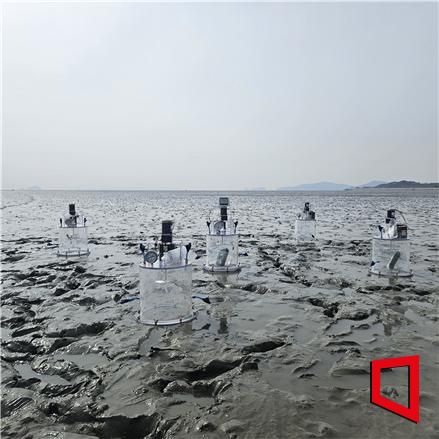
This study is attracting attention for scientifically proving that non-vegetated tidal flats, which account for 98% of domestic tidal flats, are also potential carbon absorption sources, and for newly highlighting the value of tidal flat ecosystems. However, currently, the international community only recognizes ecosystems inhabited by marine plants such as mangrove forests, salt marshes, and seagrass beds as marine carbon sinks, so domestic tidal flats without plants have not been properly valued.
The area of tidal flats in Incheon accounts for 28% of the national tidal flats, making it the second largest after Jeonnam. Therefore, the scientific proof that non-vegetated tidal flats can absorb and store carbon suggests that it can play a significant role not only in Incheon but also at the national level in achieving carbon neutrality and responding to the climate crisis.
Kwon Moon-ju, director of the Incheon Health and Environment Research Institute, said, "This study proving the carbon absorption value of Incheon tidal flats is a very meaningful achievement in responding to climate change," and added, "We expect to achieve the '2045 Incheon City Carbon Neutrality' goal by utilizing Incheon's abundant marine ecosystem resources."
© The Asia Business Daily(www.asiae.co.kr). All rights reserved.

















