Number of Hospitalized Patients This Year Nine Times Last Year's
If No Effect After First-Line Macrolide Treatment
Second-Line Use of Tetracyclines and Quinolones Also Considered
As Mycoplasma pneumonia, an acute respiratory disease, spreads widely among children and adolescents, the number of patients requiring hospitalization has increased nearly ninefold within a year. Mycoplasma pneumonia has no specific preventive vaccine, and although timely antibiotic treatment can effectively manage the infection, recent cases show a high resistance to first-line antibiotics, highlighting the need for smoother administration of second-line antibiotics through additional prescriptions.
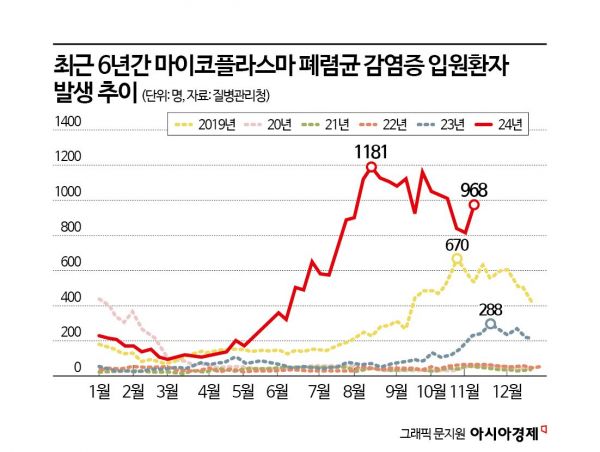
According to the Korea Disease Control and Prevention Agency on the 22nd, the number of hospitalized patients infected with Mycoplasma pneumoniae, as recorded through sentinel surveillance medical institutions, peaked this summer (week 33 with 1,181 patients) and then showed a declining trend, but increased again to 968 patients in week 45 (November 3?9) compared to 810 patients the previous week.
From the beginning of this year to week 45, a total of 23,625 patients were hospitalized due to Mycoplasma pneumonia, which is 8.8 times higher than the same period last year (2,699 patients) and 18.8 times higher than two years ago (1,257 patients). Among all hospitalized patients, 71% (16,770 patients) were children aged 12 or younger, indicating that the infection mainly affects school-age children. Globally, Mycoplasma pneumonia outbreaks occur every 3 to 4 years, and although there was a significant outbreak in Korea in 2019, the current number of patients is unprecedented according to medical professionals.
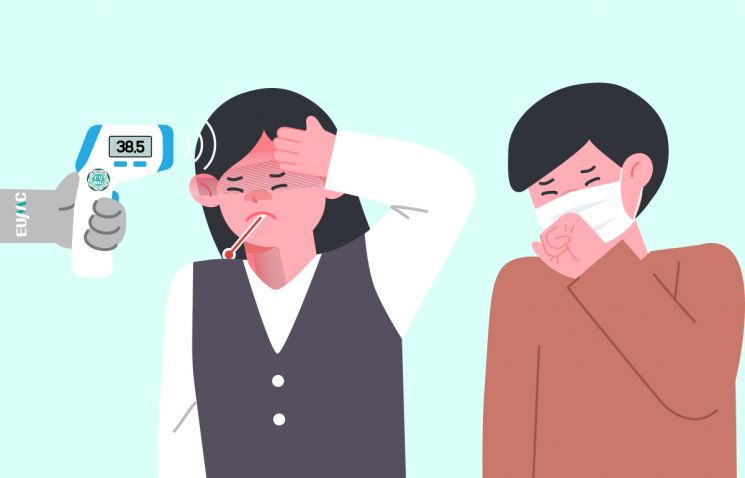
Mycoplasma pneumonia is an acute respiratory infection caused by Mycoplasma pneumoniae. After infection through droplets, there is an incubation period of about 2 to 3 weeks, followed by persistent cough, fever, sore throat, headache, and fatigue. Cough and general weakness can last from 2 to 6 weeks, and in rare cases, extrapulmonary symptoms such as skin erythema, arthritis, meningitis, or encephalitis may accompany the infection.
Unlike typical pneumonia, fever is the main symptom, often leading to misdiagnosis as influenza. If fever does not subside after 2 to 3 days despite taking common cold medicine or antipyretics, immediate hospital visit is necessary. If left untreated, it can progress to severe pneumonia, so prompt testing and treatment are essential. Diagnosis is usually confirmed through chest X-rays and polymerase chain reaction (PCR) testing.
Mycoplasma pneumonia is classified as a Category 4 infectious disease like COVID-19, but it responds well to antibiotic treatment, which can shorten the treatment period if administered appropriately. Macrolide antibiotics are initially prescribed, and if fever persists for more than three days, resistance is suspected.
In such cases, other antibiotics such as tetracyclines or quinolones, which were previously avoided in children, may be used. Due to the concerning spread of Mycoplasma pneumonia, the government recognized these drugs as reimbursable second-line treatments for refractory Mycoplasma pneumonia at the end of last year. However, when prescribing these drugs, hospitals must provide sufficient explanation to patients (or guardians) regarding clinical considerations, concomitant medications, and food precautions, and obtain consent before use.
Dr. Hongjun Lee, director of Gimpo Ijeil Hospital, stated, "While indiscriminate use of antibiotics should be avoided, for pneumonia patients whose symptoms worsen due to antibiotic resistance, using alternative antibiotics or steroids to quickly manage symptoms is more beneficial." He added, "Considering the situation in China where the Mycoplasma pneumonia outbreak lasted until this summer, it is expected that the epidemic may continue through this winter and into next year in Korea."
The Korea Disease Control and Prevention Agency announced, "By March next year, in collaboration with the Pediatric Infectious Diseases Society and others, we plan to establish comprehensive clinical guidelines for Mycoplasma pneumonia that reflect recent changes in diagnosis and treatment patterns after COVID-19, including severity assessment criteria."
© The Asia Business Daily(www.asiae.co.kr). All rights reserved.


















