Criticism of the 'Two-State Theory'... UN General Assembly to Finalize Adoption Next Month
Unanimous Vote Not Achieved, 'Consensus Without Voting'... Questions on Enforceability
North Korea's Struggle Policy: "No-Vote Agreement Blocks Claims of Consensus"
The 'North Korea Human Rights Resolution' condemning North Korea's systematic human rights violations was once again adopted at the United Nations level, but there are concerns that it cannot be fully welcomed. This is because it has been adopted for years without a vote, based on 'customary consensus.' When adopted without either support or opposition, the actual implementation inevitably loses momentum.
The Third Committee of the UN General Assembly held a meeting on the 20th (local time) at the UN Headquarters in New York, USA, and adopted the North Korea Human Rights Resolution without a vote. The adopted resolution is scheduled to be finally adopted at the UN General Assembly plenary session next month.
A 'Hollow' North Korea Human Rights Resolution with Neither Support nor Opposition
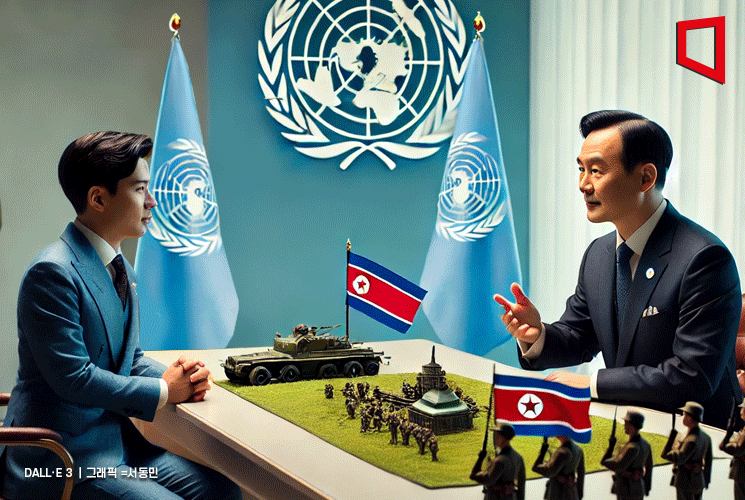
The UN adopts the North Korea Human Rights Resolution annually: in the first half of the year at the Human Rights Council in Geneva, Switzerland, and in the second half at the General Assembly in New York, USA. The resolution was first adopted in 2003 by the UN Commission on Human Rights (the predecessor of the Human Rights Council) and has been adopted for 22 consecutive years this year. Based on the Third Committee-General Assembly standard, it has been 20 years since 2005.
Although the UN-level resolution does not have binding force under international law, it carries political and moral obligations to respect and follow it because it reflects the united demands of the international community. However, since 2016, both the Human Rights Council and the General Assembly have adopted the resolution only by consensus without a vote, which is a limitation.
Consensus is a method of adoption when no country requests a vote, and it differs from unanimity where all cast affirmative votes. If there is neither support nor opposition, the actual implementation inevitably loses momentum. Even during past votes, support was overwhelming, but the South Korean government has not actively pushed for a vote.
This also aligns with the conclusion of 'blocking discussions on North Korean human rights' directed by Chairman Kim Jong-un. In November last year, Ri Il-gyu, former political counselor at the North Korean Embassy in Cuba who defected, revealed this fact at the 'International Dialogue on North Korean Human Rights' held recently in Geneva. The content of the 'struggle policy' issued by the North Korean Ministry of Foreign Affairs to overseas missions for eight years since 2016 was disclosed, which included instructions to block the regularization of human rights discussions.
Regarding the North Korea Human Rights Resolution, it was ordered, "If no proposal for a vote is made, it is customarily adopted without a vote, which effectively blocks enemies from claiming consensus on the resolution," and "Contact the 18 countries that opposed the resolution during the 70th UN General Assembly vote in 2015 to negotiate for them to make statements opposing the adoption of the resolution." The 'no-vote' resolution is interpreted as an attempt to claim it is not an international consensus.
An official from the Ministry of Unification said, "Even if a vote is requested, it seems that the number of countries willing to accept North Korea's (opposition) request is decreasing, so it appears they judged that it is better to deny the resolution itself and adopt it without a vote," and evaluated, "(North Korea) sees that skipping the voting procedure reduces the burden on its allied countries."
Strengthened Wording... Explicit Concern over Kim Jong-un's 'Two-State Theory'
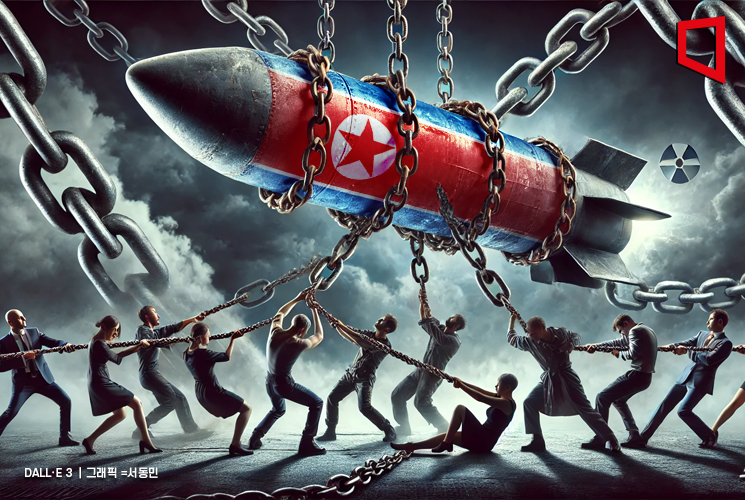
The resolution adopted this time includes some new content that was not included in previous resolutions. It also explicitly states concerns about the 'hostile two-state theory' that Chairman Kim Jong-un has been pushing since the end of last year.
The Third Committee stated, "North Korea announced in January this year that it will no longer pursue unification with the Republic of Korea," and "expressed concern about the negative impact this could have on human rights situations, including the issue of separated families."
In addition, it criticized the so-called 'three major evil laws' of the Kim Jong-un era?the Law on the Rejection of Reactionary Ideology and Culture, the Law on Guaranteeing Youth Education, and the Law on the Protection of Pyongyang Dialect?pointing out that they severely restrict the freedom of thought and conscience of the residents. It repeatedly emphasized the demand to abolish or reform all practices and laws. This is the first time that the resolution has included demands for abolition or reform of both the two-state theory and the three major evil laws.
Furthermore, the Third Committee pointed out that illegal nuclear and missile programs are funded through forced labor, and that the national budget is disproportionately allocated to military expenses, thus failing to adequately protect human rights. It also urged that all abductees from South Korea and Japan be immediately repatriated and requested the President of the UN General Assembly to hold a high-level meeting to hear testimonies from civil society.
An official from the Ministry of Foreign Affairs said, "The government actively participated in the resolution text negotiation process as in previous years to strengthen the text and to ensure that new content suitable for various situations could be reflected."
© The Asia Business Daily(www.asiae.co.kr). All rights reserved.
![Clutching a Stolen Dior Bag, Saying "I Hate Being Poor but Real"... The Grotesque Con of a "Human Knockoff" [Slate]](https://cwcontent.asiae.co.kr/asiaresize/183/2026021902243444107_1771435474.jpg)

















