Gyeonggi Paju City announced on the 21st that whooping cough and Mycoplasma pneumonia are spreading simultaneously this winter, and caution is still needed regarding tsutsugamushi disease, which surged in the fall.
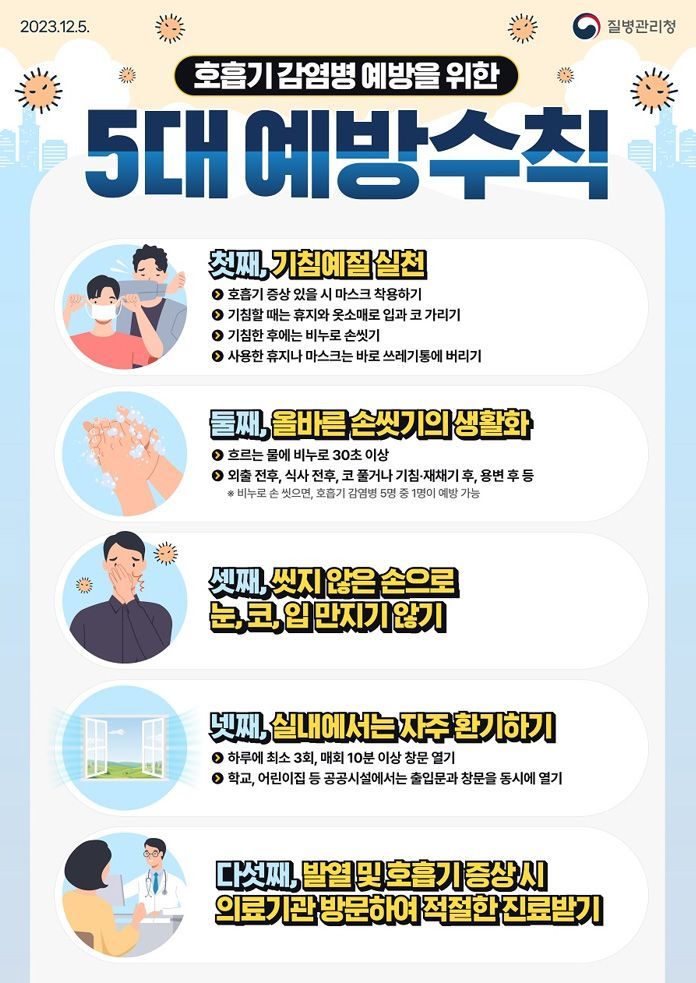
Whooping cough has been reported nationwide with 30,332 cases up to the first week of November this year, and on the 4th, the first death due to whooping cough since statistics began was recorded. In the case of Paju City, there were no patients last year, but this year the number has rapidly increased to 452. Whooping cough initially shows symptoms similar to a cold, but after about two weeks, paroxysmal coughing symptoms appear. Especially in groups with weak immunity, such as infants and young children, it is highly contagious, with one person capable of infecting up to 12 to 17 others, requiring special caution.
Mycoplasma pneumonia, for which an epidemic warning has been issued since June, is known to have a high incidence mainly among children and adolescents aged 5 to 15, and is also called "pre-school and school-age pneumonia."
This disease initially presents symptoms similar to a cold, such as headache, fever, and sore throat, but over time, coughing worsens and is accompanied by a high fever above 38 degrees Celsius. Particularly, Mycoplasma pneumonia has raised concerns about antibiotic resistance, making early diagnosis and prompt treatment important. Delayed diagnosis can lead to complications such as hepatitis or severe pneumonia.
According to the Korea Disease Control and Prevention Agency, the density index of chigger mites, the vector of tsutsugamushi disease, has increased more than threefold in the past three weeks, and the number of patients has surged about eightfold. The larvae of chigger mites that transmit tsutsugamushi disease increase in number from September to November, with more than half of the patients occurring intensively in November. Since there is no preventive vaccine for this disease yet, avoiding contact with mites is recommended as the most effective preventive measure.
Lee Hansang, director of the Paju Public Health Center, said, "This year is a special situation where whooping cough, Mycoplasma pneumonia, and tsutsugamushi disease are spreading simultaneously," adding, "Especially since the number of whooping cough patients in Paju City has surged from zero last year to 452 this year, households with infants and young children must complete vaccinations, and if respiratory symptoms occur, please visit medical institutions immediately."
© The Asia Business Daily(www.asiae.co.kr). All rights reserved.
![From Hostess to Organ Seller to High Society... The Grotesque Scam of a "Human Counterfeit" Shaking the Korean Psyche [Slate]](https://cwcontent.asiae.co.kr/asiaresize/183/2026021902243444107_1771435474.jpg)
















