Samsung Developer Conference Korea 2024 Held on the 21st
Integrated Multimodal Model of Language, Code, and Image
Composed of Three Models: Compact, Balanced, and Supreme
Samsung Electronics has unveiled its second-generation proprietary generative artificial intelligence (AI) model, 'Samsung Gauss2.' Unlike the previous 'Samsung Gauss1,' Samsung Gauss2 is a second-generation version that integrates language, code, and image into a multimodal model capable of processing various data types simultaneously. Samsung plans to maximize consumer-tailored AI functions by applying Gauss2 to various tasks and embedding it in products.
On the 21st, Samsung Electronics held the 'Samsung Developer Conference Korea 2024 (SDC24 Korea)' online and introduced the successor to the generative AI model 'Samsung Gauss1,' which was first unveiled last year.
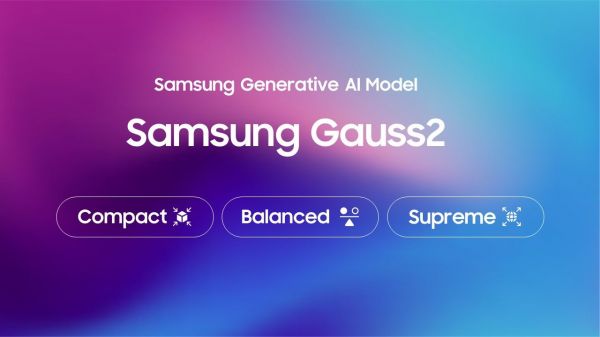
Samsung Gauss2 consists of three models tailored for different service purposes: ▲Compact ▲Balanced ▲Supreme. The 'Compact' model is a small-sized model designed to operate efficiently even in limited computing environments. It maximizes the characteristics of the device in on-device environments to provide optimized performance. The 'Balanced' model is cloud-based, balancing stability and efficiency in terms of performance and speed, delivering balanced performance across various tasks. Lastly, the 'Supreme' model aims for top performance. Based on the 'Balanced' model, it uses an 'expert mixture' technique to significantly reduce computational load during training and inference, enhancing both performance and efficiency.
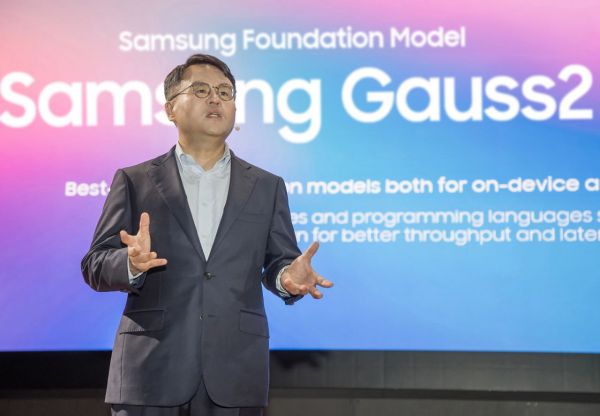 On the 21st, at the 'Samsung Developer Conference Korea 2024,' Lee Ju-hyung, Vice President of Samsung Research at Samsung Electronics, is introducing the 'Samsung Gauss2.' Samsung Electronics
Depending on the model, Samsung Gauss2 supports languages from 9 to 14 countries and various programming languages. Samsung Electronics developed and applied its own large language model (LLM) training stabilization techniques and designed a proprietary 'tokenizer' to maximize efficiency for supported languages. The 'Balanced' and 'Supreme' models provide equal or superior performance compared to leading open-source generative AI models currently available, in key metrics such as generating responses in multiple languages including English and Korean, and coding. The processing speed per hour is 1.5 to 3 times faster, reducing user wait times and enabling more efficient work.
The advantage of proprietary generative AI models lies in their ease of customized development to deliver optimal performance tailored to specific purposes and application areas. In practice, Samsung Gauss leverages this advantage of customized development to support various tasks of employees.
'code.i' is a coding assistant service based on the Samsung Gauss model that supports in-house software developers. Recently, it was upgraded to the Samsung Gauss2 model and is being used by the DX division’s business units and some overseas research centers. Since its service launch in December last year, monthly usage has increased more than fourfold, with about 60% of all software developers in Samsung Electronics’ DX division using it. The Samsung Gauss Portal is an interactive AI service of Samsung Gauss that supports DX division employees in quickly and efficiently handling various office tasks such as document summarization, translation, and email drafting. The service was expanded to overseas subsidiaries in April. Additionally, since August this year, Samsung Electronics has applied 'Samsung Gauss' to call centers to assist counselors by automatically classifying and summarizing consultation content.
Samsung Electronics plans to continuously improve the performance of the code.i service through Samsung Gauss2, enhance natural language question-and-answer capabilities of the Samsung Gauss Portal, and support multimodal functions such as understanding tables and charts and image generation to contribute to increased internal productivity. Under the AI vision of 'AI for All,' Samsung aims to provide AI services across all product lines so that users can enjoy a more convenient and enjoyable daily life. It is also expected to introduce more advanced personalized services by combining with knowledge graph technology in the future.
Meanwhile, Samsung Electronics has held developer events annually since 2014 to communicate and collaborate with software developers, marking its 11th anniversary this year.
Jeon Kyung-hoon, Chief Technology Officer (CTO) of Samsung Electronics’ DX division and head of Samsung Research, said, "Samsung Electronics is focusing on securing the latest software technologies such as artificial intelligence and data analytics to create new lifestyles and improve customers’ lives. We have unveiled 'Samsung Gauss2,' Samsung Electronics’ proprietary generative AI model, explained its enhanced performance, efficiency, and application plans, and through this, we will provide more convenient and differentiated customer experiences by improving work productivity and gradually applying it to products."
© The Asia Business Daily(www.asiae.co.kr). All rights reserved.


















