Lin Zhen, Chinese Foreign Ministry Spokesperson Briefing
Reaffirms Opposition to Nuclear Weapon Use in September
Russian President Vladimir Putin has approved a revised nuclear doctrine that lowers the threshold for the use of nuclear weapons for the first time in over four years, while Russia's ally, the Chinese government, has expressed the need for "calm and restraint."
On the 20th, during a briefing, Chinese Foreign Ministry spokesperson Lin Zhen responded to a question from Russian state media asking, "President Putin has approved a new national policy on nuclear deterrence, and the Russian Ministry of Defense stated that Ukraine used US-made Army Tactical Missile Systems but was intercepted by Russian air defense systems. What is China's position?" Lin said, "We have paid close attention to the relevant reports."
Spokesperson Lin stated, "In the current situation, each party should maintain calm and restraint and lead to de-escalation and reduction of strategic risks through dialogue and negotiation," adding, "What I want to emphasize is that China’s position remains unchanged that each party should lead de-escalation and strive for a political resolution to the Ukraine crisis."
Earlier, in September when Russia announced its intention to revise its nuclear doctrine, the Chinese Foreign Ministry stated, "China has repeatedly declared that nuclear weapons should not be used and nuclear war must not happen. Russian leaders pointed out in January 2022 in the 'Joint Statement on Preventing Nuclear War and Avoiding Arms Races' that there can be no winners in nuclear war and that nuclear war must not occur," expressing a more direct opposition. The tone of the remarks on this occasion appears somewhat softened.
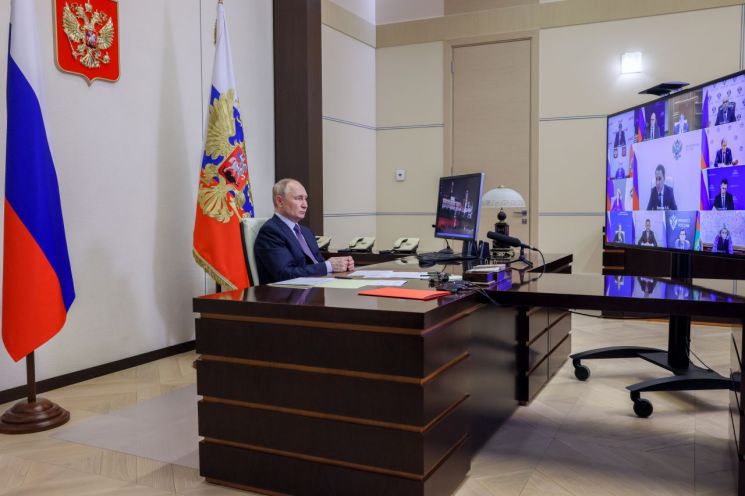
President Putin approved the revision of the nuclear doctrine on the 19th (local time), the first such revision in over four years since June 2020. The reason given was to align with changes in the international situation surrounding Russia and Ukraine.
The revision eased the conditions under which Russia may decide to use nuclear weapons from "when the existence of the state is threatened" to "when there is a significant threat to state sovereignty and territorial integrity." It also included a provision that any attack by a non-nuclear-weapon state supported by a nuclear-weapon state will be considered a joint attack. This appears to be aimed at Western nuclear powers such as the United States, the United Kingdom, and France supporting Ukraine.
© The Asia Business Daily(www.asiae.co.kr). All rights reserved.

















