Expected to Be Reflected in the 2035 National Greenhouse Gas Reduction Target
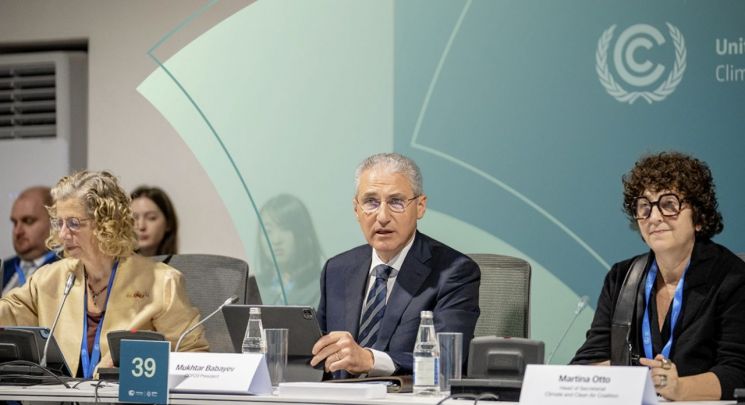
South Korea has joined the COP29 Declaration on Reducing Methane from Organic Waste at the 29th United Nations (IUN) Climate Change Conference of the Parties (COP29) held in Baku, Azerbaijan.
Azerbaijan, the chair country of COP29, launched the declaration to reduce methane from organic waste on the 19th (local time), announcing that more than 30 initial signatory countries have committed to setting sectoral targets to reduce methane emissions from organic waste within their future Nationally Determined Contributions (NDCs).
The declaration was first signed by the chair country Azerbaijan, with South Korea becoming the second signatory. Following them, 35 countries including Japan, Russia, Brazil, Germany, the United States, Canada, Mexico, Austria, Turkey, Norway, North Korea, the United Kingdom, and Malaysia participated. So far, the signatories account for 47% of global methane emissions. Seven of the world's top ten methane-emitting countries from organic waste have joined the declaration.
This declaration supports the implementation of the 2021 Global Methane Pledge (GMP), which was initiated at COP26. The Global Methane Pledge aims to reduce methane emissions by 30% by 2030 compared to 2020 levels. Organic waste is the third largest source of anthropogenic methane emissions after agriculture and fossil fuels.
Countries participating in the pledge must set methane reduction targets from organic waste in their NDCs. In South Korea's case, this is expected to be reflected in the 2035 NDC. Furthermore, when establishing future NDCs, sectoral targets for reducing methane from organic waste must be set, and specific policies and roadmaps should be developed to achieve these goals.
Researcher Sang-A Lee of the Climate Solution Methane Team stated, "Currently, the management of organic waste in South Korea is dispersed across several ministries, with food waste and sewage sludge under the Ministry of Environment, and livestock manure under the Ministry of Agriculture, Food and Rural Affairs." She added, "By participating in this declaration, we hope that organic waste policies will be managed more integratively, and methane emissions and reductions will be more precisely quantified."
© The Asia Business Daily(www.asiae.co.kr). All rights reserved.
![Clutching a Stolen Dior Bag, Saying "I Hate Being Poor but Real"... The Grotesque Con of a "Human Knockoff" [Slate]](https://cwcontent.asiae.co.kr/asiaresize/183/2026021902243444107_1771435474.jpg)
















