Seoul and Gyeonggi Account for 48.9% of the Total
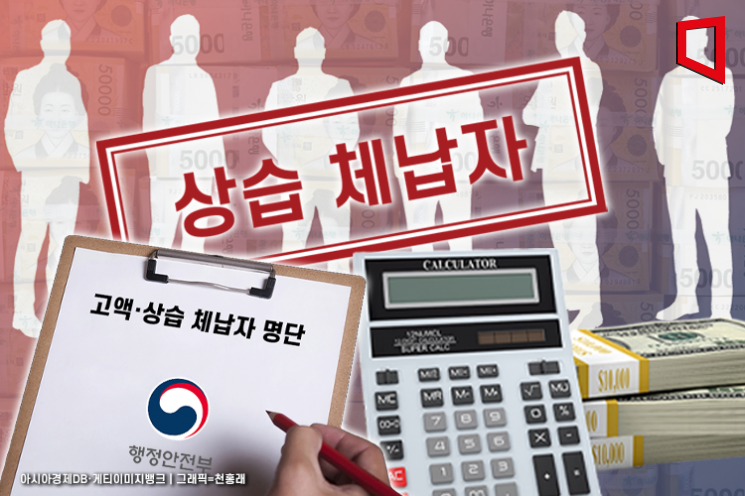
The list of high-amount and habitual defaulters who have failed to pay local taxes and local administrative penalties for more than one year and over 10 million KRW has been disclosed.
On the 20th, the Ministry of the Interior and Safety released the names of 9,099 local tax defaulters and 1,175 local administrative penalty defaulters, totaling 10,274 individuals. The published information includes the defaulters' names, business names (corporate names), ages, occupations, addresses, types of unpaid taxes, and payment deadlines. The number of high-amount and habitual defaulters this year increased by 5.6% compared to last year.
Most local tax defaulters were found to reside in the Seoul metropolitan area. Seoul accounted for 1,800 people, and Gyeonggi for 2,645, making up 48.9% of the total. The main unpaid tax items among the top 10 individual and corporate defaulters were local income tax and acquisition tax.
For local administrative penalties and fines, 678 defaulters from the Seoul metropolitan area, including Seoul, Incheon, and Gyeonggi, accounted for 57.7% of the total. The most common unpaid penalty was the building compliance penalty under the Building Act, with 274 cases.
The Ministry of the Interior and Safety and local governments provide defaulters with an opportunity to explain their cases before disclosing the list or notify them in advance that their names will be published if the arrears are not paid, thereby encouraging payment. Accordingly, among this year’s list disclosure targets, 7,203 local tax defaulters paid approximately 74.8 billion KRW before their names were made public. In the case of local administrative penalties and fines, 1,183 defaulters paid about 22.2 billion KRW.
The Ministry of the Interior and Safety plans to strictly respond to high-amount and habitual defaulters by entrusting the Korea Customs Service to seize and auction overseas imported goods of local tax defaulters, imposing travel bans (for arrears over 30 million KRW), and using the detention system to confine defaulters for a certain period.
© The Asia Business Daily(www.asiae.co.kr). All rights reserved.
![Clutching a Stolen Dior Bag, Saying "I Hate Being Poor but Real"... The Grotesque Con of a "Human Knockoff" [Slate]](https://cwcontent.asiae.co.kr/asiaresize/183/2026021902243444107_1771435474.jpg)

















