Biden Administration's First Description of President-elect Gonzalez
The U.S. administration under Joe Biden has stated that Edmundo Gonzalez, the opposition candidate at the time, is the true winner of the July 28 Venezuelan presidential election, which has been embroiled in allegations of electoral fraud. Locally, there are concerns that the 'two presidents under one roof' situation, which arose after the 2019 election, could be repeated.
U.S. Secretary of State Antony Blinken said on the 19th (local time) on X (formerly Twitter), "The Venezuelan people overwhelmingly made Edmundo Gonzalez the president-elect on July 28," adding, "In a democracy, the will of the voters must be respected." Foreign media reported that this is the first time the U.S. has explicitly recognized Gonzalez as the 'president-elect.'
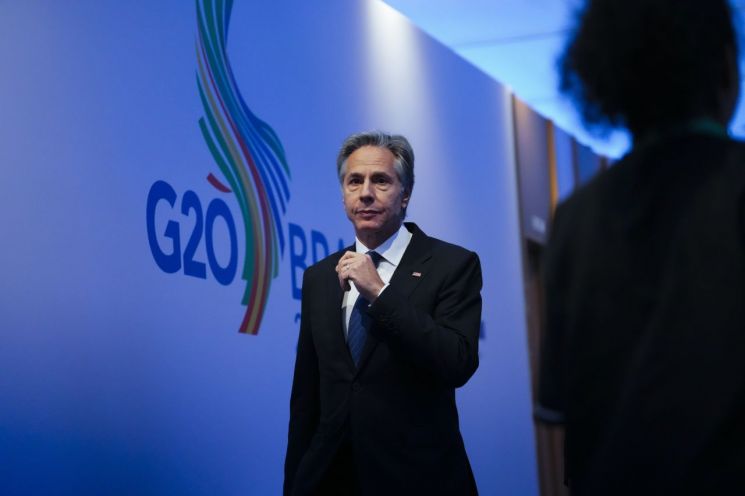
Gonzalez, who fled to Spain to escape arrest threats from the Maduro regime, responded on X that "I am grateful to (the United States) for recognizing the sovereign will of all Venezuelan residents."
Earlier, the Venezuelan National Electoral Council declared President Nicolas Maduro the winner of a third term through two rounds of vote count disclosures. The opposition raised allegations of electoral fraud and released their own tally showing Gonzalez winning with 67% to 30%, but this was not accepted. As a result, protests rejecting the election results intensified locally, leading to casualties.
The international community, including the United States, has also demanded that the Maduro regime fully disclose the vote counting process transparently. Some regional countries, including Argentina, have even accepted Maduro's electoral defeat as a fait accompli.
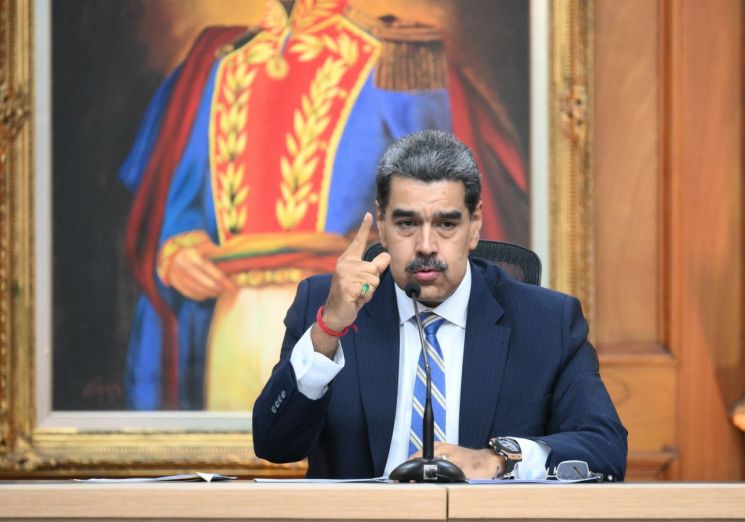
However, it is expected to be difficult to overthrow the 'fortress-like' Maduro regime. Backed by a legislature dominated by the ruling party, Maduro's government wields public authority to detain those protesting alleged electoral fraud, exercising an 'iron fist.'
There is also a possibility that the 'two presidents under one roof' crisis from 2019 could occur again. Previously, Maduro won re-election in 2018 through a 'half election' held without the participation of the opposition, who claimed fraud. At that time, the Venezuelan National Assembly, which was then dominated by the opposition, appointed National Assembly Speaker Juan Guaid? as interim president in January 2019, receiving support from the United States and other Western countries. However, internal divisions weakened the movement, and Guaid? was ultimately forced out in disgrace in 2022.
Meanwhile, earlier this month, President Maduro proposed on a live TV broadcast to Donald Trump, then president-elect of the United States, that "Although the first Trump administration was not good for us, now is a new beginning," suggesting that future bilateral relations develop in a 'win-win' direction. Previously, during his first term, Trump had labeled the Maduro regime as an 'illegitimate government' and tightened financial constraints through sanctions on the oil industry. Maduro's third term is set to begin on January 10 next year.
© The Asia Business Daily(www.asiae.co.kr). All rights reserved.
![Clutching a Stolen Dior Bag, Saying "I Hate Being Poor but Real"... The Grotesque Con of a "Human Knockoff" [Slate]](https://cwcontent.asiae.co.kr/asiaresize/183/2026021902243444107_1771435474.jpg)












