Content Market Rivaling Steel and Semiconductor Industries
Active Content M&A Amid Large Corporation Participation
Amid the booming content industry, major Japanese corporations such as Sony are aggressively engaging in mergers and acquisitions (M&A) of content companies.
On the 20th, Nihon Keizai Shimbun (Nikkei) reported that Japan's Sony has entered negotiations to acquire the content company 'Kadokawa.' Sony plans to invest 1.8 trillion yen (16.1393 trillion KRW) over the next three years related to this acquisition. Previously, Sony also considered acquiring the American media giant Paramount Global, but negotiations reportedly broke down.
Starting as a publishing company, Kadokawa is currently on a successful path with original manga adaptations into animations and game content development. Kadokawa created an animation of the manga 'Saiai no Ko' and aired it on Netflix, garnering significant attention. Thanks to the success of Saiai no Ko, Kadokawa even acquired the video production company 'Dogakobo,' which participated in the animation production, this year, expanding its influence. Additionally, its subsidiary released the game 'Elden Ring,' which has sold over 25 million copies worldwide, gaining global popularity.
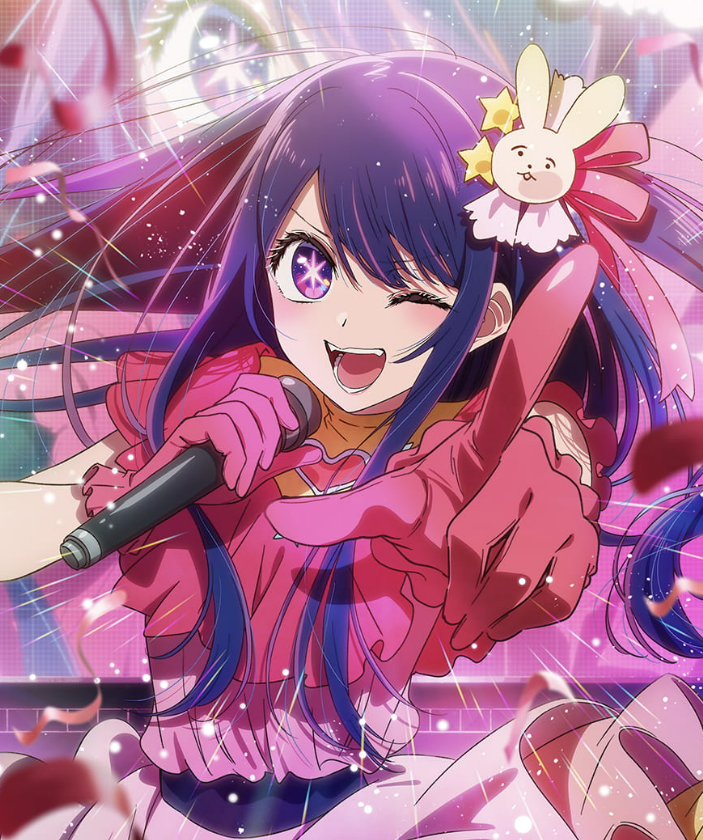
Nikkei analyzed, "Kadokawa is one of Japan's representative companies alongside famous publishers Shueisha and Kodansha. It is especially considered a 'treasure trove' with a high potential for other content utilization, as it holds many popular manga and a light novel (entertaining popular novel) label targeting young audiences."
In Japan, M&A between companies for content has been increasing recently. Japan's largest film distributor Toho announced in May that it acquired 'Science SARU,' which produced the animated film 'Inu-Oh,' and in October of the same year, it announced the acquisition of 'GKIDS,' a company distributing Japanese animations such as Studio Ghibli in the United States.
This phenomenon has occurred despite the Japanese content market booming, due to the sharp rise in content production costs. With production costs soaring, only large corporations can afford them. The industry estimates that developing a blockbuster game takes an average of over four years and costs more than 4 billion yen (359 million KRW). Animation is not much different; producing a three-month TV animation series typically costs several billion yen. Even then, if the work does not succeed, recovering the investment is difficult.
The size of the content market in Japan is estimated at 14 trillion yen (125.9 trillion KRW), and overseas sales in 2022 reached about 4.7 trillion yen (42.2666 trillion KRW), tripling over ten years. Nikkei reported, "This scale rivals Japan's steel industry and approaches that of the semiconductor industry." The Japanese government is actively supporting this sector, aiming to increase sales to 20 trillion yen (179 trillion KRW) by 2033. American Netflix is also gaining overseas attention by producing live-action dramas based on popular manga such as 'One Piece.'
Recently, companies turning their attention to the content industry have begun adopting strategies to secure promising killer content through M&A and diversify their business operations. Nikkei stated, "Companies are seeking to maximize group-level profits through M&A by targeting derivative businesses ranging from movie, game, and animation production to merchandise sales."
© The Asia Business Daily(www.asiae.co.kr). All rights reserved.

















