U.S. Congressional Body Proposes 32 Recommendations
Expansion of AI and Quantum Technology Investments
Strengthening Export Controls on China
Includes Measures to Counter Chinese Dumping Exports
A bipartisan advisory body of the U.S. Congress has recommended establishing a program in the field of artificial intelligence (AI) comparable to the past U.S. nuclear bomb development plan, the 'Manhattan Project,' to counter China's advanced technology, and strengthening export controls against China. This recommendation is based on the assessment that the Chinese Communist Party is disrupting global supply chains and further enhancing its global dominance by providing massive subsidies to domestic companies in advanced industries such as AI, semiconductors, batteries, and robotics.
The U.S.-China Economic and Security Review Commission (USCC) announced 32 recommendations to be implemented to confront China's advanced technology in its annual report submitted to Congress on the 19th (local time). The 43-page recommendations reveal the U.S.'s sense of crisis that the authoritarian-centered technology superiority strategy led by Chinese President Xi Jinping is gaining traction. The USCC stated, "Even if China's economy falters by 2025, the Chinese Communist Party will continue to pursue ambitions to dominate advanced industries," adding, "The U.S. must implement essential measures to respond to this."
'Uncharted Territory' AGI Field, Need to Develop a 'Manhattan Project'-Level Program
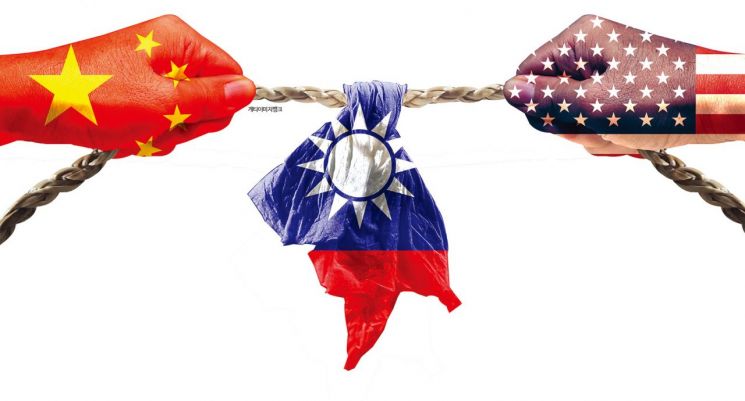
First, the USCC emphasized that Congress should establish a program similar to the 'Manhattan Project' to develop Artificial General Intelligence (AGI) capabilities. AGI refers to high-performance AI that surpasses human intelligence, and the U.S. needs a project-level plan akin to the secret nuclear weapons development during World War II to secure global dominance.
Industry experts predict that AGI will emerge within the next five years through mass production of high-performance AI chips. There is also a sense of urgency in U.S. political circles that China, armed with semiconductor subsidies and vast amounts of training data, could gain an advantage in this field.
Accordingly, the USCC stressed that as a policy to achieve AGI leadership, the administration should be granted broad multi-year contracting authority and provide funding to major AI, cloud, and data center companies. To ensure the effectiveness of such a project, it also recommended that the Secretary of Defense assign the highest priority 'DX' rating?indicating the most urgent and critical status?to defense-related goods and services involved in AI projects.
Proposed Measures to Counter Quantum, Biotechnology, and Other Advanced Technologies
Regarding quantum technology, the USCC also argued that the U.S. government should vertically integrate the development and commercialization of the technology either independently or with key international partners to counter China. Furthermore, the White House Office of Science and Technology Policy should develop a quantum technology supply chain roadmap that coordinates overseas investment, assessments of critical U.S. supply chains, activities of the Committee on Foreign Investment in the United States (CFIUS), and federally funded research activities in consultation with appropriate agencies and experts.
Concerning biotechnology, it requested that Chinese companies and individuals participating in U.S. research and development related to genomes and genetic data obtain government approval. It also recommended expanding the connected vehicle regulations announced last September to include industrial machinery, the Internet of Things (IoT), home appliances, and connected devices produced by Chinese companies.
Congress was also urged to enact legislation banning the import of certain Chinese technologies and services, with humanoid robots and remotely managed energy infrastructure cited as prime examples. Additionally, the USCC recommended that Congress pass laws prohibiting China-based investors from holding board seats in strategic technology sectors. Allowing foreign investors to occupy board seats and observer positions in U.S. technology startups could enable China to acquire sensitive strategic information that could be used to gain a competitive edge through industrial espionage.
Proposed Responses to China's Dumping Exports

Recommendations to control China's dumping exports were also presented. The USCC called for abolishing the duty exemption limit (currently $800) under Section 321 of the Tariff Act for products imported through e-commerce platforms. It also recommended granting authority to forcibly recall products if Chinese companies fail to comply with information requests or voluntary recall requests from the U.S. Consumer Product Safety Commission (CPSC). To prevent tariff evasion and address the increasing complexity of global supply chains, it proposed developing evaluation tools to identify the actual origin of parts, components, and materials included in products entering the U.S.
Measures to counter China's circumvention exports were also included. The USCC stated that specific information must be gathered on China's practice of producing goods in Mexico and Canada to enter the U.S. market to evade tariffs. It also highlighted the need to investigate the price differences between products transported from China through Mexico and Canada and those shipped directly.
The commission further demanded amending relevant laws to require online marketplaces to clearly disclose the manufacturer's name, actual address, and contact information in product listings for Chinese goods. It emphasized that online marketplaces should clearly display warning labels indicating that the items were manufactured in countries that do not comply with U.S. consumer safety standards.
There was also a call for a Treasury Department investigation into whether Hong Kong could be designated as a Primary Money Laundering Concern (PMLC) jurisdiction. The USCC cited that "the Hong Kong Special Administrative Region is increasingly serving as a hub and transshipment center for illegal funds and technology sanctions evasion from Russia, Iran, and North Korea." Jurisdictions designated as PMLCs are only allowed to transact with U.S. financial institutions under highly restricted conditions.
© The Asia Business Daily(www.asiae.co.kr). All rights reserved.


















