Government Education Achievements and Plans
First Step Toward 'National Responsibility Education and Care'
Foundation Established for Regional-University Win-Win Cooperation
Legislation related to 'Yubotonghap' (integration of early childhood education and care) to ensure that infants and toddlers can receive quality education and care anywhere will be actively promoted starting next year. Based on this year's pilot operation, the government has decided to support local governments so that the Regional Innovation-Centered University Support System (RISE) can be implemented in 17 metropolitan cities and provinces.
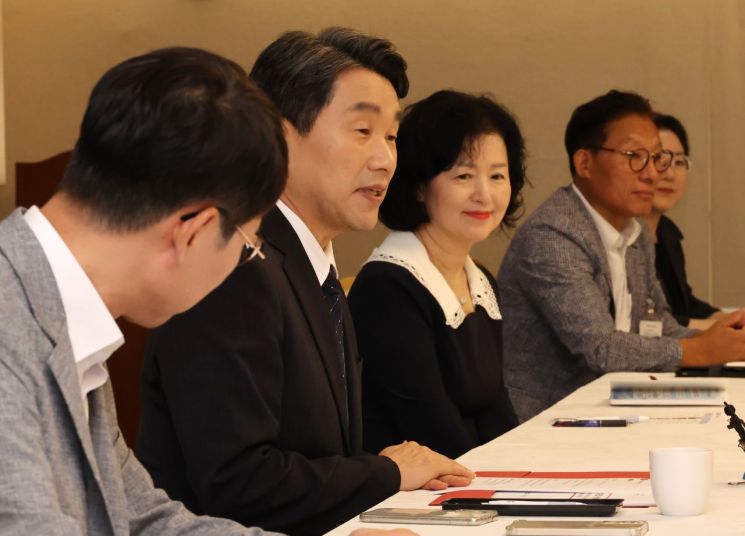
On the 19th, Oh Seok-hwan, Vice Minister of Education, held a briefing at the Government Seoul Office and announced the 'Achievements and Future Plans of the Yoon Seok-yeol Government in the Education Sector,' which included these details.
The Ministry of Education explained that it has been promoting educational reform over the past two years through '3 major areas and 9 tasks.' The detailed tasks include ▲National Responsibility for Education and Care (Yubotonghap, Neulbom School) ▲Bold Changes in the Education Field (Together School, Classroom Revolution, Entrance Exam Reform) ▲Mutual Advancement of Local and National Levels (Education Development Special Zones, Glocal University, University Innovation Ecosystem, Ministry of Education Transformation).
The Ministry of Education designated last year as the 'first year of educational reform' and has been actively promoting educational reform tasks this year. First, it explained that it established a national responsibility system for education and care through Yubotonghap and Neulbom School. Through the revision of the Government Organization Act in December last year, the department supporting daycare centers and kindergartens was unified under the Ministry of Education for the first time in 30 years, and a pilot project for infant and toddler schools is being conducted at about 150 schools. On the 1st of this month, the Yubotonghap portal was launched, allowing kindergarten new student admission and enrollment applications to be processed in one place.
In addition, to address the care gap, a new comprehensive education system called Neulbom School, which integrates and improves existing after-school programs and care classrooms, was officially introduced this year. Currently, Neulbom programs providing more than two hours daily are offered to 293,000 first-grade elementary school students who wish to participate. According to the Ministry of Education, more than 80% of parents participating in Neulbom School reported satisfaction. Next year, the support target for Neulbom School will be expanded to include second-grade elementary school students.
To restore the education field, the Ministry of Education is increasing communication with the field through the 'Together School' communication platform and 'Together Chat Meetings.' It is also promoting a classroom revolution led by teachers through digital-based educational innovation. Teacher competency enhancement programs are being implemented focusing on 10,000 lead teachers and 150,000 general teachers, and 1,046 digital education innovation leading schools and 65 research schools are being operated. AI digital textbooks for mathematics, English, and information subjects for grades 3 and 4 in elementary school, grade 1 in middle school, and grade 1 in high school will have their certification results announced at the end of this month and are scheduled to be introduced in the field in March next year.
The Ministry of Education stated that it has worked to normalize public education by eradicating school violence, protecting teachers' educational activities, and responding to private education cartels. In particular, it emphasized that it opened a private education cartel and corruption reporting center last year and sought to increase trust by excluding killer questions from the mock evaluation starting in September last year.
For mutual growth between regions and universities, the Ministry promoted Education Development Special Zones, the Regional Innovation-Centered University Support System (RISE), and the Glocal University 30 Project.
Next year, the Ministry plans to announce the integrated standards for kindergartens and daycare centers and promote the enactment of the integration law. It will also finalize the RISE system and match at least 20% of local government funds against national subsidies. Additionally, it plans to support the stabilization of newly introduced projects such as AI digital textbooks and the high school credit system in school settings. The Ministry of Education stated, "Since declaring 2023 as the 'first year of educational reform,' we have steadily carried out educational reform tasks based on the foundation we have diligently built," and added, "We will continue to strive to achieve results that all citizens can feel."
© The Asia Business Daily(www.asiae.co.kr). All rights reserved.











