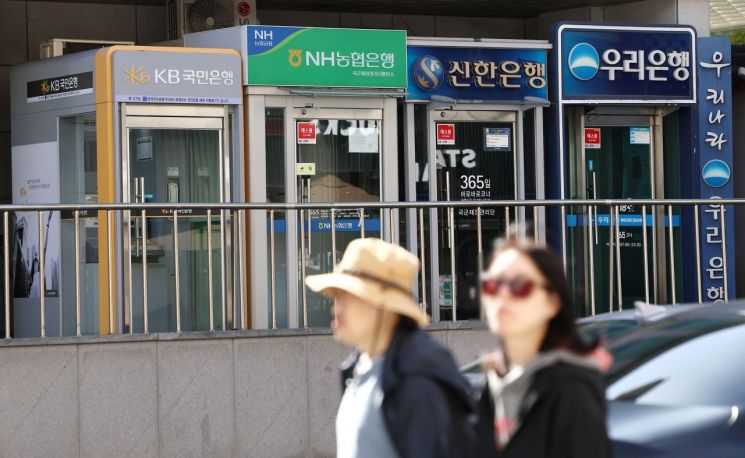
The deposit insurance coverage limit will be raised from 50 million won to 100 million won for the first time in 24 years. As a result, there are expectations that a money move will occur toward savings banks, while commercial banks are also projected to experience little impact. On the contrary, there are complaints that only the deposit insurance premiums will increase, making the inflow effect from raising the deposit protection limit minimal and only increasing costs.
On the 13th, the ruling and opposition parties' policy committees agreed on an amendment to the Deposit Protection Act to raise the deposit protection limit to 100 million won, and it is expected to be processed at the plenary session on the 14th.
The deposit protection system is a system where the Deposit Insurance Corporation pays up to 50 million won on behalf of customers when a financial company goes bankrupt or ceases operations and cannot return the money entrusted by customers. The Deposit Insurance Corporation collects premiums from financial companies to accumulate funds and pays on behalf of the financial company if it becomes insolvent.
The premium rates are 0.08% for banks, 0.15% for financial investment companies, 0.15% for insurance companies, and 0.4% for savings banks.
The current protection limit has remained the same for 24 years since it was raised from 20 million won to 50 million won in 2001. Accordingly, there have been continuous calls to raise the protection limit reflecting inflation rates and other factors.
It is expected that funds will move to savings banks, which offer higher interest rates than commercial banks, if the protection limit is raised. According to the Korea Financial Investment Association, raising the deposit protection limit from 50 million won to 100 million won results in a 40% increase in savings bank deposits. According to the Financial Supervisory Service, savings bank deposits amounted to 116.4631 trillion won as of the first half of this year.
There is also a sense that the perception of deposits entrusted to savings banks being safe will increase if the deposit protection limit is raised.
A savings bank official stated, "The increase in the deposit protection limit is expected to enhance trust in savings banks and improve the negative image caused by past savings bank insolvency incidents."

However, there are complaints that the effect is minimal and only costs will increase due to higher insurance premiums. Since savings banks pay the highest deposit insurance premiums in the financial sector, if the deposit protection limit increase leads to a rise in the insurance rate, the burden of insurance premiums will significantly increase. The savings bank insurance rate rose to 0.4% following the savings bank insolvency crisis in 2011.
Another savings bank official expressed concern, saying, "For savings banks, deposit insurance premiums are a kind of cost, and if costs rise, loan interest rates may also increase." He added, "While financial consumers might calculate interest rates and move from commercial banks to savings banks, currently, if necessary, it is not difficult to secure liquidity through raising deposit interest rates or various special promotions."
Commercial banks also do not have major concerns that customers will leave for savings banks due to the increase in the deposit protection limit. However, concerns about increased cost burdens due to higher insurance premiums are greater.
A commercial bank official said, "In practice, when working at branches, many elderly customers who experienced the savings bank crisis tend to avoid using savings banks even if their interest rates are higher," adding, "Rather, commercial banks operate based on stability and reliability even without a deposit protection limit, so increasing the protection limit only raises the insurance premiums they have to pay, which is not a welcome situation."
Another commercial bank official also said, "Currently, there is not much difference in interest rates on deposits and savings between savings banks and commercial banks, and due to the savings bank PF crisis and other factors, the atmosphere is not good, so it does not seem that many commercial bank customers will leave," adding, "However, the burden of insurance premiums has rather increased."
© The Asia Business Daily(www.asiae.co.kr). All rights reserved.
![Clutching a Stolen Dior Bag, Saying "I Hate Being Poor but Real"... The Grotesque Con of a "Human Knockoff" [Slate]](https://cwcontent.asiae.co.kr/asiaresize/183/2026021902243444107_1771435474.jpg)

















