Report on Concrete Implementation Plans at December Meeting
"Need to Correct the Medical Delivery System"
"Must Establish a Rational Medical Accident Safety Net"
The government announced on the 14th that it discussed the 'Second Medical Care Promotion and Primary Medical Care Strengthening Review Direction for Regional and Essential Medical Care Enhancement' and the 'Medical Accident Safety Net Strengthening Direction,' among other topics.
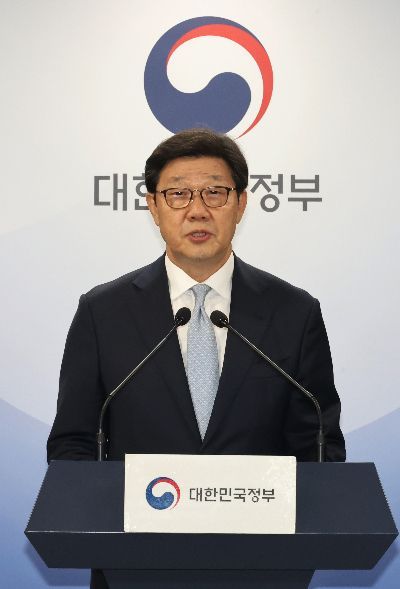
The Presidential Commission on Medical Reform (Uigeaetwi) held its 7th meeting the previous day and discussed these matters. Based on this discussion, the commission plans to report specific implementation plans for reform tasks such as regional and essential medical care enhancement, medical accident safety nets, and improvements to non-reimbursed and actual expense insurance at the 8th meeting scheduled for December.
No Yeonhong, chairman of the Uigeaetwi, said, "It is necessary to strengthen the nurturing and support so that regional secondary hospitals can function properly and to innovate the primary medical care system to correct the medical delivery system." He added, "To address the delayed remedy of patients' rights and the avoidance of essential medical care by medical staff, it is necessary to establish a rational medical accident safety net that alleviates judicial risks related to medical accidents while guaranteeing effective remedies for patients."
Review of Second Medical Care Promotion and Primary Medical Care Strengthening
At the meeting, the direction for promoting second medical care and strengthening primary medical care was discussed to build a win-win ecosystem of linkage and cooperation among medical institutions and to normalize the medical delivery system.
◆ Structural transformation and focused promotion of secondary hospital functions= First, the role of secondary hospitals as the backbone will be redefined comprehensively considering the inclusiveness of various diseases and symptoms, severity, surgical capabilities, and appropriate length of stay. The plan includes fundamentally reforming the compensation system to ensure that excellent secondary hospitals are not disadvantaged in evaluations and rewards compared to tertiary general hospitals by improving existing medical quality evaluations and classification-based additional payment systems.
Measures to nurture specialized and professional hospitals alongside secondary hospitals were also reviewed. It was suggested to reclassify the existing types of specialized hospitals, which are categorized by disease and medical department, according to purpose and function, and to significantly strengthen performance-based rewards.
Opinions on the need to nurture subacute hospitals were also presented. The commission will further discuss nurturing plans such as strengthening support for the performance of subacute functions that specialize in treating patients in the recovery phase after severe surgery.
Considering specialized functions such as infectious diseases and cancer, as well as policy functions including the overall management of national essential medical care policies, governance support measures for secondary public hospitals such as the National Medical Center, National Cancer Center, and local medical centers will also be prepared.
◆ Strengthening integrated and continuous primary medical care functions= Through the primary medical care innovation pilot project, plans to nurture clinics performing integrated and continuous primary medical care functions and improve patient health were discussed. In particular, the project will review the introduction of an innovative payment system based on bundled fees, health improvement, and patient satisfaction performance rewards.
Strengthening regional linkage and cooperation with regional secondary hospitals and local medical associations, as well as preparing education programs for training primary medical care specialists, were also reviewed. The commission will evaluate the performance of existing projects such as primary medical care chronic disease management and primary care physicians for the disabled, and based on this, prepare improvement plans.
◆ Regional-centered, strengthened medical cooperation measures= A system for sharing goals, benefits, information, and personnel among medical institutions will be established to promote linkage and cooperation between hospitals.
A plan was proposed to establish common goals among cooperating institutions and conduct evaluations at the level of the entire cooperative network to gradually expand a system that allows sharing of benefits among institutions. Additionally, the construction of a hub to connect the various EMRs unique to each medical institution and the promotion of various forms of personnel sharing were discussed.
Measures to create a foundation for patients to use medical services centered on regional medical institution networks to alleviate concentration in large metropolitan hospitals were also reviewed. To strengthen the regional medical ecosystem, the regional medical innovation pilot project will be gradually promoted. The pilot project will initially be conducted in 3 to 4 regions with a scale of 50 billion KRW over 3 years per region, and will be developed further based on the results.
Medical Accident Safety Net Strengthening Direction: Alleviating Judicial Risks for Best-Effort Medical Care
Essential medical acts related to critical and emergency patients' lives inherently carry high accident risks due to urgency, fatality, and unpredictability. There was consensus among the members that despite best efforts in treatment, medical accidents lead to civil and criminal lawsuits, which suppress conscientious medical care and cause avoidance of essential medical care.
◆ Strengthening patient rights remedies: Activation of settlement and mediation and expansion of compensation systems= First, institutionalizing explanations and communication about medical accidents so that patients and families can fully understand the circumstances and causes of medical accidents, and promoting legislation to support education and psychological counseling for trauma recovery during communication were reviewed.
A 'Patient Advocate System' to assist patients will be newly established, and amendments to the 'Medical Dispute Mediation Act' will be legislated to innovate the medical dispute mediation system, including improvements to medical appraisal procedures.
To strengthen the compensation system for medical accidents, mandatory liability insurance and mutual aid will be discussed, and the state will support compensation insurance premiums focusing on essential medical departments. Additionally, expanding state compensation for unavoidable medical accidents without medical staff negligence will be reviewed. The current compensation, limited to childbirth accidents, will be expanded to severe pediatric and severe emergency cases, and the compensation limit for unavoidable accidents, which was announced for legislation in October, will be raised from 30 million KRW to over 300 million KRW.
◆ Alleviating investigation risks: Strengthening investigation expertise through the establishment of a 'Medical Accident Deliberation Committee (tentative name)'= There was consensus on establishing a 'Medical Accident Deliberation Committee (tentative name)' from the early stages of investigation to judge whether the medical act was essential and whether there was gross negligence based on medical appraisal results, thereby enhancing the expertise and transparency of medical accident investigations.
The 'Medical Accident Deliberation Committee (tentative name)' will be composed of government, medical community, patient groups, and legal professionals, and will provide expert opinions to ensure that investigations and prosecutions focus on gross negligence.
◆ Need to shift to a prosecution system focused on essential medical care and gross negligence= Opinions were also presented that while criminal protection for essential medical acts should be strengthened, serious negligence requiring investigation and prosecution should be clearly defined and punished.
However, as a prerequisite for alleviating judicial risks related to medical accidents, there was consensus among members on the need to transparently disclose the circumstances of medical accidents and guarantee effective remedies for patients by imposing legal requirements related to proving negligence and causality, such as ▲mandatory liability insurance subscription ▲participation in dispute mediation systems ▲provision of medical records.
It was suggested that the semi-prosecution exemption based on mutual agreement between parties be broadly recognized for all medical acts, but for fatal accidents, considering the severity of the accident, it should be limited to essential medical fields, and the application of special semi-prosecution exemption should be reviewed depending on whether the deceased's will can be represented.
Considering the risks and public interest of essential medical acts, a shift to a prosecution system focused on gross negligence was discussed, prosecuting only in cases where clear breaches of duty of care and significant patient harm are proven.
© The Asia Business Daily(www.asiae.co.kr). All rights reserved.
![Clutching a Stolen Dior Bag, Saying "I Hate Being Poor but Real"... The Grotesque Con of a "Human Knockoff" [Slate]](https://cwcontent.asiae.co.kr/asiaresize/183/2026021902243444107_1771435474.jpg)











