Labor and Management Discuss Workforce Reassignment
Pressure from Low-Cost Chinese Products
Industrial Electric Furnace Price Increase Burden
Hyundai Steel has decided to suspend operations at its steelmaking facility, the Pohang Plant No. 2 in Gyeongbuk, amid a prolonged steel industry downturn and worsening profitability. It appears the company judged that there are limits to continuous production cuts aimed at improving profitability. The sentiment is strong that there is no end in sight to the tunnel of recession.
According to the steel industry on the 14th, Hyundai Steel decided to halt operations at Pohang Plant No. 2 and informed its employees. The plant scheduled for closure has a production capacity of 1 million tons of steelmaking and 700,000 tons of rolling. This accounts for about 3% of Hyundai Steel’s total production volume. The Pohang plant has been operating under a system producing various products in small quantities, but its operating rate reportedly dropped sharply since last year due to the worsening steel market conditions.
Hyundai Steel plans to hold a labor-management council meeting this afternoon to discuss workforce redeployment and the timing of the closure. A company official explained, "We are reviewing the closure for efficient production operation and profitability improvement. Nothing has been finalized yet, and we will proceed through smooth consultation between labor and management."
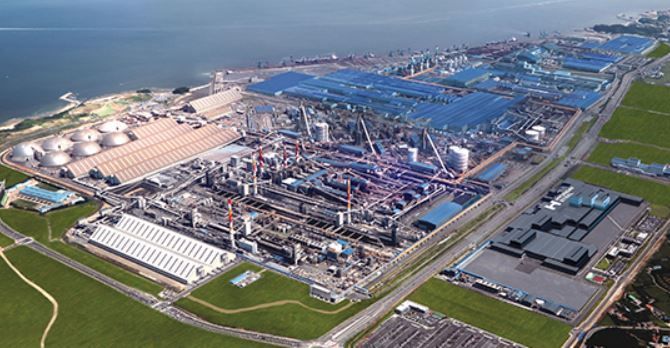
Hyundai Steel decided to close the plant because it judged that escaping the recession is difficult despite continuous production cuts. Earlier, Hyundai Steel conducted a special maintenance for six months on the electric furnace at its Incheon plant starting in February, and the Dangjin Steelworks is also undergoing a long-term regular maintenance from September to mid-December. However, Hyundai Steel’s operating profit in the third quarter plunged 77.4% year-on-year to 51.5 billion KRW, falling below the second quarter’s 98 billion KRW and failing to benefit even from the seasonal peak effect.
Posco, the largest steelmaker in Korea, is also experiencing deteriorating performance and is carrying out restructuring of low-profit businesses and non-core assets at the group level. A representative example is the consideration of selling the loss-making Jiangsu Zhangjiagang Pohang Non-oriented Electrical Steel Plant in China.
The main cause of this performance decline is attributed to the onslaught of low-priced steel products from China. Chinese steelmakers are exporting steel products such as heavy plates at low prices to compensate for reduced domestic demand caused by the real estate market slump, putting pressure on the domestic steel market. According to the Korea International Trade Association, China’s net steel exports last year reached about 34.1 billion USD, approaching the previous peak of 34.3 billion USD in 2014. Hyundai Steel filed an anti-dumping petition with the Ministry of Trade, Industry and Energy’s Trade Commission in July, claiming damage from Chinese companies’ low-priced heavy plate exports.
Additionally, the recent increase of more than 10% in industrial electricity rates has added to the burden. Hyundai Steel, which mainly uses electric furnaces that melt steel scrap to produce steel products, is estimated to incur about 100 billion KRW in additional annual costs due to this electricity rate hike. This amount is equivalent to twice the operating profit of the third quarter.
An industry insider said, "Steelmakers have endured the recession by reducing production so far, but the situation has become more difficult with the rise in electricity rates."
© The Asia Business Daily(www.asiae.co.kr). All rights reserved.

















