Russia demands withdrawal from Kursk in Ukraine
Ukraine demands NATO membership and security guarantees
Short-term impossible to establish ceasefire line and demilitarized zone
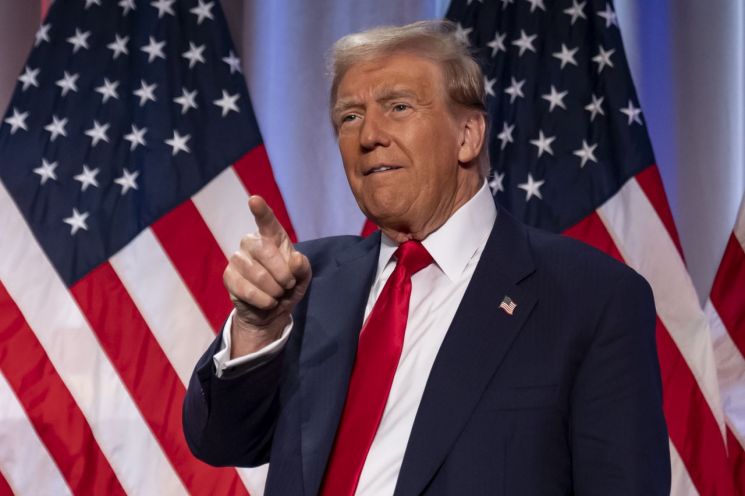
As Donald Trump, the President-elect of the United States, is reportedly preparing to dispatch a special envoy to lead ceasefire negotiations for the Ukraine war, attention is focused on whether a breakthrough in the ceasefire can be achieved. Trump has pledged to bring about a ceasefire before his official inauguration in January next year, indicating his desire for swift ceasefire talks.
However, there is a significant gap in positions between Ukraine and Russia. Russia demands a complete withdrawal of Ukrainian forces occupying the Russian Kursk region, while Ukraine insists on security guarantees such as joining the North Atlantic Treaty Organization (NATO). As a result, negotiations have been slow. It is also expected that determining the ceasefire line and establishing a demilitarized zone?other contentious issues in the ceasefire talks?will take considerable time, making it unlikely that the ceasefire will be achieved before January as Trump promised.
"Trump to Soon Appoint Special Envoy for Ukraine Peace Talks"…Differences Between Russia and Ukraine Persist
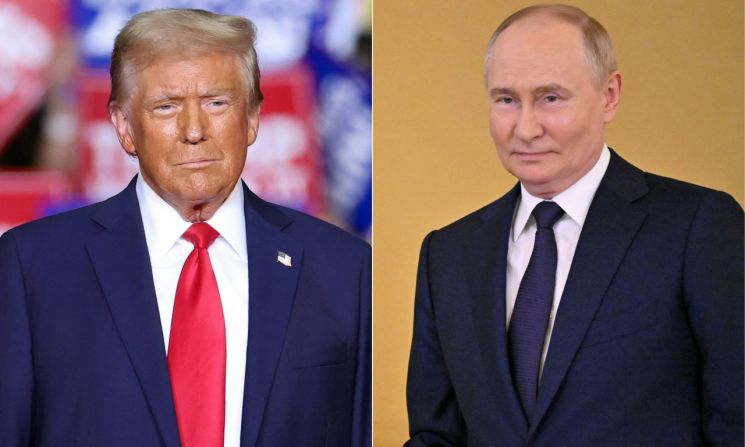
On the 13th (local time), Fox News cited sources saying, "Trump is likely to soon appoint a special envoy to lead negotiations to end the Ukraine war," adding, "The envoy is expected to be a highly credible senior official who will be tasked with finding a breakthrough in the Ukraine war and reaching a peaceful agreement."
Trump had also dispatched a special envoy to Ukraine during his first term in office in 2017. The envoy, Kurt Volker, was assigned to ease military tensions between Russia and Ukraine following Russia's forced annexation of Crimea in 2014 and to prevent a full-scale war. However, he ultimately failed to secure a peaceful agreement and resigned in 2019. After the outbreak of the Ukraine war in 2022, no special envoy was appointed during the Biden administration.
Both inside and outside the United States, even if a special envoy is dispatched, it is expected to be difficult for Trump to lead a Ukraine ceasefire before his inauguration on January 20, as he pledged. Given the significant differences between Ukraine and Russia, it is analyzed that a long time will be needed to reach a consensus.
Konstantin Malofeyev, a close aide to President Vladimir Putin and a Russian media mogul, told The New York Times (NYT), "Even the most moderate political forces in Russia will naturally demand Ukraine’s withdrawal from the Kursk region and territorial concessions to Russia," adding, "It is a difficult situation for the two countries to reach an agreement."
Ukraine’s position is that if territorial concessions are made, they must be accompanied by firm security guarantees such as NATO membership. Roman Kostenko, head of Ukraine’s parliamentary defense and intelligence committee, emphasized, "Territorial issues are important, but the most crucial thing is to secure our safety," adding, "Dialogue with Russia must be based on solid guarantees. Nothing is more important to us than this."
Korean Peninsula-Style Division Expected…Ceasefire Line and Demilitarized Zone Demarcation Also Challenging
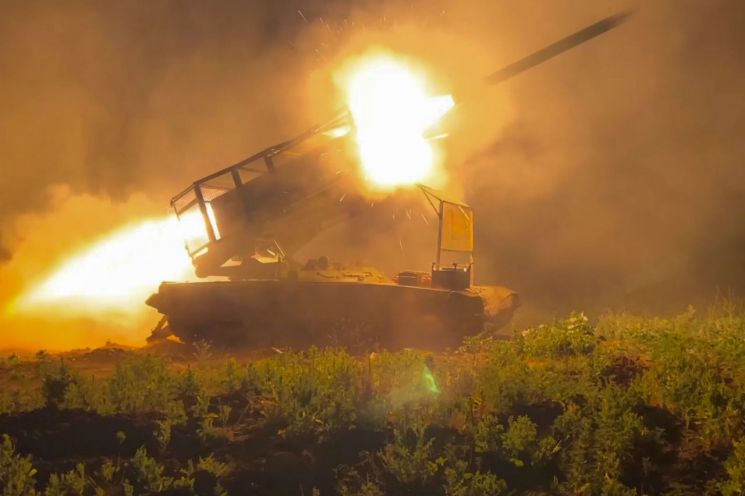
However, the ceasefire plan being considered by the transition team led by Trump does not fully incorporate the demands of both Russia and Ukraine. The Wall Street Journal (WSJ) quoted Trump’s foreign policy advisers saying, "The core of the ceasefire plan proposed by policy advisers to the transition team is to freeze the front lines in the current situation where Russia occupies 20% of Ukraine’s territory, while limiting Ukraine’s NATO membership for more than 20 years," adding, "It is still uncertain what proposals Trump will accept or modify."
Even if the ceasefire plan results in a division of Ukraine’s territory similar to the Korean Peninsula, concerns have been raised that it could take a long time to demarcate the ceasefire line and establish a demilitarized zone. Above all, since the eastern and southern coastal cities of Ukraine currently occupied by Russia are major industrial areas, if a large demilitarized zone is established like on the Korean Peninsula and access is completely restricted, there is a risk that Ukraine’s economy could be excessively weakened.
NYT cited senior Ukrainian officials saying, "The Ukrainian government wants to ensure that the ceasefire line does not harm the country’s post-war economic recovery," adding, "The width of the buffer zone, the demilitarized zone with Russia, could be a very important consideration. If mishandled, Ukraine’s major industrial areas could be left as unstable conflict zones unsuitable for investment for a long time."
© The Asia Business Daily(www.asiae.co.kr). All rights reserved.
![User Who Sold Erroneously Deposited Bitcoins to Repay Debt and Fund Entertainment... What Did the Supreme Court Decide in 2021? [Legal Issue Check]](https://cwcontent.asiae.co.kr/asiaresize/183/2026020910431234020_1770601391.png)

















