Seogu Seochang, Gwangsan Dongsan, Samgeo, Jipyeong Selected
Selection Committee Decides Rankings After On-site Investigation, Review, and Evaluation
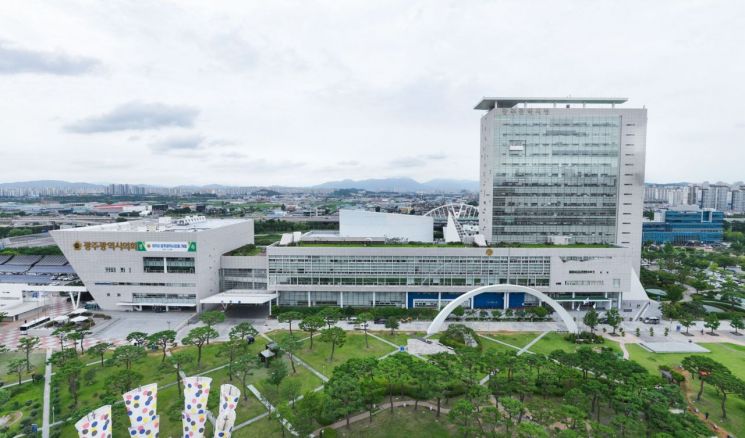
The feasibility study for the site of the Gwangju Resource Recovery Facility has been narrowed down to four locations.
On the 13th, Gwangju City held a meeting of the Site Selection Committee for the Resource Recovery Facility and, after reviewing the six candidate sites submitted by the autonomous districts and conducting document verification, prioritized four sites. The study target areas are Seo-gu Seochang, Gwangsan-gu Dongsan, Samgeo, and Jipyeong. The remaining two sites (Nam-gu Yanggwa and Gwangsan Dongho) were excluded due to unsuitable conditions.
The application requirements for the eco-friendly resource recovery facility mandate obtaining consent from more than 50% of the household heads registered as residents actually living within 300 meters of the site boundary (with at least 60% agreeing to sale). Additionally, site conditions exclude areas classified as Grade 1 or 2 in the Greenbelt (GB) evaluation and Grade 1 in the Ecological Natural Map. After reviewing compliance with these conditions, the Site Selection Committee identified two sites as restricted for waste treatment facility installation and excluded them from consideration.
The feasibility study plan for the four candidate sites will be announced on the 15th in the Gwangju City Gazette, the official website, and daily newspapers in accordance with the Waste Facility Promotion Act. The Site Selection Committee will finalize the ranking of the candidate sites after on-site visits and evaluation procedures. The study process and results will be publicly disclosed for citizen review, and local residents' opinions will also be collected.
The city is preparing a plan to promote a resource recovery facility (incineration) capable of processing 650 tons per day in anticipation of the ban on direct landfill of combustible household waste by 2030, and is currently proceeding with the site selection process.
Jung Mi-kyung, head of the Resource Circulation Division of Gwangju City, stated, “In response to the 2030 ban on direct landfill of combustible household waste, Gwangju, among metropolitan cities without incineration facilities, must urgently prepare countermeasures,” adding, “We will strive to find ways to increase resident acceptance as a symbol of eco-friendliness and carbon neutrality.”
Meanwhile, Gwangju City plans to decide and announce the final site after conducting a strategic environmental impact assessment once the candidate site is selected.
© The Asia Business Daily(www.asiae.co.kr). All rights reserved.

![Clutching a Stolen Dior Bag, Saying "I Hate Being Poor but Real"... The Grotesque Con of a "Human Knockoff" [Slate]](https://cwcontent.asiae.co.kr/asiaresize/183/2026021902243444107_1771435474.jpg)















