Loretta Mester, Former FOMC Member
Concerns Over Tariff-Induced Inflation... Expected Slowdown in Monetary Easing Pace
With the inauguration of Donald Trump's second administration, which has forecasted a 'tariff bomb,' there are expectations that the pace of interest rate cuts by the U.S. Federal Reserve (Fed) will slow down. It is anticipated that Trump's tariff hike promises will cause inflation, prompting the Fed to adjust the speed of the monetary easing cycle it began last September.
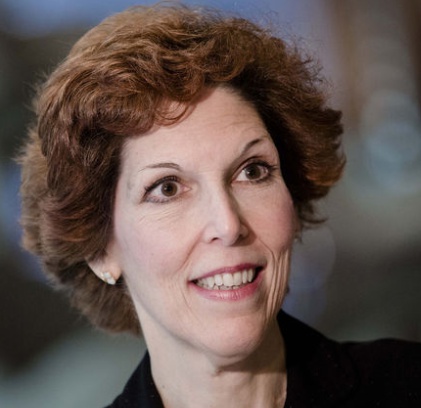 Loretta Mester, former President of the Cleveland Federal Reserve Bank
On the 12th (local time), Loretta Mester, former president of the Cleveland Federal Reserve Bank, participated as a panelist at the annual UBS Europe Conference held in London, UK, stating, "The number of rate cuts next year will not be as many as expected last September," and added, "In my view, the market (which has lowered its rate cut expectations) is correct."
Earlier, after the Federal Open Market Committee (FOMC) regular meeting in September, the Fed released a dot plot forecasting four rate cuts of 25 basis points (1bp=0.01 percentage points) each by 2025, but there are now expectations that the number of cuts next year will be fewer. Mester said, "The pace of rate cuts next year will be influenced by fiscal policy," and she expects fewer than four cuts as the market anticipates.
In fact, after Trump's victory in the presidential election, the market has reduced its expectations for rate cuts next year, causing U.S. Treasury yields to rise. As of 3:10 p.m. Eastern Time on the day, the 10-year U.S. Treasury yield, a global bond yield benchmark, stood at 4.44%, and the 2-year U.S. Treasury yield, sensitive to monetary policy, was around 4.34%. These are increases compared to the day before the election on the 4th (10-year at 4.28%, 2-year at 4.16%).
The background to the expected high interest rates following the start of Trump's second term includes his promised tariff hikes and tax cuts such as reductions in income and corporate taxes. Trump has announced a universal tariff of 10-20% on all countries and a 60% tariff on China. Such high tariffs are expected to raise the prices of imported goods and stimulate inflation. This could make the Fed hesitant to lower interest rates. Additionally, the Trump administration's top priority to ban illegal immigration is expected to cause labor market supply shortages and wage increases, further fueling inflation. The tax cuts promised by Trump are also likely to lead to increased federal budget deficits and higher issuance yields due to increased government bond issuance, which could stimulate market interest rates.
Global credit rating agency Moody's predicted before the election that if Trump won and the Republican Party controlled Congress, U.S. inflation would rise from 3% in 2024 to 3.6% in 2025. It also foresaw the possibility of a recession in mid-2025 if the Fed hesitates to cut rates due to rising inflation. According to this scenario, Trump won the election decisively, and the Republicans are on the verge of securing the majority in the House following their control of the Senate.
Former President Mester expects that detailed economic forecasts related to the fiscal policies of Trump's second administration will not be available until early next year. She said, "It's not just about tariffs," adding, "We need to examine whether there will be changes in the U.S. economic outlook across various areas such as immigration, taxes, and spending."
© The Asia Business Daily(www.asiae.co.kr). All rights reserved.

![Clutching a Stolen Dior Bag, Saying "I Hate Being Poor but Real"... The Grotesque Con of a "Human Knockoff" [Slate]](https://cwcontent.asiae.co.kr/asiaresize/183/2026021902243444107_1771435474.jpg)














