Establishment of Seongdong-type On-site Action Manual for Rapid and Systematic Response to Irregular Crowds at Non-venue Performances...Setting Focused Inspection Items, Requesting Event Suspension Based on Crowd Density, Joint Enforcement with Seongdong Police Station...First Local Government to Implement Pre-safety Management by Sharing Security Guard Deployment Reports with Seongdong Police, Recognized as Best Practice by Ministry of the Interior and Safety for Nationwide Local Governments and Police Stations
Seongdong-gu, Seoul (Mayor Jung Won-oh) announced that it has established the "Action Manual for On-Site Response to Accidents at Stadiums and Performance Venues" and launched a full-scale step-by-step response.
The manual includes crisis management for performances held outside of traditional performance venues, a first nationwide.
Seongsu-dong, known as a hot place with various attractions such as culture, arts, and food, hosts numerous luxury brand stores and large-scale pop-up events frequently, which raises safety concerns due to the potential for large crowds gathering at once.
According to Seoul Metro, the average daily number of passengers boarding and alighting at Seongsu Station during rush hour increased more than twofold over ten years: 8,786 in 2014, 11,820 in 2020, and 18,252 in 2024.
In response, the district prepared a comprehensive crowd control reinforcement plan last September, including ▲integrated crowd information management ▲strengthened triple patrol and monitoring ▲crowd management guidance ▲firm measures against crowd congestion accidents.
For small-scale events with over 500 attendees, the district office, local community centers, and police stations jointly manage crowd control without exception. For gatherings of over 1,000 people, joint inspections with the fire station, constant patrols by crowd management personnel, focused monitoring during weekend day and night as well as weekday nights, and cooperation with the police to halt events in case of danger are conducted to prevent safety accidents in advance.
In particular, the district thoroughly manages crowds by sharing security service report information received from the Seongdong Police Station. According to the Security Services Act, events attended by celebrities must deploy multiple security personnel to prevent accidents caused by congestion and report this to the relevant police station.
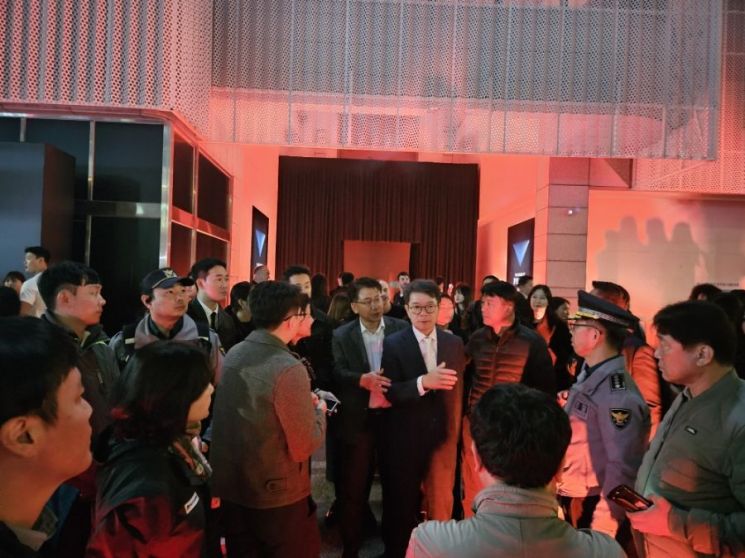
Inspired by this, the district requested the Seongdong Police Station to share related report information and, for the first time among local governments nationwide, analyzes risk by identifying crowd information such as attendees and event scale, and conducts pre-inspections to enhance the effectiveness of safety measures. The Ministry of the Interior and Safety has also disseminated the cooperation case between the district and Seongdong Police Station as a model example of a "prevention-centered crowd accident safety management system" to local governments and police stations nationwide.
Furthermore, to respond to new types of crowd congestion, the district newly prepared a crisis management manual for performance venues based on its prior proactive safety management experience. Performances held outside of official venues are not subject to facility standards under the Building Act or Fire Services Act, creating potential safety blind spots.
To fill these institutional gaps, the district became the first nationwide to systematize disaster response for performances outside of official venues. Based on a review of risk occurrence cases, it established focused inspection items such as installing external crowd control lines, securing emergency evacuation routes, separating viewing areas, and properly managing the number of spectators.
In particular, depending on the crowd density risk level, the response system clearly defines measures such as requesting event organizers to suspend external events like photo calls or voluntarily end early, and jointly enforcing forced suspension with the Seongdong Police Station. Additionally, a handbook containing key points such as step-by-step response actions, roles of related departments, and contact networks was separately produced to enhance usability in urgent situations.
Alongside this, the district is promoting various policies for safety management in the Seongsu-dong area, including operating the Seongdong-style pedestrian safety street on Yeonmujang-gil, relocating the crosswalk in front of Seongsu Station Exit 3, operating a smart crowd management system, and running the "Seongsu Station Live" YouTube channel that broadcasts real-time crowd status.
Jung Won-oh, Mayor of Seongdong-gu, stated, “Seongdong-gu has established a crisis management manual capable of responding to crowd congestion situations outside of performance venues to ensure no safety blind spots occur. Based on our prior experience of proactively responding to crowd congestion, we will respond quickly and systematically to new types of risk situations to create a safe city where all residents can feel secure.”
© The Asia Business Daily(www.asiae.co.kr). All rights reserved.

















