Shigeru Ishiba, the president of Japan's ruling Liberal Democratic Party, was re-elected as Prime Minister on the 11th.
On the same day, Prime Minister Ishiba secured first place in the prime ministerial election held during the special Diet sessions of both the House of Representatives (lower house) and the House of Councillors (upper house), returning to the office of Prime Minister.
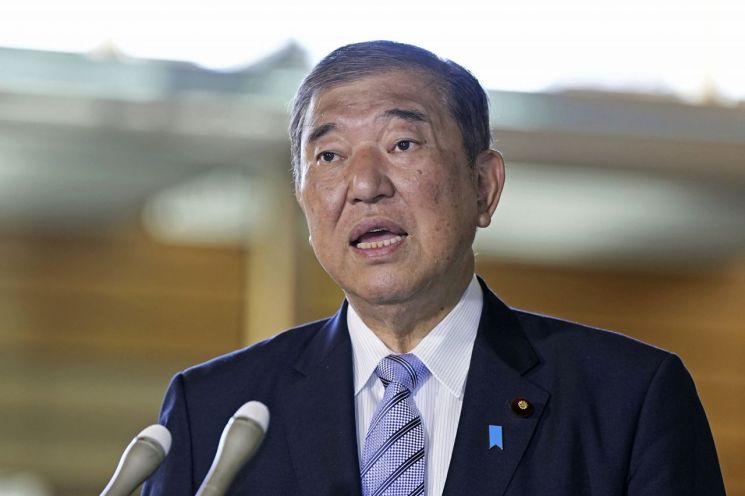
In the runoff vote, Prime Minister Ishiba won 221 out of 465 total votes, defeating Representative Noda, who received 160 votes. The runoff vote in the House of Representatives was held for the first time in 30 years since 1994.
In the initial vote, Ishiba received 221 votes out of 465, while Representative Noda obtained 151 votes. As no candidate secured a majority, a runoff vote was conducted.
There were 80 invalid votes in the runoff. Any ballots with names other than Prime Minister Ishiba and Representative Noda were considered invalid. The second opposition party, Nippon Ishin no Kai, and the third opposition party, the Democratic Party for the People, cast their votes for their respective party leaders, just as in the first round. This is interpreted as tacit approval of Prime Minister Ishiba's reappointment.
Separately, in the prime ministerial election held by the House of Councillors (upper house), Ishiba was re-elected as Prime Minister with 142 out of 239 total votes.
Prime Minister Ishiba took office as the 102nd Prime Minister on the 1st of last month. With his re-election on this day, he will launch the second Ishiba Cabinet as the 103rd Prime Minister.
The first Ishiba Cabinet resigned en masse during a provisional cabinet meeting on the morning of the same day. With Ishiba's re-election, the second Ishiba Cabinet is expected to be formed, retaining key ministers.
© The Asia Business Daily(www.asiae.co.kr). All rights reserved.

















