Economic and Fiscal Performance Review and Future Plans Announcement
Government: "Establishing Market Economy and Sound Fiscal Policy"
Foreign Exchange Market Trading Volume Up 13% from July to October
Additional Regional Revitalization Investment Fund to be Created Next Year
Managing Project Outcomes to Promote Interdepartmental Collaboration
Supply Chain Stability Plan Developed for Economic Security
The Yoon Suk-yeol administration, having reached the midpoint of its term, announced plans to expand investments in regional revitalization. The funds allocated next year will increase by 300 billion KRW, and a mega project aimed at restructuring the regional economic ecosystem will be promoted. Additionally, to activate private investment, related laws will be amended, and support will be provided for projects such as the expansion of the Seobu Line and the Pyeongtaek-Siheung Expressway. A tailored support plan for small business owners will also be reviewed within the year to accelerate domestic demand recovery.
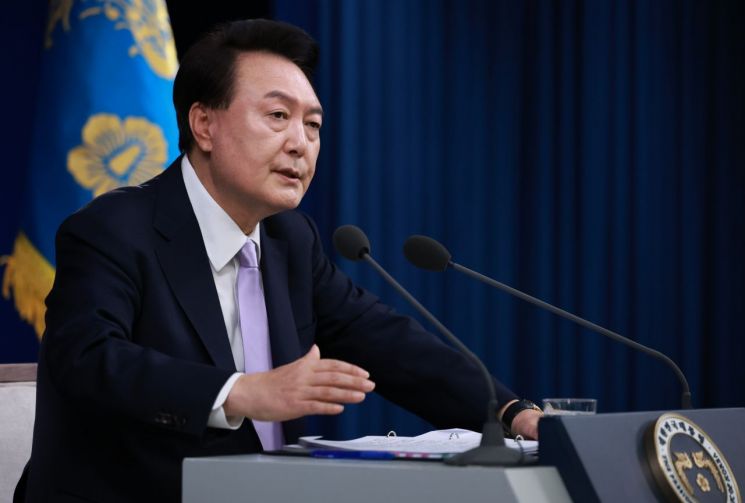
Prices Decrease and Exports Increase... Livelihood Benefits Raised to Record High
On the 11th, the government reviewed the economic and fiscal achievements over the past two and a half years since the launch of the Yoon Suk-yeol administration and announced future plans. The government emphasized, "From the outset, we transitioned to an emergency economic system and pursued bold and proactive policy responses," adding, "We have focused on establishing a market economy and sound fiscal discipline, and shifting the framework of economic management to be private sector-centered."
First, it self-assessed that efforts were made to manage the macroeconomy stably and minimize the impact of the global complex crisis. Despite the ongoing global high inflation trend, focusing on managing it resulted in consumer prices, which had risen 6.3% year-on-year in July 2022, falling by 5 percentage points to 1.3% last month. Furthermore, based on cooperation between macroeconomic and financial authorities, market stabilization measures were implemented, leading to the early stabilization of the corporate bond and short-term funding markets.
Exports recorded the highest growth rate among the top 10 global exporting countries in the first half of the year. While South Korea’s exports increased by 9.1% year-on-year in the first half, major countries such as China (3.8%), the United States (2.3%), Germany (-1.5%), and Japan (-3.6%) showed relatively weak performance. Last year, per capita national income surpassed Japan for the first time in history, and this year growth beyond potential levels is also expected.
The government focused on reducing the household debt ratio while enhancing economic fundamentals and creditworthiness, achieving a decline in 2022 for the first time in 18 years. Efforts were also made to improve fiscal sustainability by enforcing fiscal rules and reducing the increase in the national debt ratio. Foreign Direct Investment (FDI) has been breaking records from 2022 through the third quarter of this year. Overseas evaluations, including inclusion in the World Government Bond Index (WGBI), have been positive.
The government shifted to a private sector-centered economic management approach while creating a corporate environment that meets global standards. Killer regulations such as industrial complex location restrictions were abolished, and unreasonable economic penalty regulations were improved. Additionally, through active economic diplomacy, 447 Memoranda of Understanding (MOUs) were signed, attracting exports, orders, and investments worth 97 billion USD.
While strengthening welfare for the vulnerable, the government also raised livelihood benefits to a record high average annual increase over the recent three years (2023?2025). Livelihood benefits, which were 18.44 million KRW (for a family of four) in 2022, will be expanded to 23.42 million KRW next year. This represents an average annual increase of 1.66 million KRW over three years, which is three times the average increase of 470,000 KRW during the previous administration’s five years. The government also emphasized efforts toward fundamental structural reforms by promoting the four major reforms (pension, labor, education, and healthcare).
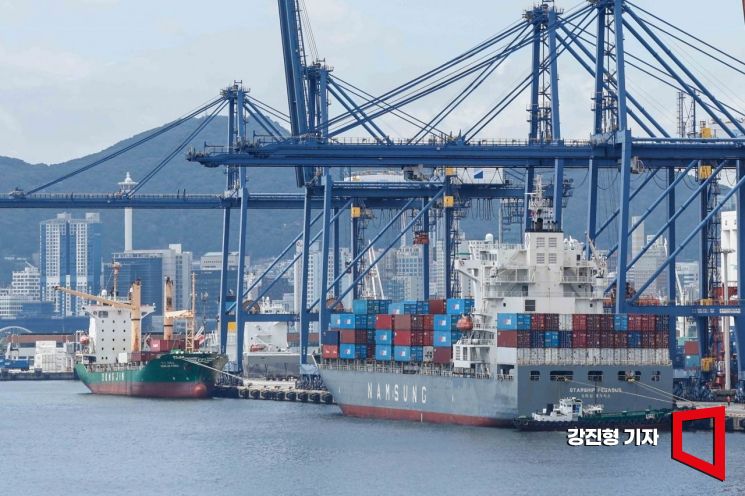
Extended Foreign Exchange Market Hours Stabilize... Supply Chain Stabilization Plan Also Announced
The government stated, "We will continue to improve people’s livelihoods and the perceived economy, manage risks such as real estate and household debt, and respond to external uncertainties such as international situations," adding, "Policy efforts will focus on enhancing growth potential and sustainability through structural reforms."
To enhance fiscal sustainability, the government plans to gradually improve the managed fiscal balance to within -3% after next year and manage the national debt ratio to within 50% during the term. It will also raise the eligibility criteria for livelihood benefits for low-income groups to 35% of the median income and continue to increase fiscal investment to stabilize the lives of vulnerable groups by identifying and supporting youth who have given up job seeking.
In the process of producing collaborative outcomes that the public can feel, execution management will be strengthened through fiscal execution inspection meetings and linked with performance management of multi-ministerial collaborative projects. After a pilot introduction this year, performance management of multi-ministerial collaborative projects will be expanded from next year in connection with 16 collaborative budget projects. To accelerate domestic demand recovery, additional tailored support plans for small business owners will be considered within the year.
The government will discover various types of large-scale projects to expand the regional revitalization investment fund. The investment period for the mother fund (300 billion KRW) will be shortened from two years to one year, and additional projects will be selected by the end of the year. Furthermore, an additional 300 billion KRW will be raised for the mother fund next year to support local governments’ commitment to regional revitalization. In the mid to long term, mega projects will be promoted to restructure the entire regional economic ecosystem through the creation of industry-academia-research clusters and urban restructuring.
In the process of activating private investment, amendments to the Private Investment Act and its enforcement decree will be prepared. The 'KB Balhae Infrastructure Fund' will be converted into a public offering fund, and the Private Investment Project Deliberation Committee will be held to support project promotion. The 'Seobu Line Implementation Agreement,' reflecting special provisions on construction costs, and the 'Pyeongtaek-Siheung Expressway Expansion Third-Party Proposal Announcement' for expanding the currently operating private investment road will be submitted as agenda items to the Private Investment Committee after review by the Korea Development Institute (KDI).
In the international arena, efforts will continue to improve the foreign exchange market structure. The government extended foreign exchange market opening hours and allowed foreign financial institutions to participate in the domestic foreign exchange market, resulting in a 13.1% increase in average daily foreign exchange market trading volume (11.58 billion USD) from July to October compared to the same period last year. Next month, plans will be made to secure liquidity for stable extended hours.
Amid increasing domestic and international economic uncertainties, a 'Basic Plan for Supply Chain Stabilization' to expand economic security will also be announced within the year. Based on the 'Supply Chain Stabilization Promotion Strategy' announced in June, the plan will concretize tasks raised by related ministries and the private sector. It is expected to include stabilization of supply and demand for economic security items (public stockpiling, expansion of domestic production base, etc.), infrastructure reinforcement, and establishment of strategic external strategies.
© The Asia Business Daily(www.asiae.co.kr). All rights reserved.


















