Opposition and Residents Absent in 'Half-Formed' Start
Medical Association Led by Single President Shifts to 'Emergency Committee System'
The 'Ruling and Opposition Parties and Government-Medical Council Consultative Body,' a discussion body aimed at resolving conflicts between the government and the medical community, will be launched on the 11th. Although it will start as a half-hearted consultative body due to the absence of opposition parties and many medical organizations, there is speculation that residents and medical students may join the negotiation table in solidarity with the new leadership of the Korean Medical Association (KMA) following the impeachment of the former KMA president.
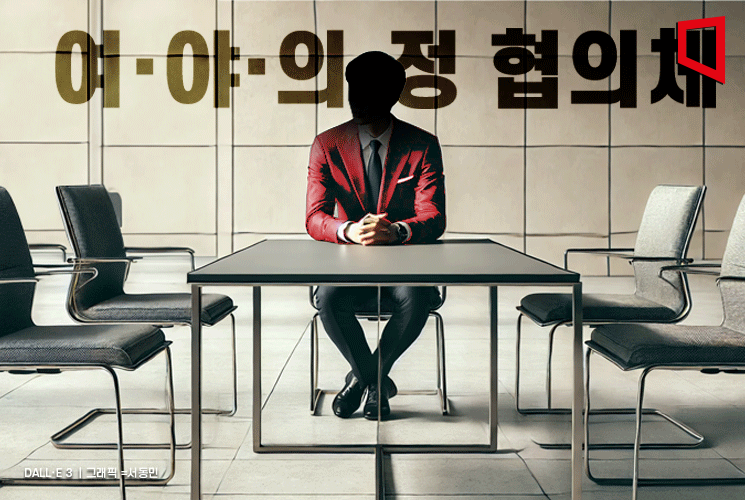
According to the government and the medical community, the consultative body to discuss medical school admission quotas and resolve the medical service gap will meet face-to-face for the first time at 8 a.m. at the National Assembly on the same day.
From the ruling party, lawmakers Lee Man-hee, Kim Seong-won, and Han Ji-ah will attend, while from the government, Prime Minister Han Duck-soo, Minister of Health and Welfare Cho Kyu-hong, Deputy Prime Minister for Social Affairs and Minister of Education Lee Ju-ho, and Presidential Office Policy Chief Sung Tae-yoon will participate. Following President Yoon Seok-yeol's directive, the participation of top government officials such as the Prime Minister and Deputy Prime Minister in the consultative body demonstrates a commitment to swift decision-making and achieving concrete results within a short period. From the medical community, two organizations will participate: the Korean Academy of Medical Sciences, an academic medical society, and the Korean Association of Medical Colleges (KAMC), composed of medical school deans.
However, the Democratic Party of Korea has refused to participate in the consultative body without the involvement of major medical organizations, so the consultative body will initially launch in the form of 'Ruling Party-Medical Community-Government.' The Korean Intern Resident Association (KIRA), a key group representing residents who hold the key to resolving the situation, maintains its stance that it will not participate unless the increase in medical school admissions for the 2025 academic year is reconsidered, and medical school professors are also skeptical about participating in the consultative body.
Kim Sang-hoon, Policy Committee Chair of the People Power Party, said, "The first meeting on the 11th will be a get-acquainted session without setting an agenda," adding, "We will convey the hope that the Democratic Party will participate until the very end."
The impeachment of KMA President Lim Hyun-taek the day before introduced a variable to the medical community's participation in the consultative body. At the KMA's extraordinary delegate meeting held on the 10th, a no-confidence motion against President Lim was passed with 170 votes in favor, 50 against, and 4 abstentions. The KMA delegates decided to switch the association to an emergency response committee system until a new president is elected. The medical community is evaluating that the direction of resolving the situation may depend on what alternatives the government proposes during this period.
A major factor behind President Lim's premature resignation was criticism that he did not adequately reflect the views of 'future doctors,' such as residents and medical students. Kim Gyo-woong, Chair of the KMA Delegates, said, "Once the emergency response committee and the new executive team are formed, we expect residents to actively participate and express their opinions," adding, "We will discuss with them and decide on matters such as whether to participate in the consultative body."
© The Asia Business Daily(www.asiae.co.kr). All rights reserved.

















