Exchange Rate Rise → Raw Material Price Increase → Construction Cost Increase Concerns
Ukraine Reconstruction Benefits Expected but Middle East Orders Likely to Decline
With former President Trump winning the U.S. presidential election, the rise in exchange rates is expected to lead to an increase in domestic construction costs. In the overseas construction sector, while benefiting from the Ukraine reconstruction projects, orders from the Middle East are expected to shrink.
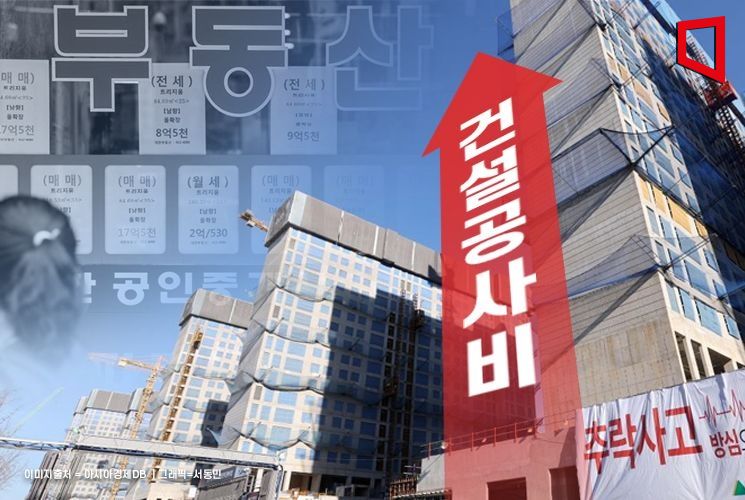
In a trend briefing published on the 9th by the Construction Industry Research Institute, researcher Eom Geun-yong stated, "The rise in exchange rates in the domestic construction market will lead to an increase in raw material prices, causing construction costs to rise," adding, "This will affect overall domestic inflation, delaying the timing of interest rate cuts and consequently postponing factors that could reduce construction costs."
Since the U.S. election results were announced, the exchange rate rose by 13.7 won as of the 7th and continued its upward trend, soaring to the 1,400 won level during nighttime trading on the 9th. As the exchange rate rises, the cost of some imported items increases, and inflation may be stimulated by rising prices of imported goods across domestic industries, leading to expectations that the timing of interest rate cuts could be delayed.
In overseas construction, with Trump mentioning the end of the Russia-Ukraine war, benefits are expected from the approximately $486.3 billion Ukraine reconstruction projects. Korean companies are actively participating in Ukraine's reconstruction through public-private cooperation in roads, housing, power plants, and other sectors, so if reconstruction plans are fully implemented, benefits can be anticipated.
Orders from the Middle East are somewhat negative. Since Trump maintains a hardline stance on the Middle East, the size of the Middle Eastern market could be a negative factor for overseas construction orders.
Researcher Eom explained, "Trump criticized the current Biden administration's policies regarding the escalation of Middle East issues and has signaled a hardline approach. If tensions in the Middle East increase, it is expected that new orders from Middle Eastern countries will decrease and projects will be delayed, worsening the situation."
With Trump's election, 'America First' policies are expected to be further strengthened in areas such as supply chain and manufacturing support, trade and China policy, immigration, fiscal policy, climate change and energy, and diplomacy and security. Externally, tariff increases (universal tariff application, increased tariffs on Chinese imports) and a tough stance on China (abolishing most-favored-nation status, blocking indirect exports, etc.) are anticipated.
The rise in exchange rates and tariff increases are also expected to negatively impact economic growth. Domestic exports are projected to decline depending on the degree of U.S.-China conflicts and tariff hikes, which could lead to a slowdown in economic growth due to reduced net exports. Goldman Sachs analyzed that imposing a 10% universal tariff would reduce domestic exports and investment, resulting in about a 1 percentage point decrease in economic growth.
© The Asia Business Daily(www.asiae.co.kr). All rights reserved.
![Clutching a Stolen Dior Bag, Saying "I Hate Being Poor but Real"... The Grotesque Con of a "Human Knockoff" [Slate]](https://cwcontent.asiae.co.kr/asiaresize/183/2026021902243444107_1771435474.jpg)
















