Samsung Discusses Contract Details with Intel
TSMC Nears Completion of Negotiations, Final Subsidy Announcement Soon
The Joe Biden administration is reportedly accelerating efforts to finalize an agreement on the semiconductor support law (CHIPS Act) with companies such as Samsung Electronics within the remaining term.
Bloomberg News reported on the 7th (local time) that "the next two months will be a very critical period for more than 20 companies currently negotiating the CHIPS Act," adding, "They want to strengthen the domestic chip industry through the CHIPS Act before Donald Trump takes office at the White House."
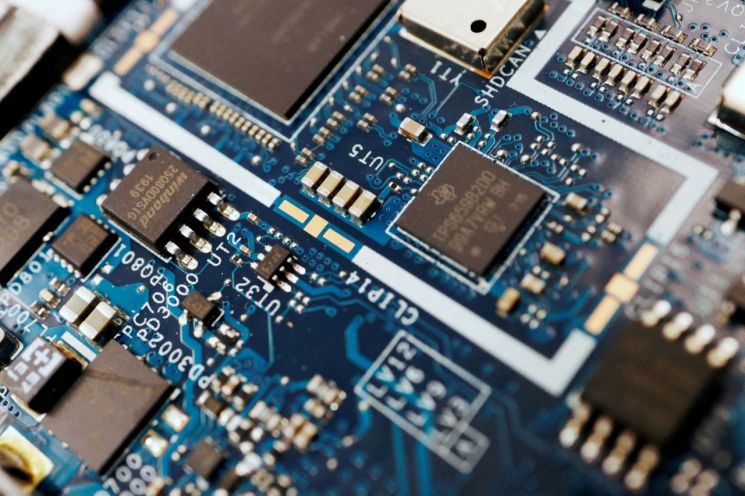
According to sources, some companies such as Taiwan's TSMC and GlobalFoundries have completed negotiations and are expected to announce final subsidies soon. However, other companies like Intel, Samsung, and Micron Technology are still reportedly discussing the details of the contracts.
The CHIPS Act, enacted in 2022 under the Biden administration, provides a total of $52.7 billion over five years, including $39 billion in production subsidies and $13.2 billion in research and development (R&D) support for semiconductor companies investing in the United States. Leading semiconductor companies such as Samsung Electronics, SK Hynix, and TSMC are expected to receive subsidies in exchange for building factories in the U.S.
So far, the U.S. Department of Commerce has allocated more than 90% of the subsidies, but only one binding contract has been announced. Since the continuation of the CHIPS Act cannot be guaranteed if Donald Trump takes office, the remaining two months of President Biden's term are crucial for the approximately 20 companies that have not yet completed the procedures.
Previously, Donald Trump criticized the CHIPS Act last month, calling it "too bad," and expressed the view that tariffs would be more effective than direct subsidies in promoting the semiconductor industry. U.S. House Speaker Mike Johnson has also stated intentions to simplify the CHIPS Act.
However, there are predictions that the CHIPS Act will be maintained even if a second Trump administration officially begins. Both parties reportedly agree on the need to attract factories of leading semiconductor companies to gain an advantage in the semiconductor hegemony competition with China.
Adam Posen, president of the Peterson Institute for International Economics, pointed out that President Biden maintained former President Trump's China tariffs after taking office, and assessed, "Trump might try to reinterpret the law to distribute money somewhat differently than Biden, but he will not repeal it."
© The Asia Business Daily(www.asiae.co.kr). All rights reserved.
![Clutching a Stolen Dior Bag, Saying "I Hate Being Poor but Real"... The Grotesque Con of a "Human Knockoff" [Slate]](https://cwcontent.asiae.co.kr/asiaresize/183/2026021902243444107_1771435474.jpg)
















