Fed Cuts Interest Rate by 0.25 Percentage Points to 4.5-4.75%
This Time a 'Small Cut' to Adjust Pace
Powell: "No Authority to Dismiss Trump... Will Keep Position"
Increased Monetary Policy Uncertainty After Next Year
The U.S. Federal Reserve (Fed) cut the benchmark interest rate by 0.25 percentage points as expected. This is the second rate cut following the 'big cut' (0.5 percentage point rate cut) in September, marking a move to moderate the pace of monetary easing. In particular, Jerome Powell, the Fed Chair, who is expected to have an 'uncomfortable coexistence' due to the dismissal threats from President-elect Donald Trump, confirmed at the highly watched press conference that he would not step down despite the pressure to resign.
Fed cuts rate by 0.25 percentage points... moderates pace with 'small cut'
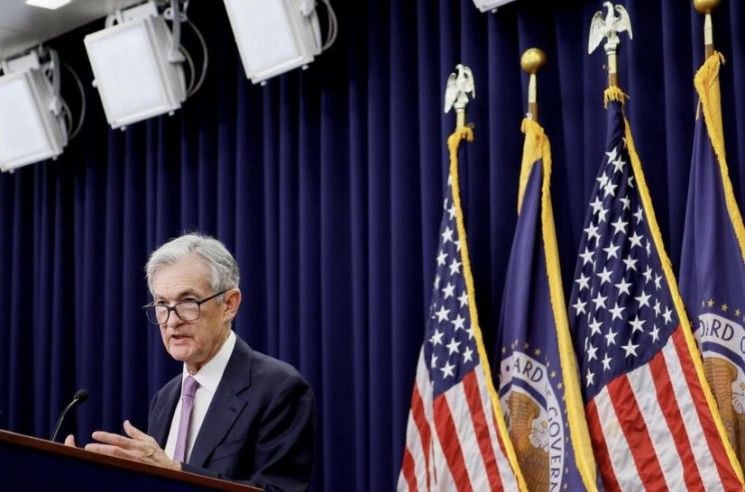
On the 7th (local time), the Fed announced in its policy statement released after the Federal Open Market Committee (FOMC) regular meeting that it had unanimously decided to lower the federal funds rate from the previous 4.75?5.0% to 4.5?4.75%, a 0.25 percentage point cut. This follows the 0.5 percentage point cut from 5.25?5.5% in September, marking the first rate cut in two and a half years of tightening. As a result, the interest rate gap with South Korea narrowed to 1.5 percentage points at the upper bound.
In the policy statement, the Fed assessed that "economic activity is expanding at a solid pace," and "labor market conditions have generally softened, and the unemployment rate has risen but remains low."
Regarding inflation, the Fed stated that "progress has been made toward the 2% target, but it remains somewhat elevated." In the September policy statement, the Fed expressed "greater confidence" that inflation was steadily slowing to 2%, but this phrase was removed this time. Powell explained this as a "move not to provide guidance" on the future path of interest rates.
At the FOMC press conference, Powell said, "Further recalibration of this policy stance will help maintain the resilience of the economy and labor market," and "over time, as rates move toward a neutral level, further progress on inflation will also be consistently possible." He also stated, "Despite today's rate cut, policy remains restrictive," and "we will move the monetary policy stance toward a more neutral position." This is interpreted as signaling the Fed's intention to continue the rate cut trend to achieve its dual mandate of full employment and price stability.
However, regarding the pace of rate cuts, Powell hinted that "we have just begun to think about that issue," suggesting the possibility of slowing the pivot (policy direction change). He also said that the December FOMC meeting would decide rates based on data.
Wall Street is highly anticipating a 0.25 percentage point additional rate cut by the Fed next month. According to the Chicago Mercantile Exchange (CME) FedWatch, the federal funds futures market reflected a 73.5% probability of a 0.25 percentage point rate cut at the December FOMC, up from 69.9% the previous day.
Adita Babe, an economist at Bank of America (BoA), said, "Powell's remarks are dovish and suggest that a December cut remains the base scenario," adding, "The Fed is expected to cut rates by 25 basis points (1bp = 0.01 percentage points) in December." Anna Wong, an economist at Bloomberg Economics, also said, "The Fed is signaling it will place more weight on full employment and ease its focus on price stability," and "the Fed is expected to continue the rate cut cycle and cut rates by an additional 25bp in December."
Powell: "Trump has no authority to dismiss"... interest rate path amid uncomfortable coexistence
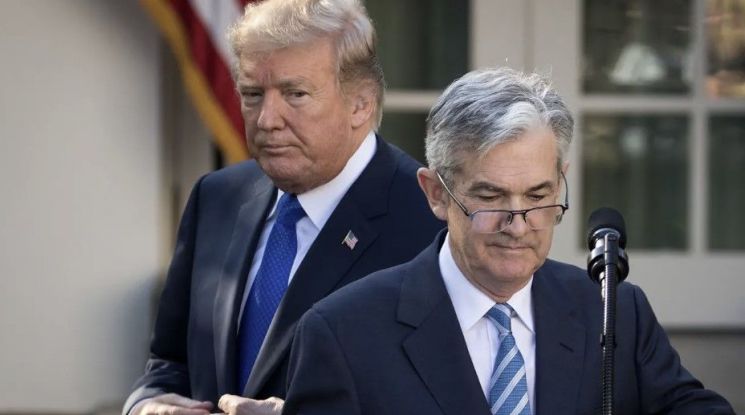
What attracted the most market attention that day was not the Fed's rate decision but Powell's remarks about his tenure. When asked by reporters whether he intended to step down amid multiple dismissal threats from President-elect Trump, Powell firmly answered "No." Furthermore, he stated, "The president does not have the legal authority to dismiss the Fed Chair."
President-elect Trump has repeatedly expressed dissatisfaction with the Fed's rate hikes and vowed several times to dismiss Powell, whom he appointed, if he won the election. Powell, who took office during the Trump administration in 2018, has his term extended under the Biden administration until June 2026.
Powell also stated, "In the short term, election results will not affect our monetary policy decisions," clearly demonstrating his commitment to maintaining the Fed's political independence. Meanwhile, CNN reported that President-elect Trump would guarantee Powell's remaining term while the Fed implements rate cuts.
Regarding the policy direction of the next administration, Powell drew a line, saying he would not speculate or assume. He said, "At this point, we do not know the timing or content of future policy changes, nor can we assess their impact on the economy," adding that it is premature to disclose revisions to economic forecasts.
However, Powell acknowledged concerns about the large U.S. fiscal deficit, stating, "U.S. fiscal policy is unsustainable" and "poses a threat to the economy." Amid concerns that President-elect Trump's tax cut promises, including corporate tax reductions, will expand the fiscal deficit and increase federal government debt, this is interpreted as indirectly suggesting that the next administration's policies could pose risks to the U.S. economy.
Wall Street expects the Fed to maintain its monetary easing stance for the time being but anticipates that the Fed may moderate the pace of rate cuts amid the uncomfortable coexistence between Powell and President-elect Trump. This is because the tariff hikes promised by President-elect Trump could reignite inflation that the Fed has barely managed to calm. Tax cut policies, including corporate tax reductions, are also expected to expand the fiscal deficit and increase government bond issuance, potentially pushing rates higher. With the Republican Party likely to control both the House and Senate, the policies promised by President-elect Trump are expected to easily pass through Congress.
Alice Auzenbauer, Head of Investment Strategy at JP Morgan Asset Management, said, "The Fed cut rates this time, and a December cut will not be a big controversy, but what happens afterward is the issue," adding, "The Fed will begin to consider questions about when and to what extent the Trump administration will implement its election promises." Michael Feroli, Chief Economist at JP Morgan, predicted, "If the Fed faces significant uncertainty, it will want to slow the pace of (rate cuts)."
© The Asia Business Daily(www.asiae.co.kr). All rights reserved.


















