Imported Products' Domestic Sales Share Approaches 32%
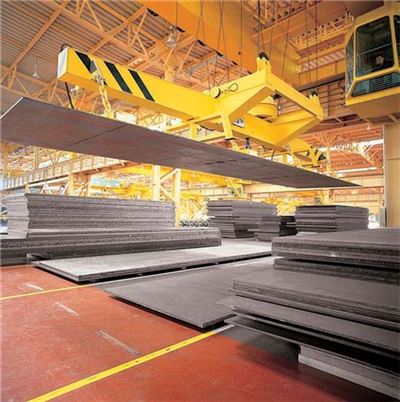 Photo of the steel plate process at a steel company.
Domestic shipbuilding and steel industries are clashing over the import of Chinese-made steel plates. While the steel industry has requested anti-dumping tariffs on low-priced Chinese steel, the shipbuilding industry is strongly concerned about the impact on their profits. The shipbuilding sector particularly argues that small and medium-sized shipbuilders, which have a high proportion of imported steel, will be directly hit by the anti-dumping tariffs. Despite moves to file anti-dumping petitions, imports of Chinese steel plates by shipbuilders have not significantly decreased.
According to statistics from the Korea Iron & Steel Association on the 11th, the import volume of carbon steel plates from January to September this year was about 1.39 million tons, accounting for 32.3% of the total domestic shipbuilding steel plate sales (4.32 million tons). This is similar to last year's level of 32%. Especially this year, domestic steel companies such as Hyundai Steel have actively taken measures by requesting anti-dumping petitions against Chinese steel plates. Despite the steel industry's opposition, shipbuilders continue to import without hesitation.
The resistance from steel companies has intensified this year. Following Hyundai Steel's request for an anti-dumping petition, they recently proposed to the Trade Commission of the Ministry of Trade, Industry and Energy that a 'provisional anti-dumping duty' be applied. Provisional anti-dumping duties are temporarily imposed before a final conclusion on dumping is reached.
Steel companies are taking action because they believe the market share of Chinese steel plates in the domestic market has reached a level that cannot be overlooked. Until before 2021, the share was only in the low to mid-20% range, but it sharply increased from the second half of 2021 when the shipbuilding industry recorded consecutive orders mainly for eco-friendly vessels such as liquefied natural gas (LNG) carriers and propulsion ships. The share rose from 23% in 2021 to 31.6% in 2022, and 36.9% last year.
Shipbuilders are sticking to importing Chinese steel plates because they are about 15% cheaper than domestic products, which has an absolute impact on profitability. HD Korea Shipbuilding & Offshore said, "We are increasing the proportion of Chinese steel usage from 20% to over 25%."
They are especially resisting by putting small and medium-sized shipbuilders at the forefront. An industry insider said, "(If tariffs are imposed) the impact on small and medium-sized shipyards and equipment suppliers with a high proportion of Chinese steel will be even more severe."
Both sides also have clear differences in perspective regarding supply chain issues. The steel industry believes that if the market share of domestic steel shrinks, domestic shipbuilders will eventually find it difficult to survive in the long term. An industry official said, "Shipbuilding and steel are closely symbiotic industries in upstream and downstream sectors, and the expansion of Chinese steel's share could weaken domestic industrial competitiveness and supply chains." A recent example is the nickel 9% steel plates for LNG vessels, which became possible through close industry collaboration.
On the other hand, shipbuilders argue that steel imports are also a way to diversify supply chains. An industry representative stated, "Steel production was halted due to natural disasters like Typhoon Hinnamnor and strikes by cargo unions, causing disruptions in construction work. The reason for increasing the use of Chinese steel plates is not simply limited to price."
© The Asia Business Daily(www.asiae.co.kr). All rights reserved.
![Clutching a Stolen Dior Bag, Saying "I Hate Being Poor but Real"... The Grotesque Con of a "Human Knockoff" [Slate]](https://cwcontent.asiae.co.kr/asiaresize/183/2026021902243444107_1771435474.jpg)















