Claim for 50 Million Won Compensation and Article Deletion Both Dismissed
"If No Illegality, Article Deletion Not Allowed Even If False"
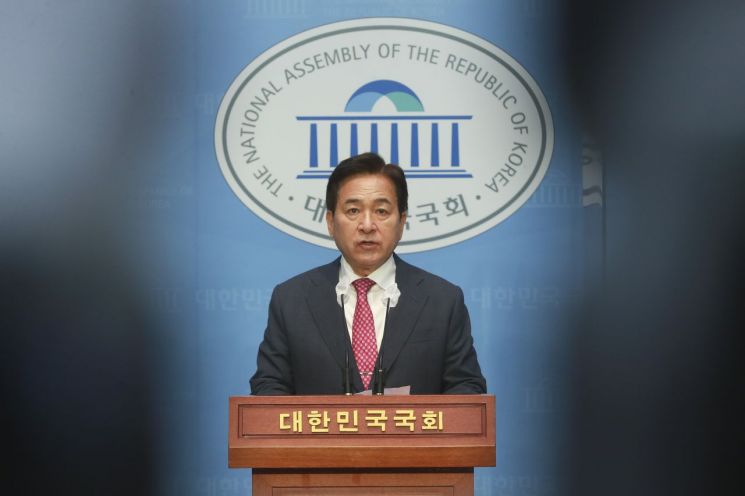
Former Future United Party lawmaker Shim Jae-cheol, who was the president of the Seoul National University student council in June 1980, ultimately lost a lawsuit against media outlets and journalists that reported he made a false confession under torture and coercion during an investigation by the new military regime, claiming he received instructions and funds for student protests from former President Kim Dae-jung in the so-called 'Kim Dae-jung treason conspiracy case.'
According to the legal community on the 7th, the Supreme Court's 2nd Division (Presiding Justice Kwon Young-joon) dismissed Shim’s appeal in the damages claim lawsuit against Hankyoreh Newspaper and three reporters, thereby upholding the lower court ruling that ruled against Shim.
The court stated, "The lower court’s judgment not to recognize liability for damages due to defamation-related tort is acceptable," adding, "There is no error affecting the judgment such as failure to conduct necessary hearings for the lower court’s decision, exceeding the limits of free evaluation of evidence contrary to logic and common experience, legal misinterpretation regarding false statements, defamation, justifications for illegality, violation of the duty to state reasons, or contradictions in reasoning."
Furthermore, the court added, "Since the publication acts of each article in this case cannot be deemed unlawful, the lower court’s judgment that rejected the plaintiff’s request for deletion of the articles on the premise of illegality is also acceptable, and there is no error in the legal principles concerning the deletion request based on tort that affected the judgment."
Shim filed a lawsuit in September 2019 seeking deletion of the three articles and 50 million KRW in damages, claiming that the articles published by Hankyoreh in 2004, 2005, and 2018 through newspaper pages, weekly magazines, and internet sites contained false information about his student activism days, thereby damaging his social value and reputation.
The articles stated that Shim, then president of the Seoul National University student council in June 1980, made a false confession under torture and coercion during the new military regime’s investigation, claiming he received instructions and money from former President Kim, and that he wrote a statement in 1995 to correct this.
The first-instance court ruled against Shim, stating it was difficult to recognize the articles as false and dismissed all of Shim’s claims.
The court explained, "Most of the content in the articles that the plaintiff claims to be false is either directly recorded in the plaintiff’s own written statement or based on the contents of that statement and circumstances related to the case. The evidence submitted by the plaintiff alone is insufficient to recognize that such article contents are false, and there is no other evidence to acknowledge this."
The appellate court acknowledged that some parts of the problematic articles were false but reached the same conclusion as the first-instance court.
The court found that the part where Shim testified in the trial and statement of the Kim Dae-jung treason conspiracy case that he received funds and instructions for student protests from former President Kim was factually incorrect.
However, the court did not recognize liability for damages, reasoning that even if some reported content was objectively proven false, the articles concerned the past actions and evaluations of a public figure, which require ongoing assessment and verification, and were based on the historical fact of the Kim Dae-jung treason conspiracy case, a matter of public significance.
In particular, the court pointed out that Shim is a public figure and that he did not actively refute or legally respond to similar reports in the past, stating, "The defendants had substantial reasons to believe that the factual claims in the articles were true."
The court concluded, "Even if some false facts are included in the articles, it is difficult to regard their publication as unlawful. Therefore, all claims by the plaintiff against the defendants based on the premise that the writing and publication of the articles were unlawful cannot be accepted."
The request for article deletion can only be accepted if the writing or publication of the articles is recognized as unlawful; thus, unless the illegality of the writing and publication is acknowledged, deletion requests cannot be granted even if some false facts are included.
The Supreme Court stated, "The truthfulness of media reports means that, when considering the overall intent of the content, the important parts correspond to objective facts. Minor discrepancies or slight exaggerations in details are permissible, and some rhetorical exaggeration in the process of simplifying complex facts or emphasizing certain facts to attract public interest is also acceptable. If the important parts of the report align with the truth in the overall context, the truthfulness of the report should be recognized."
© The Asia Business Daily(www.asiae.co.kr). All rights reserved.
![Clutching a Stolen Dior Bag, Saying "I Hate Being Poor but Real"... The Grotesque Con of a "Human Knockoff" [Slate]](https://cwcontent.asiae.co.kr/asiaresize/183/2026021902243444107_1771435474.jpg)
















