[US Election 2024]
As former President Donald Trump, the Republican candidate, is confirmed as the owner of the White House for the next four years, congratulatory messages are pouring in from around the world. However, the underlying intentions behind showcasing their relationships with the U.S. vary. It is anticipated that Trump’s return to the White House, emphasizing a stronger “America First” policy, will once again shake the world.
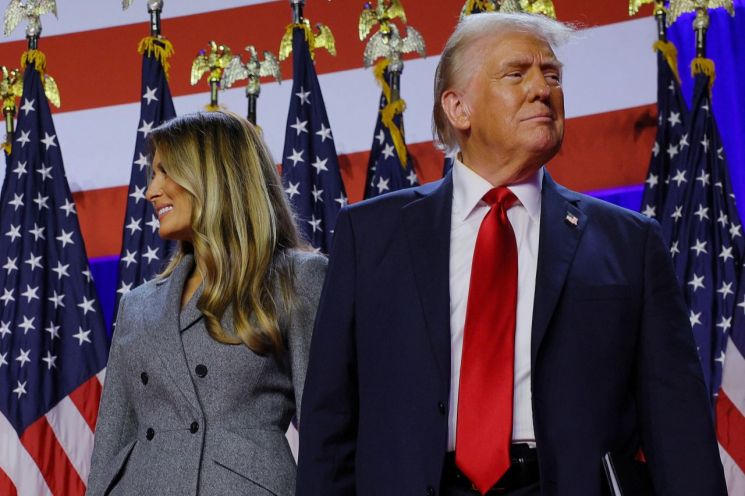
According to local media such as CNN, Chinese President Xi Jinping called President-elect Trump on the 6th (local time) to personally congratulate him on his election victory. This call took place amid efforts by various world leaders to contact President-elect Trump through multiple official and unofficial channels. Prior to this, Israeli Prime Minister Benjamin Netanyahu and French President Emmanuel Macron also held official calls with President-elect Trump. Notably, the Israeli Prime Minister’s Office and the French ?lys?e Palace highlighted that these leaders were among the first world leaders to call President-elect Trump after the election results were confirmed.
Among the European Union (EU) member states, far-right political leaders who have shown a tailored rapport with former President Trump also expressed their approval in unison. Italian Prime Minister Giorgia Meloni emphasized, "Italy and the United States are an unshakable alliance," while Hungarian Prime Minister Viktor Orb?n called it "the greatest comeback in U.S. political history." Even British Prime Minister Keir Starmer, whose former Foreign Secretary had previously made harsh remarks such as calling Trump a ‘sociopath,’ issued a statement congratulating the "historic victory" and emphasizing the "closest alliance" between the two countries.
Although world leaders are flaunting their bilateral relations along with congratulatory messages, analysis suggests their true feelings are uneasy. The Associated Press (AP) reported, "Trump’s first term insulted and alienated America’s long-standing allies," and predicted that "he will shake the world once again." Former President Trump has already signaled a large-scale tariff war. He is once again wielding the tariff card that previously unsettled not only China, which was defined as a ‘strategic competitor’ during his first term, but also the longstanding Atlantic alliance with Europe.
Moreover, in the case of the EU, there are differences in positions between major leaders and President-elect Trump on key issues such as support for Ukraine, NATO burden-sharing, and climate change. AP noted, "NATO is tense and Ukraine is anxious," and highlighted "deep divisions" with some European leaders celebrating more enthusiastically than others.
The Middle East is even more chaotic. While Prime Minister Netanyahu immediately welcomed the result, Hamas in Palestine, which is at war with Israel, and Hezbollah in Lebanon indicated their intention to continue fighting. This situation is far from welcome for Iran, the key backer and core of the ‘axis of resistance.’ During his first term, President-elect Trump moved the U.S. embassy to Jerusalem and unilaterally withdrew from the Iran nuclear deal (JCPOA - Joint Comprehensive Plan of Action) after three years, demonstrating a pro-Israel and anti-Iran hardline stance.
Additionally, tariff-driven trade wars and cross-strait tensions over Taiwan are also cited as factors causing unease worldwide. Dawei, director of the International Security Strategy Center at Tsinghua University in Beijing, diagnosed the situation as "one with more challenges than opportunities." Philip O’Brien, a professor at the University of St Andrews, pointed out that U.S. allies in the Indo-Pacific region such as Japan, South Korea, Taiwan, and Australia "can no longer expect the U.S. to be a reliable partner on defense issues."
© The Asia Business Daily(www.asiae.co.kr). All rights reserved.

















