Including 18 Sites Selected in Rounds 1 and 2, 65% of All Tertiary Hospitals Participate
Deputy Minister Park Minsu Urges Medical Community to Join Ruling, Opposition, Medical, and Government Consultative Body
Thirteen tertiary general hospitals, including Ewha Mokdong Hospital and Konkuk University Hospital, have been selected as targets for the government's structural transformation support project. Including the 18 hospitals such as Severance Hospital and Seoul Asan Hospital selected on the 24th and 29th of last month, a total of 31 hospitals are currently participating in the pilot project for the structural transformation of tertiary general hospitals, exceeding 65% of all tertiary general hospitals (47 hospitals).
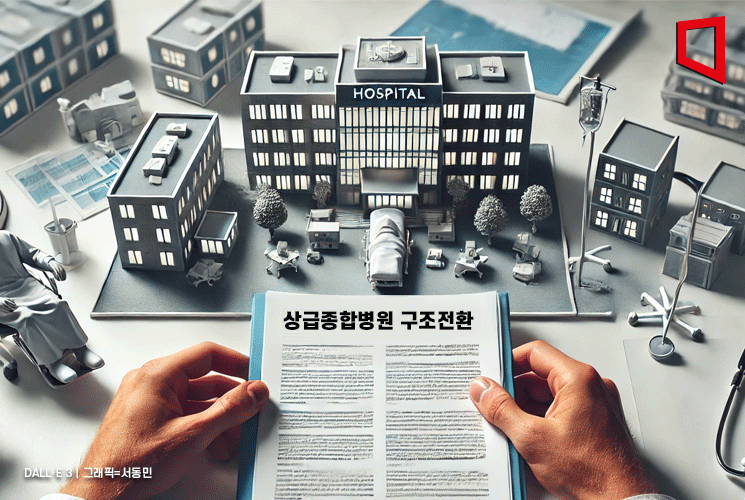
On the 7th, Park Min-su, the 2nd Vice Minister of the Ministry of Health and Welfare, held a meeting of the Central Disaster and Safety Countermeasures Headquarters for the doctors' collective action at the Government Seoul Office and announced, "Through the 3rd selection evaluation of the tertiary general hospital structural transformation support project, 13 additional institutions have been selected," adding, "Five more institutions are currently applying."
The newly selected hospitals this time are Gangneung Asan Hospital, Konkuk University Hospital, Konyang University Hospital, Gyeongsang National University Hospital, Kosin University Gospel Hospital, Busan Paik Hospital, Soonchunhyang University Bucheon Hospital, Yeungnam University Hospital, Wonkwang University Hospital, Wonju Severance Hospital, Ewha Mokdong Hospital, Chosun University Hospital, and Chungnam National University Hospital.
Vice Minister Park said, "We plan to provide a sufficient application period to allow more medical institutions to participate in medical reform," and added, "We will do our best to support the structural transformation so that tertiary general hospitals can be reborn as 'critical care-centered hospitals.'"
Along with this, the government has significantly increased the related budget from 7.9 billion KRW this year to 371.9 billion KRW next year to drastically improve the training environment for residents starting next year. Additionally, the government plans to institutionalize the 'working hours reduction pilot project,' which shortens residents' working hours from 80 hours per week to 72 hours, and continuous working hours from 36 hours to between 24 and 30 hours. To ensure residents receive systematic and substantial training, a 'responsible supervising specialist' will be designated, and through the 'multi-institution cooperative training model pilot project,' residents will be able to gain diverse clinical experiences ranging from severe to mild cases.
Furthermore, to encourage residents to take pride in training in essential medical fields such as critical care and emergency medicine, the scope of training allowance support will be expanded from pediatrics to eight departments including obstetrics and gynecology, internal medicine, surgery, emergency medicine, thoracic surgery, neurology, and neurosurgery.
On the 11th, the ruling and opposition parties, medical organizations, and government consultation body will be officially launched. Vice Minister Park expressed, "I hope the launch of the consultation body will be an opportunity for the political circles, medical organizations, and government to come together, put their heads together for medical normalization, and swiftly unravel the complicated entanglements," emphasizing, "We must narrow differences through dialogue, restore trust, and solve problems."
Vice Minister Park also repeatedly urged, "In addition to the Korean Academy of Medical Sciences and the Korean Association of Medical Colleges (KAMC), which have already expressed their willingness to participate in the consultation body, the Medical Association and resident groups should also participate in the consultation body."
© The Asia Business Daily(www.asiae.co.kr). All rights reserved.












