September Current Account Surplus of $11.12 Billion, Third Largest Surplus Ever
5th Consecutive Month of Surplus Driven by Strong Exports of Semiconductors, Smartphones, and IT Products
Negative Impact on Next Year's Current Account Expected Due to Trump Election
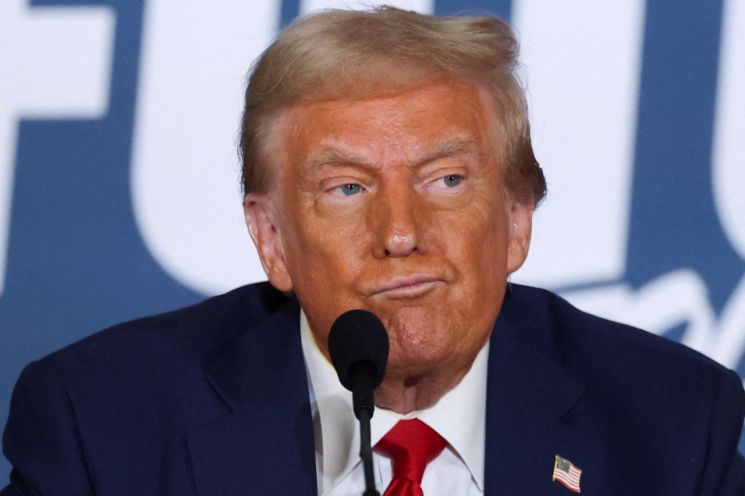
Thanks to strong exports of our key products such as semiconductors, smartphones, and automobiles, the current account balance has maintained a surplus for five consecutive months. With the continued export boom, the size of this year's current account surplus is expected to exceed initial forecasts. However, with Donald Trump winning the U.S. presidential election, negative impacts on our current account balance next year are anticipated.
According to the "September Balance of Payments (provisional)" released by the Bank of Korea on the 7th, South Korea recorded a current account surplus of $11.12 billion in September. After recording a deficit in April due to increased foreign dividends, the current account has maintained a surplus for five consecutive months since May.
September Current Account Surplus Ranks Third Largest Historically
The surplus amount was the largest since June ($12.56 billion) and ranked third largest for September on record. Last September, the current account surplus was $6.07 billion. The cumulative current account surplus from January to September this year was $64.64 billion, an increase of $47.89 billion compared to the same period last year ($16.75 billion).
Breaking down the September current account by category, the goods balance ($10.67 billion) expanded its surplus compared to the previous month, mainly due to strong performance in IT products. Exports reached $61.67 billion, a 9.9% increase compared to the same month last year. Based on customs clearance in September, semiconductor exports rose 36.7%, information and communication devices increased 30.4%, and passenger cars grew 6.4% year-on-year. On the other hand, the decline in non-IT products expanded. Exports of petroleum products (-17.6%), chemical products (-8.4%), machinery and precision instruments (-7.8%), and steel products (-1.6%) decreased. By region, exports increased to Southeast Asia (16.2%), China (6.3%), the European Union (EU, 5.1%), and the United States (3.4%), while exports to Japan (-0.8%) declined compared to the same month last year.
Imports in September amounted to $51 billion, a 4.9% increase year-on-year. Although imports of raw materials such as crude oil and coal turned to a decrease, the increase in capital goods such as semiconductors expanded. Based on customs clearance in September, imports of raw materials such as chemical products (-12.5%) and crude oil (-11.6%) decreased by 6.8% year-on-year. In contrast, imports of capital goods such as semiconductor manufacturing equipment (62.1%), semiconductors (26.5%), and precision instruments (7.6%) increased by 17.6%. Imports of consumer goods rose by 0.3%.
Uncertainty Grows Next Year Due to Trump’s Election
With the continued export boom, the current account surplus is expected to continue in October, and the size of this year's current account surplus is projected to exceed the Bank of Korea's initial forecast of $73 billion. Shin Seung-chul, head of the Bank of Korea’s Economic Statistics Department, said, "With exports continuing to perform well centered on semiconductors, we expect the forecast for this year's current account surplus to be revised upward."
However, there is an analysis that uncertainty for our economy next year may increase due to former President Donald Trump's victory in the U.S. presidential election. Shin said, "Considering Trump’s protectionism and pressure on China, there will likely be negative effects on our export conditions. Although this year's current account is not expected to be affected, we need to analyze more carefully how much impact it will have next year."
In September, the services balance recorded a deficit of $2.24 billion, mainly due to travel, processing services, and intellectual property royalties. As the peak season for overseas travel ended, the travel balance deficit narrowed. The deficit in intellectual property royalties widened due to seasonal factors reducing receipts from trademarks and research and development copyrights.
The primary income balance showed a surplus of $3.09 billion, mainly from dividend income. The secondary income balance recorded a deficit of $390 million.
The financial account, which shows capital inflows and outflows, recorded a net asset increase of $12.68 billion in September, expanding the surplus compared to the previous month ($4.93 billion). Direct investment saw an increase of $2.47 billion in overseas investment by domestic investors and a $1.44 billion increase in foreign investment in the domestic market.
In securities investment, domestic investors' overseas investment increased by $7.5 billion, mainly in bonds. Foreign investors' domestic investment decreased by $1.3 billion, mainly in stocks.
© The Asia Business Daily(www.asiae.co.kr). All rights reserved.
!["The Woman Who Threw Herself into the Water Clutching a Stolen Dior Bag"...A Grotesque Success Story That Shakes the Korean Psyche [Slate]](https://cwcontent.asiae.co.kr/asiaresize/183/2026021902243444107_1771435474.jpg)
















