Full Review of Sono International Wonsando Tourism Complex Project
Relocation of Korea Wheel Smart Farm Project to Daejeon... Population Expected to Decrease by 1,000
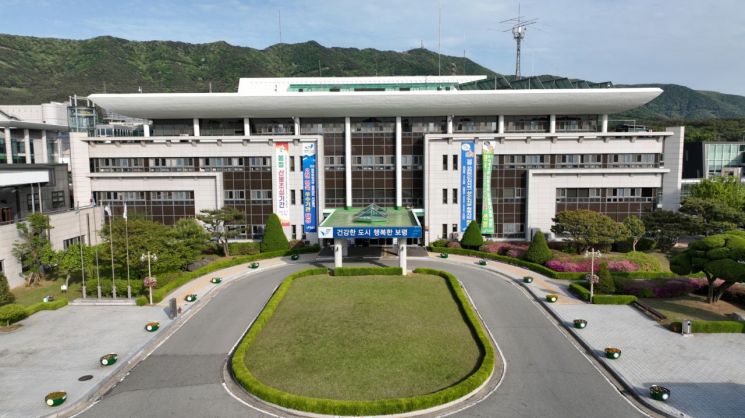
Boryeong City in South Chungcheong Province is facing criticism for its complacent response, which has put a key tourism project in jeopardy and driven out promising companies.
According to an Asia Economy report on the 7th, Sono International Co., Ltd. is said to have begun a full review of its 'Wonsando Daemyung Sono Resort Tourism Complex Development' project.
Sono International cited the domestic and global economic downturn, rising construction costs, and increased labor costs as reasons, but as the company is set to become the second-largest shareholder of T'way Air and Air Premia and is expected to acquire management rights with 300 billion won in funding, it is interpreted that the 760 billion won Wonsando Daemyung Sono Resort project has effectively been abandoned.
A Sono International official stated, "Nothing has been decided as we are still in the project review stage."
As a result, there are concerns that Boryeong City's projects to develop marine leisure hubs, tourism resources, and tourism infrastructure across five islands in the region, with a total investment of 1.1254 trillion won, will also be affected.
Despite these circumstances, the city has maintained a basic stance, saying that this is a private investment project and that the delay is due to changes in building design, which is being criticized as a complacent response.
A city official stated, "The basic design has been completed, and the project is only delayed due to changes in building design. The project has not been scrapped."
Previously, Korea Wheel, a leading company in Boryeong, engaged in a legal dispute with Boryeong City over the construction of a smart farm and, in May, signed an investment agreement worth about 117 billion won with Daejeon City to relocate its headquarters and research center to the Pyeongchon Industrial Complex in Seo-gu, Daejeon.
Since 2019, Korea Wheel has installed four smart farm greenhouses, each 1,126 square meters, and mobile containers on its factory site, and has been conducting a pilot project for a circulating smart farm. However, the city issued a restoration order for violating the Building Act and reported the company to the police for violating the Industrial Sites Act.
Korea Wheel filed an administrative lawsuit against the city's administrative order, and a significant impact is expected depending on the outcome of the first trial verdict scheduled for the 20th.
As of 2021, Boryeong City's population has fallen below 100,000, dropping to 94,021 as of October. Unlike other local governments that are making every effort to attract companies to prevent local extinction, the city is being criticized for driving out a high-quality company that has paid billions of won in taxes and employed about 300 people since 2009 due to clumsy administration.
If Korea Wheel relocates to Daejeon, Boryeong City's population is expected to decrease by about 1,000 people.
© The Asia Business Daily(www.asiae.co.kr). All rights reserved.
![Clutching a Stolen Dior Bag, Saying "I Hate Being Poor but Real"... The Grotesque Con of a "Human Knockoff" [Slate]](https://cwcontent.asiae.co.kr/asiaresize/183/2026021902243444107_1771435474.jpg)
















