Trump, Impact on Korean Battery Industry Following US Presidential Election Victory
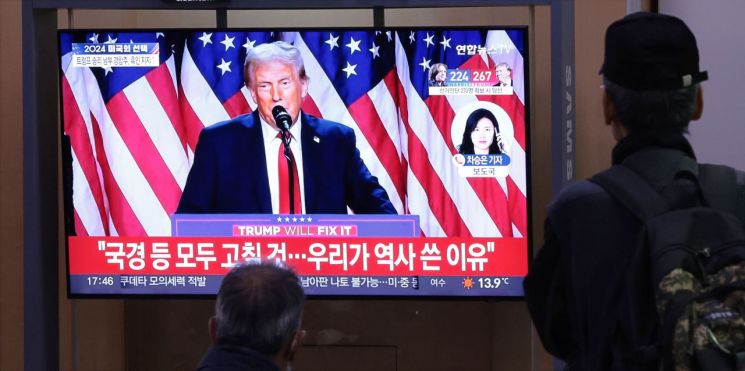 On the afternoon of the 6th, citizens at Seoul Station are watching the broadcast of former U.S. President Donald Trump, the Republican presidential candidate, declaring his victory in the November 5 U.S. presidential election. [Image source=Yonhap News]
The securities industry analyzed that the possibility of repealing the Inflation Reduction Act (IRA), which would have a significant impact on domestic industries, is low regarding Donald Trump's re-election as U.S. president, but the market could contract due to high tariffs and the abolition or reduction of subsidies.
On the 7th, NH Investment & Securities analyzed, "Under the Donald Trump administration, fuel efficiency regulations and carbon dioxide (CO2) emission regulations may be relaxed, but the possibility of repealing the Inflation Reduction Act (IRA) is low." Juminwoo, a researcher at NH Investment & Securities, explained, "During Trump's first term, despite the 'Red Wave,' there was a failure to repeal Obamacare," adding, "In this election as well, opposition may arise in constituencies where secondary battery-related investments are concentrated within the districts of the House and Senate."
He continued, "If repealing the IRA is difficult, Trump is expected to reduce the budget by making the conditions for receiving related subsidies and Advanced Manufacturing Production Credit (AMPC) benefits stricter through executive orders." AMPC refers to an incentive in the U.S. that provides tax credit benefits to manufacturers producing eco-friendly products such as batteries and solar power using advanced manufacturing technologies. Kim Junsung, an analyst at Meritz Securities, also stated, "If subsidies under the IRA are abolished or reduced, cost pressure will arise not only for finished vehicles but also across the battery value chain," adding, "If the expected production and sales volumes are difficult to achieve, the burden of fixed costs may increase."
Juminwoo also judged that there is a possibility of repealing the IRA while maintaining high tariffs. He analyzed, "If the IRA is repealed with the consent of the House and Senate, high tariffs on Chinese electric vehicles, batteries, and materials will be maintained," adding, "The key issue is whether Chinese companies' local factory investments to avoid tariffs will be allowed; in this case, domestic companies will face two risks: losing IRA benefits and competition with China."
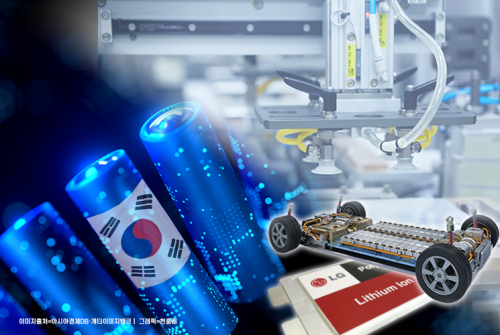
During the election campaign, Trump criticized the IRA enacted by the Biden administration as "the cause of the largest tax increase in history" and pledged to repeal the law or reduce support. He also announced a 'high-intensity tariff policy' prioritizing domestic interests, stating that a 60% tariff would be imposed on Chinese products and a general tariff of 10-20% on goods imported from other countries.
No Wooho, a researcher at Meritz Securities, viewed the possibility of repeal as low, stating that Trump's main pledges are rather aligned with the current IRA policy. In a report titled "The Opening of the Trump Era in the U.S. and Sector Impact Review," No said, "Trump's major pledges, such as bringing manufacturing back to the U.S. and lowering corporate tax rates, align with the IRA," and evaluated, "Contrary to market concerns, Trump tends to respect consumers' diverse choices and his influence on the electric vehicle transition is neutral."
However, he expressed concern about the reduction of subsidies that would directly affect domestic electric vehicle and battery companies, such as AMPC. No said, "(The possibility of AMPC repeal or reduction) is pessimistic for companies establishing local production facilities," adding, "The repeal of AMPC will act as pressure on earnings decline and cash flow."
© The Asia Business Daily(www.asiae.co.kr). All rights reserved.
!["The Woman Who Threw Herself into the Water Clutching a Stolen Dior Bag"...A Grotesque Success Story That Shakes the Korean Psyche [Slate]](https://cwcontent.asiae.co.kr/asiaresize/183/2026021902243444107_1771435474.jpg)

















