First Domestic Researcher Selected
Start of Korea-EU Global Collaboration to Uncover the Secrets of Cancer Occurrence
On the 5th, the Institute for Basic Science (IBS, President Noh Do-Young) announced that Gu Bon-gyeong, head of the Genome Editing Research Group, has been selected for the ERC Synergy Grant 2024, a basic research support program of the European Research Council (ERC).
According to IBS, this is the first time a researcher affiliated with a domestic institution has been selected. The ClonEScape team, organized with four research groups from Korea and Europe including Gu Bon-gyeong, will receive a total of 10 million euros (approximately 14.9 billion KRW) over six years.
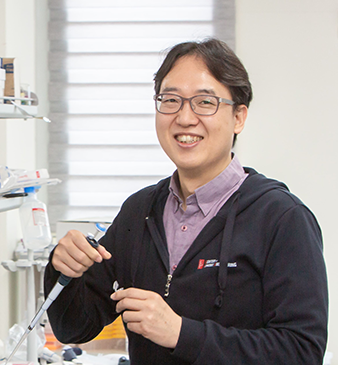
Gu Bon-gyeong has played a pioneering role in the field of adult stem cell research in the gastrointestinal tract using mouse and organoid models created through gene editing techniques. Notably, through the mosaic genetics method devised by Gu, he successfully tracked the early stages of cancer development in mouse models. In 2022 and 2023, he was also recognized as a Highly Cited Researcher (HCR) by Clarivate, a global academic information service analytics company.
The ERC Synergy Grant is one of the research support programs included in Horizon Europe, the European Union’s (EU) largest research and innovation framework program. It was created to encourage multidisciplinary collaborative research, focusing on producing innovative outcomes that surpass existing research limits through cooperation among researchers from diverse backgrounds. The total budget reaches approximately 16 billion euros, supporting world-class basic research across various fields.
For the ERC Synergy Grant 2024, 57 teams comprising 201 researchers from 24 countries worldwide, including non-European countries such as Korea, the United States, and Australia, were selected, including Gu Bon-gyeong. Notably, Gu was selected for the ERC Starting Grant in 2015, which supports early-career researchers, making this his second ERC grant, reaffirming the originality and continuous development potential of his research.
Starting in 2025, Gu Bon-gyeong will conduct research on cancer development mechanisms using mosaic genetics together with Benjamin D. Simons, professor at the University of Cambridge, UK; Maria P. Alcolea, group leader at the Cambridge Stem Cell Institute; and Daniel E. Stange, professor at the Medical Faculty of the Technical University of Dresden, Germany.
The research team plans to focus on tracing cancer-causing clones from the initial cells to reveal how cancer seed cells penetrate the human immune barrier and grow into cancer cell clones, and how these clones grow by competing with other cells or accumulating various mutations to develop into cancer.
Understanding the early mechanisms of cancer development in this way can, conversely, provide fundamental knowledge that contributes to cancer prevention, early diagnosis, and the development of treatments.
Maria Leptin, President of the European Research Council, said, “Outstanding researchers from various disciplines, countries, and even continents collaborate as one team through the ERC Synergy Grant to solve challenging problems,” adding, “Congratulations to all the selected researchers, and we look forward to seeing how they expand the boundaries of knowledge.”
Gu Bon-gyeong stated, “This will be an important turning point in uncovering the fundamental causes of cancer,” and added, “I am very pleased to have the opportunity to collaborate with world-class researchers from different fields to understand the origins of cancer and innovatively elucidate the progression of the disease.”
© The Asia Business Daily(www.asiae.co.kr). All rights reserved.
![Clutching a Stolen Dior Bag, Saying "I Hate Being Poor but Real"... The Grotesque Con of a "Human Knockoff" [Slate]](https://cwcontent.asiae.co.kr/asiaresize/183/2026021902243444107_1771435474.jpg)
















