Korean Ministry of Trade, Industry and Energy and Ministry of Foreign Affairs Participate with U.S. Department of Energy and Department of State
The governments of South Korea and the United States have agreed on principles regarding nuclear power exports and cooperation. This agreement is noteworthy as it comes amid the U.S. company Westinghouse asserting its original patents and hindering South Korea's nuclear power export to the Czech Republic. With both governments agreeing to cooperate on nuclear power exports, there is optimism that negotiations between private companies will also proceed smoothly. Furthermore, this lays the foundation for future joint entry into overseas nuclear power markets based on mutual trust between the two countries.
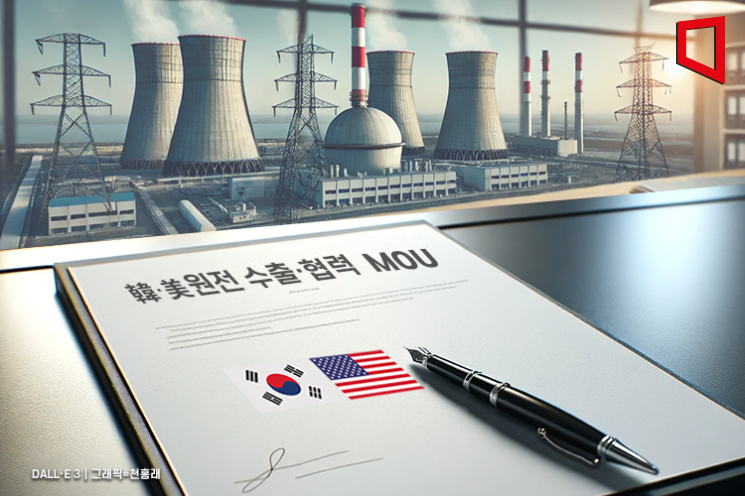
The Ministry of Trade, Industry and Energy and the Ministry of Foreign Affairs announced on the 5th that they had initialed the "Interagency Memorandum of Understanding (MOU) on Korea-U.S. Nuclear Power Export and Cooperation" after consultations with the U.S. Department of Energy and the Department of State to expand bilateral private nuclear cooperation. In a joint press release distributed to the media on the same day, the two countries explained, "Based on a long-standing cooperative relationship, we have achieved an important milestone in advancing private nuclear cooperation between Korea and the U.S. by initialing the interagency MOU on nuclear power export and cooperation on the 1st."
They also stated, "Through this provisional agreement, both sides reaffirmed their mutual commitment to promoting the peaceful use of nuclear energy and maintaining the highest standards of non-proliferation, nuclear safety, safeguards, and nuclear security, and agreed to strengthen export control management of private nuclear technologies between the two countries."
Additionally, "Building on this cooperative will, both sides agreed to expand cooperation in various fields such as responding to climate change, accelerating the global energy transition, and securing critical supply chains," adding, "This is expected to create billions of dollars in economic opportunities for industries in both countries and generate tens of thousands of manufacturing jobs."
Both parties plan to finalize the contract after completing the final review process of this MOU. The Ministry of Trade, Industry and Energy stated, "This achievement is based on the strong Korea-U.S. alliance built over time, and upon final signing, close cooperation on nuclear power exports between the two countries is expected in the global market."
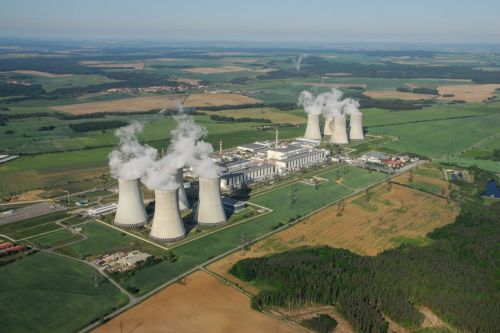
This initialing came amid an ongoing dispute between Korea Hydro & Nuclear Power and the U.S. nuclear company Westinghouse regarding South Korea's nuclear power export to the Czech Republic. In July, Czech authorities selected KHNP as the preferred negotiator for the construction of the new Dukovany nuclear power plant. South Korea and the Czech Republic are negotiating with the goal of signing the final contract by March next year.
The biggest obstacle during the final contract signing process had been the cooperation of the United States. To export nuclear power plants to the Czech Republic, South Korea must go through U.S. export control procedures, but Westinghouse, which holds the original technology, had been obstructing the process. According to the guidelines of the Nuclear Suppliers Group (NSG), which includes 48 countries worldwide including South Korea, approval from the country owning the technology is required when transferring nuclear technology to a third country. However, when exporting to countries like the Czech Republic that have a nuclear cooperation agreement with the U.S., only notification is required. The problem was that Westinghouse, the notifying party, had been uncooperative, delaying the related procedures.
South Korea signed a technology transfer contract with the U.S. nuclear company Combustion Engineering (CE) when constructing Hanbit Units 3 and 4 in 1987. The System 80 nuclear power plant patent of CE, which South Korea referred to at the time, is currently held by Westinghouse. South Korea claims to have secured its own nuclear technology, but Westinghouse asserts rights to the original technology. After KHNP was selected as the preferred negotiator, competitors Westinghouse and ?lectricit? de France (EDF) filed complaints with the Czech Republic. However, on the 31st of last month (local time), the Czech Office for the Protection of Competition (UOHS) dismissed these complaints.
Amid this, with the Korean and U.S. governments agreeing on principles to cooperate on private nuclear power exports, there is hope that Westinghouse will take a more proactive stance. A senior official from the Ministry of Trade, Industry and Energy said, "The signing of this MOU will serve as a signal for cooperation at the private sector level between the two countries." This MOU is also significant in that it could open the door to future joint entry into overseas markets beyond the Czech nuclear power export. The nuclear industry had long been concerned that the U.S. might obstruct South Korea's efforts to export nuclear power plants abroad. Regarding this, the Ministry of Trade, Industry and Energy expressed hope that "through the MOU, the two countries will restore trust and cooperate by sharing information for joint entry into the global market."
© The Asia Business Daily(www.asiae.co.kr). All rights reserved.


















