Xi Jinping Plans to Make China an International Tech Hub by 2025
Talent Leaving Amid US-China Conflict and Geopolitical Tensions
Foreign Residents in Beijing Down 40% Compared to 10 Years Ago
The deadline for the Chinese government’s pledge to transform Beijing into an international hub attracting global tech talent is approaching, but the number of foreigners working in Beijing is steadily decreasing, South China Morning Post (SCMP) reported on the 4th.
According to a report released last month by the Beijing International Talent Exchange Association (BITEA), the current number of foreigners residing long-term and working in Beijing is 22,000, a decline of over 40% compared to 10 years ago (37,000). This accounts for 0.1% of Beijing’s population and about 0.2% of the workforce in Beijing.
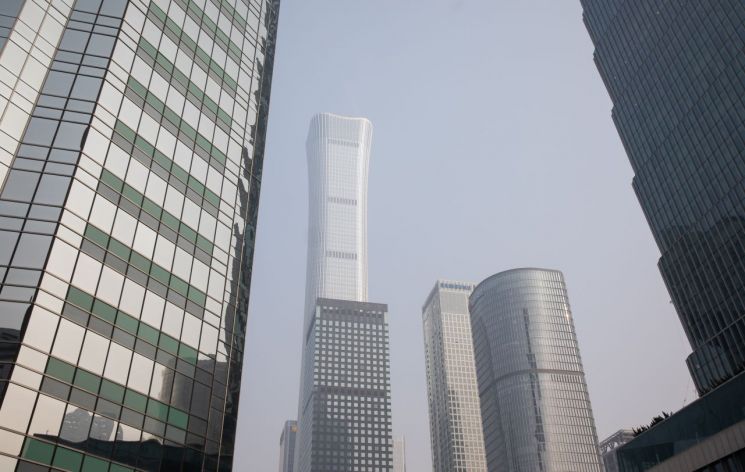
This trend contradicts the Chinese government’s efforts to attract outstanding overseas tech professionals and turn Beijing into China’s Silicon Valley. Previously, in May last year, under the leadership of President Xi Jinping, the Chinese government announced plans to establish the “International Science and Technology Innovation Center” in Beijing, aiming to make it an international tech innovation hub by 2025.
To this end, various research centers and IT companies were established, and visa and permanent residency systems were revised, but foreign workers have instead left. Among the workers remaining in Beijing, only 13% were engaged in scientific research and engineering fields, while about 30% worked in administrative or educational sectors. According to China’s state-run news agency CNS, most of the 37,000 foreigners employed long-term in Beijing 10 years ago worked in IT, consulting, and technology research fields.
SCMP pointed out, “Unlike Silicon Valley in 2016, where about 70% of workers were born outside the U.S., China has very few foreign-born workers,” adding, “China started its permanent residency system in 2004 to attract talent, but by 2018, only 12,000 so-called ‘green cards’ (Chinese permanent residencies) had been issued.”
The European Union Chamber of Commerce in China stated, “Over the past two years, there has been a separation between the headquarters of global companies and their China divisions,” diagnosing that this has “reduced the ability of China divisions to utilize new projects or investment plans.” The American Chamber of Commerce in China pointed to escalating U.S.-China geopolitical tensions as a cause of talent outflow from Beijing. The proportion of American and European workers in Beijing, which was 16% in 2019, has now decreased to 12%.
However, there was a foreign worker group whose proportion increased. During the same period, the number of African workers in Beijing rose from 26% to 31%, and the proportion of Russian and Eastern European workers increased from 11% to 16%. A labor media outlet under Beijing’s Human Resources Department explained, “African workers show strong interest in working in China,” and “those from Eastern Europe and Russia are establishing themselves as new growth drivers.”
© The Asia Business Daily(www.asiae.co.kr). All rights reserved.
![Clutching a Stolen Dior Bag, Saying "I Hate Being Poor but Real"... The Grotesque Con of a "Human Knockoff" [Slate]](https://cwcontent.asiae.co.kr/asiaresize/183/2026021902243444107_1771435474.jpg)
















