Over 2.4 Million Tourists Visited Last Year
Approximately 450 Tons of Waste Generated Daily in Cusco City
Korean-style waste management will be introduced to the Peruvian tourist destination famous for Machu Picchu. This is to protect tourism resources from the waste generated by the influx of tourists through Korean-style waste recycling. The place that made this decision is Cusco, a tourist city in Peru. On the 3rd (local time), Yonhap News reported that the Korea International Cooperation Agency (KOICA) announced the Cusco Integrated Waste Management Master Plan and presented a comprehensive related roadmap to the Cusco government.
Currently, Cusco is struggling with the increasing waste problem along with the continuous rise in tourists and residents. Accordingly, on the 30th of last month, KOICA proposed a plan to establish a pilot composting facility capable of processing 60 tons of organic waste per day. To this end, they also presented concrete implementation measures such as establishing an environmental education center and encouraging separate waste collection through awareness improvement activities.
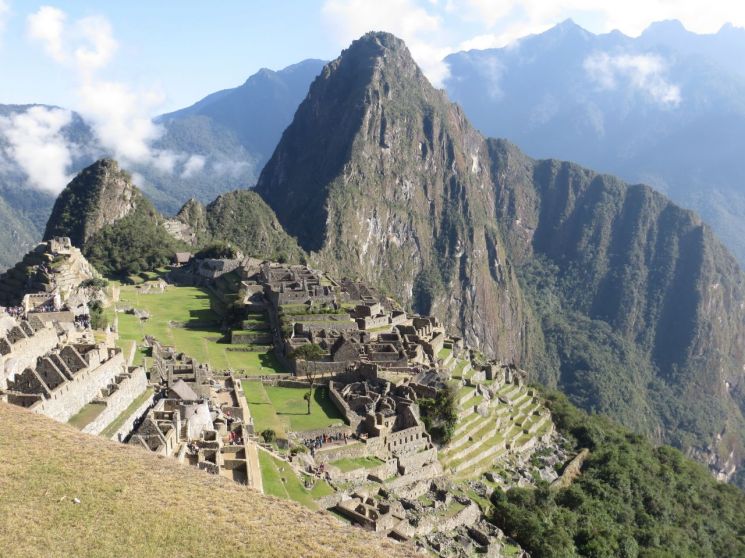
According to statistics from the Cusco government and government tourism data, about 500,000 people resided there as of last year. The number of tourists reached approximately 2.4 million in the past year alone. In the Machu Picchu protected area, where entry is limited, 955,741 people visited last year. Authorities expect the number to exceed 1 million this year due to increased capacity. Among these, about 450 tons of waste are generated daily in Cusco. Most of the waste is landfilled. KOICA stated, "The Hakira landfill is expected to reach capacity within the next eight months and has declared a state of emergency due to soil contamination caused by leachate. Although the authorities have secured additional landfill sites, a fundamental solution is urgently needed considering sustainability."
Since 2022, KOICA has been promoting the establishment of an integrated waste management system and advanced resource circulation project in Cusco, Peru. They explained that they are working closely with city authorities to realize 'Zero Waste' (a resource conservation principle that discourages waste incineration and landfilling by encouraging recycling and reuse) by 2050. Kim Young-woo, head of KOICA Peru Office, emphasized, "In June this year, Korea and Latin America signed a climate change cooperation agreement during the Korea-Latin America Future Cooperation Forum. The government is striving to actively respond to waste problems and climate change through KOICA."
Earlier in August, the American daily The Washington Post (WP) spotlighted Korea's food waste treatment method, stating it could provide lessons worldwide. WP reported in an article titled "South Korea recycles 98% of its food waste. What can this teach the world?" that most of the food waste generated is recycled into livestock feed, compost, and biogas. Additionally, in January, the French media France24 introduced Korea as the "Bio-waste Recycling Champion" in an article, stating, "Korea has mandated food waste recycling for nearly 20 years" and "Today, Korea is a model case for recycling almost all bio-waste."
© The Asia Business Daily(www.asiae.co.kr). All rights reserved.
![Clutching a Stolen Dior Bag, Saying "I Hate Being Poor but Real"... The Grotesque Con of a "Human Knockoff" [Slate]](https://cwcontent.asiae.co.kr/asiaresize/183/2026021902243444107_1771435474.jpg)











