WSJ "'Work-Life Balance Priority' Shift Centered on Young Doctors"
1 in 2 US Doctors Report "Burnout Experience"
Voices calling for improved treatment of doctors suffering from burnout, characterized by extreme physical and mental fatigue, are pouring out in the United States as well. It is interpreted that the existing medical community perception of sacrificing personal life for patients is changing, especially among the younger generation for whom work-life balance, so-called "work-life balance," has become increasingly important.
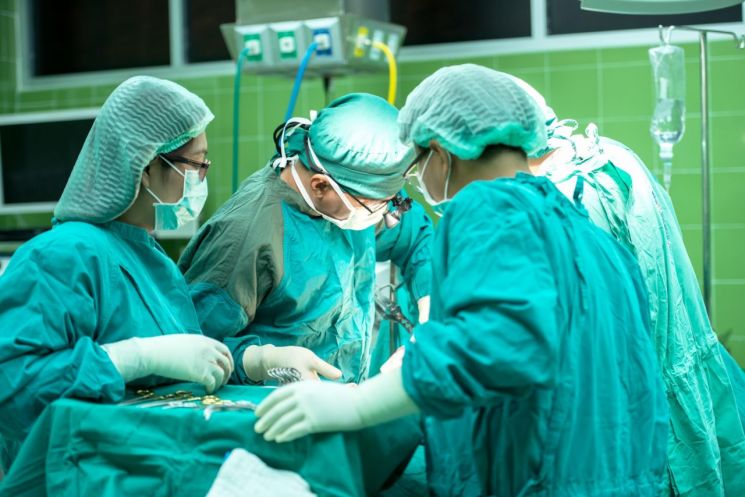
The Wall Street Journal (WSJ) recently reported, citing a survey by the American Medical Association, that 48.2% of doctors responded that they experienced burnout last year. The proportion of doctors experiencing burnout peaked at 62.8% in 2021, during the height of the COVID-19 pandemic, then remained above 50% before relatively easing last year.
Despite a decline in response rates, still one in two doctors report difficulties. WSJ reported that after interviewing about 20 American doctors, a mood is forming, especially among young doctors who want work-life balance, that the medical community’s workaholic culture needs to be corrected. The average weekly working hours of American doctors is 59 hours, and the average annual salary is $350,000 (about 480 million KRW). WSJ noted that although doctors have a high salary level, they are a profession under great mental and physical pressure.
According to the report, Dr. Jefferson Bon, a 63-year-old male surgeon who has worked for 30 years, said he feels the medical ethics of the younger generation of doctors are gradually changing. He said that at the Jupiter Medical Center emergency room where he currently works, he works 5 to 7 night shifts a month, and while some peers work shifts, younger colleagues are excluded from on-call duty. He described the atmosphere, saying, "Old guys like us get emergency room calls, and those in their 30s leave work every night."
The Accreditation Council for Graduate Medical Education (ACGME), a nonprofit private committee that evaluates and accredits residency and internship programs in the United States, currently limits residents’ weekly working hours to a maximum of 80 hours and shift work to a maximum of 24 hours.
Young doctors in the United States tend to prefer being affiliated with large hospitals rather than opening their own practice. Among doctors under 45, only 32% have opened their own practice, down from 44% in 2012, and lower than the 51% of doctors aged 45 to 55 who have their own practice. While opening a practice offers greater autonomy over working hours, all costs and burdens must be borne alone. One doctor described this by saying, "Doctors affiliated with large hospitals do not pay business expenses but have agreed to endure long working hours and paperwork."
In fact, Dr. Mary Leung (47), who works as a coach for doctors experiencing burnout while researching cancer in Long Island, New York, said, "Many doctors feel like machines themselves," and that during the day they treat patients and at night they are tormented by paperwork. Dr. Christopher Washink (58), an anesthesiologist in Naples, Florida, also recently witnessed young doctors reducing their working days and recalled that he had never taken sick leave during his 24 years of work.
As the situation has developed, changes are being detected in the United States. Dr. Kara Grace Leventhal, a 40-year-old female doctor, was at risk of losing her daughter during pregnancy while working at Johns Hopkins Hospital in Baltimore in 2021. At that time, her supervisor said that sick leave could not be taken unless there was an extreme situation such as a traffic accident on the way to work, making it difficult to receive ultrasound examinations during pregnancy. On a day when an ultrasound was scheduled, she almost skipped the exam, but managed to have it and ended up needing an emergency cesarean section.
After this experience, Dr. Leventhal, together with other colleagues at Johns Hopkins Hospital, pushed for policy changes to allow sick leave without special explanations. The hospital responded by doubling the number of standby doctors to cover medical gaps caused by sick leave. Dr. Leventhal emphasized, "To care for others, we must be able to take care of ourselves."
© The Asia Business Daily(www.asiae.co.kr). All rights reserved.

















