Invasive Raccoons Rapidly Increasing, Threatening Native Ecosystems
'Raccoon Meat Sausages' Appear... Gaining Great Popularity
In Germany, sausages made from raccoon meat, hunted to control the invasive species threatening the native ecosystem, are reportedly being sold.
On the 31st of last month (local time), CNN in the United States reported that Mikael Reis, who runs a butcher shop in Kade, about 90 km west of Berlin, is selling sausages and salami made from raccoon meat.
Reis explained the reason for making sausages from raccoon meat, saying, "While considering products to present at an eco-friendly international food fair, I thought there were many discarded raccoon carcasses since raccoon hunting was allowed."
According to the German Nature Conservation Union (NABU), raccoons were introduced to Germany in the 1920s for fur farms and began to be released into the wild by 1934.
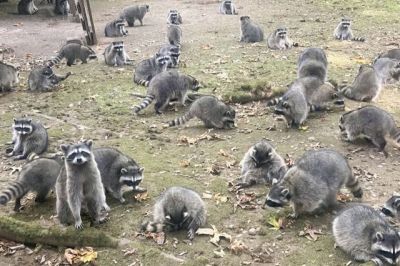
Highly adaptable raccoons have rapidly bred in cities and forests, increasing their population and threatening biodiversity in Germany, especially reptiles and amphibians that serve as their prey. As a result, almost all German states currently allow raccoon hunting to control their population.
After seeing many raccoons discarded in trash bins following hunts, Reis inquired with local officials whether it was permissible to process them into food. After receiving permission, he began producing and selling "Raccoon Balls," meatballs made from raccoon meat.
These meatballs became very popular among customers at the fair and his shop, and he now sells a total of seven raccoon meat products, including salami.
Reis said, "Raccoon meat does not taste significantly different from other meats. It is slightly more tender than other meats," and noted that most people did not show aversion to raccoon meat. He expressed pride, saying, "This is the only place in Europe where raccoon meat is sold."
He also claimed that raccoon sausages could be an attractive feature for visitors to the area. In fact, Reis's raccoon meat products have become a unique attraction for visitors to the Kade region and have been reported as an innovative measure to control the raccoon population.
© The Asia Business Daily(www.asiae.co.kr). All rights reserved.
![Clutching a Stolen Dior Bag, Saying "I Hate Being Poor but Real"... The Grotesque Con of a "Human Knockoff" [Slate]](https://cwcontent.asiae.co.kr/asiaresize/183/2026021902243444107_1771435474.jpg)
















