Measures to Address Low Birthrate and Local Extinction Risks
Expansion of Childbirth and Childcare Support and Establishment of Low Birthrate Response
Establishment of Resident Population Demand and Abolition of Event Expense Regulations
The government has initiated a reform of the local allocation tax. As a measure to respond to demographic changes such as low birth rates and local extinction, more allocation tax will be provided to local governments with higher birth rates, and new allocation criteria to address low birth rates will be established.
On the 1st, the Ministry of the Interior and Safety held a Local Allocation Tax Committee meeting chaired by Hansunki, Director of the Local Finance and Economy Office, and announced the "2025 General Allocation Tax Improvement Plan and Real Estate Allocation Tax Reform Plan," which centers on these contents.
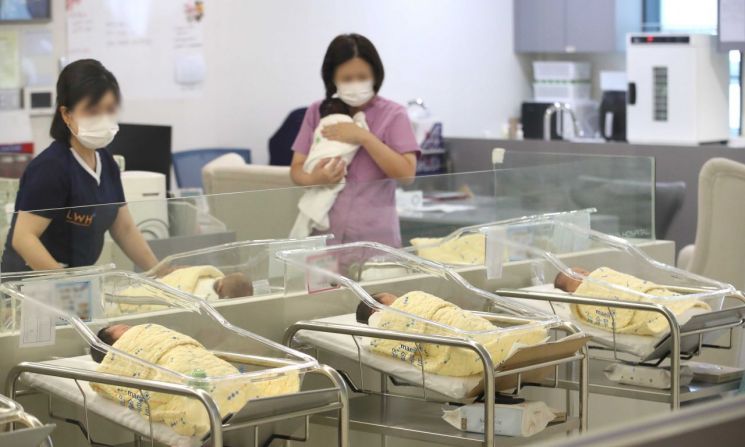
This general allocation tax improvement plan was made with a focus on "realizing the local era and enhancing regional economic dynamism" amid difficult domestic and international economic conditions, aiming to ▲ support the local era led by regions ▲ spread regional economic vitality ▲ expand responses to ultra-low birth rates and an aging society.
First, to ensure stable provision of regional public health care, support will be provided according to the scale of beds for medical institutions established and operated by local governments. In addition, to activate opportunity development zones and create quality living conditions for workers and infrastructure in the region, support will be provided according to the area of the special zones.
The penalties previously imposed to encourage the active use of events and festivals as policy tools for regional economic revitalization will be abolished. For example, the measure that reduced allocation amounts when the proportion of event and festival expenses increased compared to the previous year will be eliminated.
Adjustments to the allocation tax will also be made to prepare for ultra-low birth rates and an aging society. The reflection rate of demand for childbirth promotion will be doubled so that more allocation tax is distributed to local governments with higher total fertility rates. Furthermore, to encourage local governments to actively invest in creating a stable childcare environment, the demand will reflect the local tax reductions due to childbirth and parenting support exemptions. Along with this, to alleviate the accumulated fiscal burden caused by the continuous increase in social welfare expenditures due to the growing elderly population, the demand reflection rate for vulnerable groups will be raised by 3 percentage points each.
The real estate allocation tax will be redesigned to induce investments that create a high-quality childbirth and parenting environment, such as investments responding to low birth rates and providing care services. In particular, a new allocation criterion to respond to low birth rates has been established to encourage proactive fiscal investment by local governments. Until now, 35% was allocated to the social welfare sector and 10% to regional education, but starting next year, the allocation ratio for social welfare will be lowered to 20%, and a new category for low birth rate response (25%) will be created.
When determining the real estate allocation tax amount for each local government, the detailed calculation method has been redesigned to consider the degree of investment in responding to low birth rates and the provision of care services. Through this, the government expects that efforts by local governments to create childbirth and care environments will expand, regional care gaps will be resolved, parental childcare burdens will be alleviated, and ultimately, it will contribute to the establishment of a public responsibility-based childcare foundation.
The announced 2025 general allocation tax improvement plan and real estate allocation tax reform plan will be reflected in the "Amendment to the Enforcement Rules of the Local Allocation Tax Act" and will be open for legislative notice until the 11th of next month. Once the amendment is promulgated, the general allocation tax will be applied in the 2025 calculation, and the real estate allocation tax, considering the time lag for reflecting local government efforts, will be implemented from the 2026 calculation.
© The Asia Business Daily(www.asiae.co.kr). All rights reserved.
![From Bar Hostess to Organ Seller to High Society... The Grotesque Con of a "Human Counterfeit" [Slate]](https://cwcontent.asiae.co.kr/asiaresize/183/2026021902243444107_1771435474.jpg)
















