Support for Purchase Subsidies of 141 Hydrogen Vehicles, Expansion to 6 Hydrogen Charging Stations
Selected for Mini Hydrogen City Project... Promoting Stable Hydrogen Supply
Distributed Hydrogen Fuel Cell Power Plants... Establishing Eco-Friendly Energy Self-Sufficiency System
Lee Dong-hwan, Mayor of Goyang, "Creating an Eco-Friendly Hydrogen Economy Ecosystem Including Hydrogen Vehicle Purchase and Charging Stations"
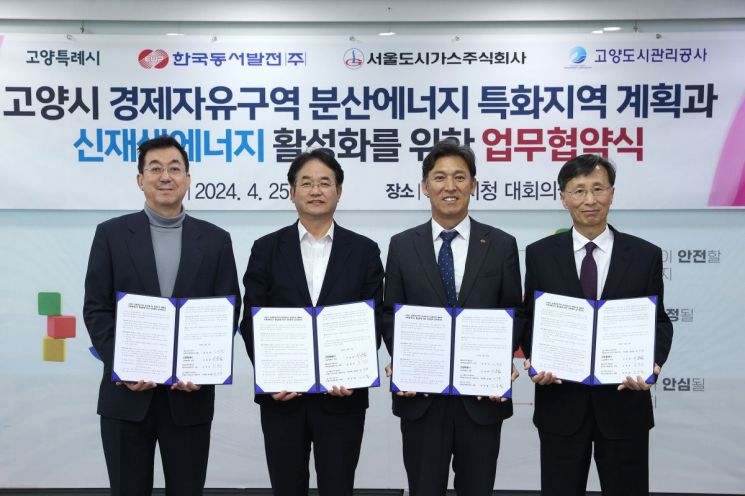 Business Agreement for Distributed Energy and Renewable Energy Activation in Goyang City Economic Free Zone.
 Goyang Special City in Gyeonggi Province is establishing various infrastructure from production to utilization to build a hydrogen economy ecosystem, which is emerging as an eco-friendly future energy source.
According to Goyang Special City on the 1st, the city plans to support purchase subsidies to promote the distribution of hydrogen vehicles and expand hydrogen charging stations. It also plans to create hydrogen production facilities for stable hydrogen charging and supply, and expand eco-friendly energy self-sufficiency by establishing distributed hydrogen fuel cell power generation facilities.
The fields where South Korea has made the greatest progress are hydrogen vehicles, hydrogen fuel cell power generation, and hydrogen charging stations.
Hydrogen vehicles use hydrogen as fuel, generating electricity by combining hydrogen with oxygen in the air. Since they emit no pollutants such as fine dust or carbon dioxide, they minimize air pollution and the greenhouse effect caused by vehicle exhaust.
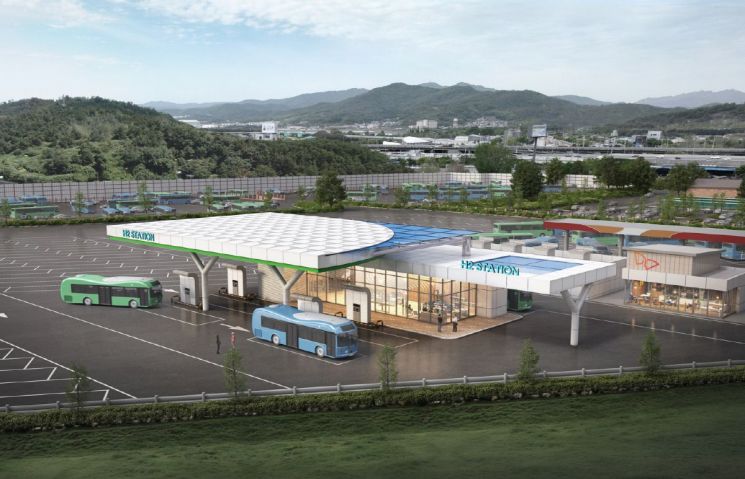
Since 2019 until last year, Goyang City has distributed 375 hydrogen vehicles and plans to expand to 2,140 vehicles by 2030. This year, it will distribute 125 hydrogen passenger cars and 16 hydrogen buses. The city plans to increase the proportion of hydrogen buses in public buses and distribute 300 hydrogen buses by 2030.
The primary obstacles to popularizing hydrogen vehicles are the high vehicle price and lack of hydrogen charging stations. Although the price of hydrogen vehicles (for example, Hyundai Nexo costs 69.5 million KRW) is relatively high, with subsidy support, they can be purchased at a level similar to conventional internal combustion vehicles. In Goyang City, a total of 32.5 million KRW (22.5 million KRW from the national government and 10 million KRW from the city) can be supported when purchasing a hydrogen passenger car. Benefits also include a 1.4 million KRW reduction in acquisition and registration tax and a 50% discount on parking fees at public parking lots.
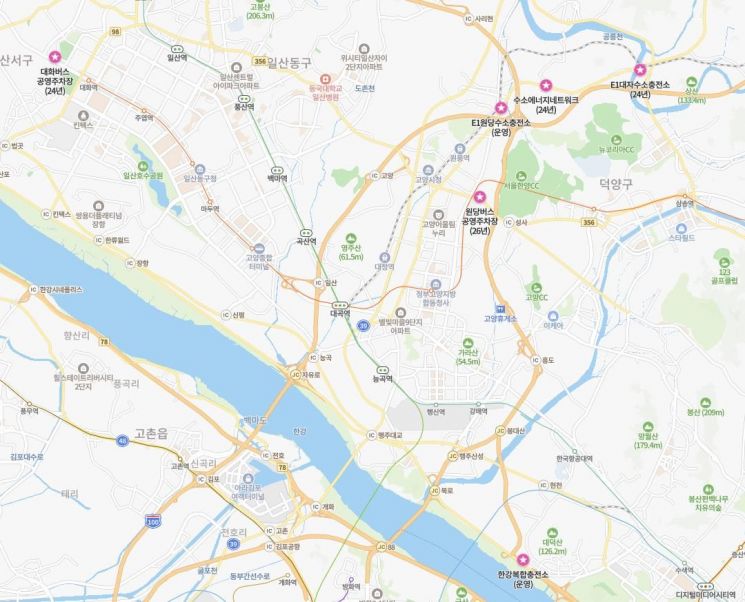
Hydrogen charging stations are also expected to expand. Goyang City currently has two existing charging stations: Seogang EN Hangang Complex Charging Station (Deogeun-dong) and E1 Wondang Hydrogen Charging Station (Wondang-dong). In December this year, two more stations will open: E1 Daeja Hydrogen Charging Station (Daeja-dong) and Hydrogen Energy Network Charging Station (Wondang-dong). In February next year, one more station will open at Daehwa Bus Public Parking Lot (Daehwa-dong). By 2026, a hydrogen charging station will also be installed at Wondang Bus Public Parking Lot. Once all six hydrogen charging stations are completed, it is expected that 1,560 passenger cars and 410 buses can be charged daily, alleviating inconveniences related to hydrogen charging.
For smooth hydrogen vehicle charging and hydrogen supply, independent hydrogen production facilities are necessary. Currently, the hydrogen used mainly comes from by-product hydrogen generated during petroleum refining and steelmaking processes, supplied to the metropolitan area from places like Ulsan and Dangjin in Chungnam Province. If hydrogen production facilities break down or transport companies go on strike, supply disruptions occur, affecting hydrogen vehicle charging and operation. In November last year, a breakdown in steel plant hydrogen production equipment caused a hydrogen charging crisis in the metropolitan and central regions. This highlights the need for distributed hydrogen production facilities to ensure stable hydrogen supply and popularization of hydrogen vehicles.
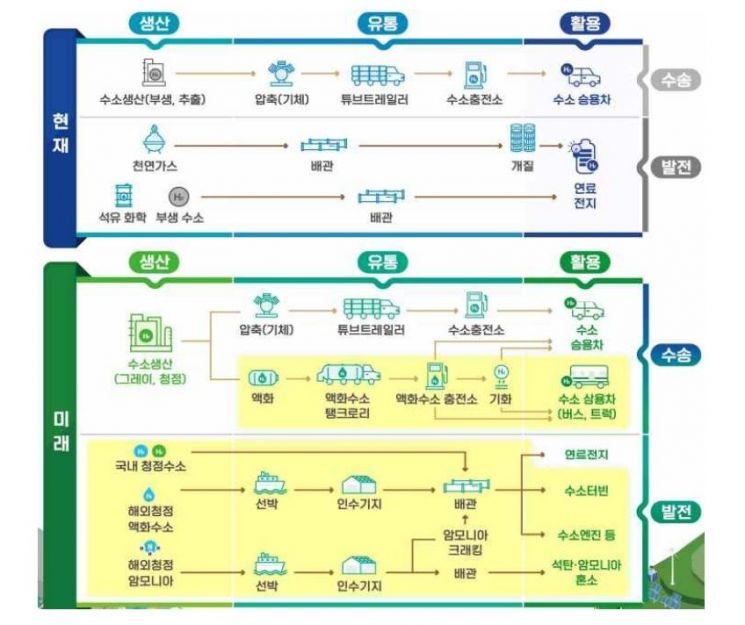
Last month, Goyang City was selected for the Gyeonggi-do Mini Hydrogen City project and plans to build a facility producing 1 ton of hydrogen per day by 2027. This amount can charge 200 medium-sized hydrogen SUVs or 33 hydrogen buses. The project budget is 10 billion KRW, with 5 billion KRW each from the provincial and city governments. Until now, hydrogen production facilities in Gyeonggi Province existed only in Ansan and Pyeongtaek. With this Mini Hydrogen City project, facilities capable of producing hydrogen will be established in northern Gyeonggi, enabling stable hydrogen supply and expected to resolve inconveniences such as charging station shortages.
By establishing power generation facilities using hydrogen fuel cells, a clean and safe distributed energy self-sufficiency system will be built.
Hydrogen fuel cell power generation facilities produce electricity and heat by reacting hydrogen with oxygen. This is an eco-friendly power generation method with high efficiency and low pollutants, noise, and vibration. Compared to solar and wind power, it requires less space, allowing small-scale installation in urban areas where power is needed. Additionally, it is not affected by climate, enabling stable electricity supply. Since hydrogen is extracted from city gas and used as raw material, supplying city gas to areas without city gas service also solves a long-standing issue for residents.
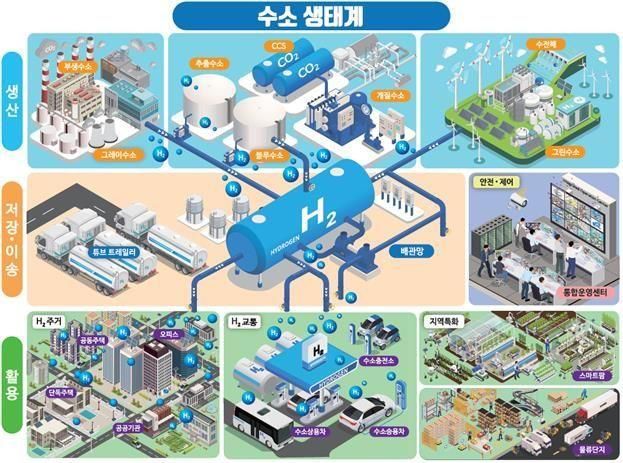
Currently, Goyang City operates a 5.3 MW hydrogen fuel cell power plant established by Korea East-West Power in 2018. This year, small-scale power plants of 330 kW and 450 kW will be built using gas stations through private investment, and by 2027, a 20 MW hydrogen fuel cell power plant is expected to be constructed. There are also plans to build a 40 MW hydrogen fuel cell power generation facility within the Special District for Distributed Energy in the Free Economic Zone.
Lee Dong-hwan, Mayor of Goyang Special City, stated, “Hydrogen is emerging as an alternative to solve climate change and environmental pollution caused by the use of fossil fuels such as oil and coal, and it is an eco-friendly energy source that can be used in various fields. We will create an eco-friendly hydrogen economy ecosystem not only by supporting hydrogen vehicle purchases and expanding charging stations but also by developing hydrogen production and hydrogen fuel cell power generation.”
© The Asia Business Daily(www.asiae.co.kr). All rights reserved.
![Clutching a Stolen Dior Bag, Saying "I Hate Being Poor but Real"... The Grotesque Con of a "Human Knockoff" [Slate]](https://cwcontent.asiae.co.kr/asiaresize/183/2026021902243444107_1771435474.jpg)


















