Negotiations Continue but Difficulties Expected
China Trade Retaliation Forecast
The European Union (EU) has finalized imposing a maximum 45.3% 'tariff bomb' on Chinese-made electric vehicles.
On the 29th (local time), the EU Commission announced that, following an anti-subsidy investigation, it has decided to impose definitive countervailing duties on imports of Chinese electric vehicles for five years. The measure will take effect from the 30th.
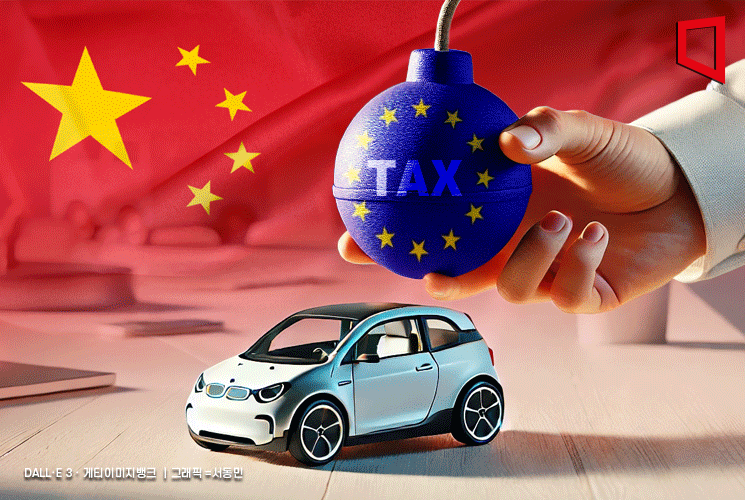
An additional tariff of 7.8 to 35.3 percentage points will be imposed on top of the existing general tariff rate of 10%, resulting in a final tariff rate of 17.8 to 45.3%.
The tariff rates vary depending on the company or their cooperation with the EU investigation. Tesla, produced at the Shanghai factory, will be subject to the lowest tariff rate of 17.8%. BYD, China’s largest electric vehicle manufacturer, will face a 27% tariff. The highest tariffs will be imposed on SAIC (Shanghai Automotive Industry Corporation) and companies that did not cooperate with the investigation.
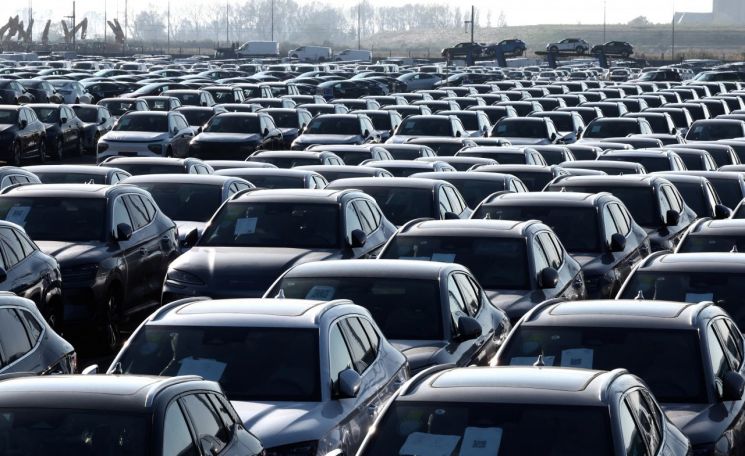
Although this is lower than the 100% tariffs imposed by the United States and Canada, significant backlash is expected as Chinese electric vehicles occupy a substantial portion of the EU market. According to the European Automobile Manufacturers Association (ACEA), the market share of Chinese-made cars in EU electric vehicle sales surged from 2.9% in 2020 to 21.7% last year.
Last September, Ursula von der Leyen, President of the EU Commission, announced in her annual policy speech that she would conduct an ex officio investigation into Chinese electric vehicles receiving unfair subsidies and being exported to Europe at low prices. During the investigation, China proposed setting a 'minimum sales price' instead of tariffs and engaged in so-called 'price commitment' negotiations, but both sides failed to narrow their differences despite several rounds of working-level talks.
According to foreign media, both sides have agreed to hold additional negotiations on the minimum sales price on the 1st of next month, but the gap in positions remains, and difficulties are expected. Bloomberg cited sources reporting that China is focusing on lowering tariffs for the state-owned company SAIC but has yet to present an offer that meets the EU’s demands.
Recently, China’s Ministry of Commerce publicly expressed dissatisfaction with the EU’s 'divide and conquer' tactic of conducting individual negotiations with companies planning to relocate some production bases to Europe. Attempting separate price commitment negotiations with individual companies while official negotiations are ongoing with Chinese authorities is seen as a breach of mutual trust. Meanwhile, the EU maintains that the negotiations are conducted under World Trade Organization (WTO) rules.
The EU plans to continue negotiations to find a mutually agreeable solution even after the definitive tariffs are imposed.
Amid unresolved differences, there is also speculation that China may launch additional trade retaliation against the EU. Chinese authorities argue that the EU’s tariffs are protectionist and harm bilateral relations and the automotive supply chain.
China initiated an anti-dumping investigation on EU pork in June and an anti-subsidy investigation on dairy products in August. Earlier this month, it announced the implementation of provisional anti-dumping measures on EU brandy. China also filed a complaint with the WTO regarding the electric vehicle tariffs. Some fear that China might impose export controls on key minerals, similar to the temporary rare earth export suspension during past territorial disputes with Japan. Bloomberg reported that EU officials expect China’s retaliation to materialize next month. Experts believe China will respond after the US presidential election results.
Member states hold differing views. Germany, a major automobile producer within the EU, criticizes the EU’s measures, arguing that China would suffer significant damage if tariffs on high-displacement vehicles increase. Germany also opposed the measure in the member state vote.
Hildegard M?ller, President of the German Association of the Automotive Industry (VDA), expressed concern, saying, "Additional tariffs represent a step back for free trade and will negatively impact Europe’s prosperity, job preservation, and growth," adding, "Countervailing duties increase the risk of widespread trade conflicts."
On the other hand, Antoine Armand, French Minister of Economy and Finance, stated in a press release, "The EU is making an important decision to protect and defend our trade interests at a time when the automotive industry needs our support more than ever."
© The Asia Business Daily(www.asiae.co.kr). All rights reserved.


















